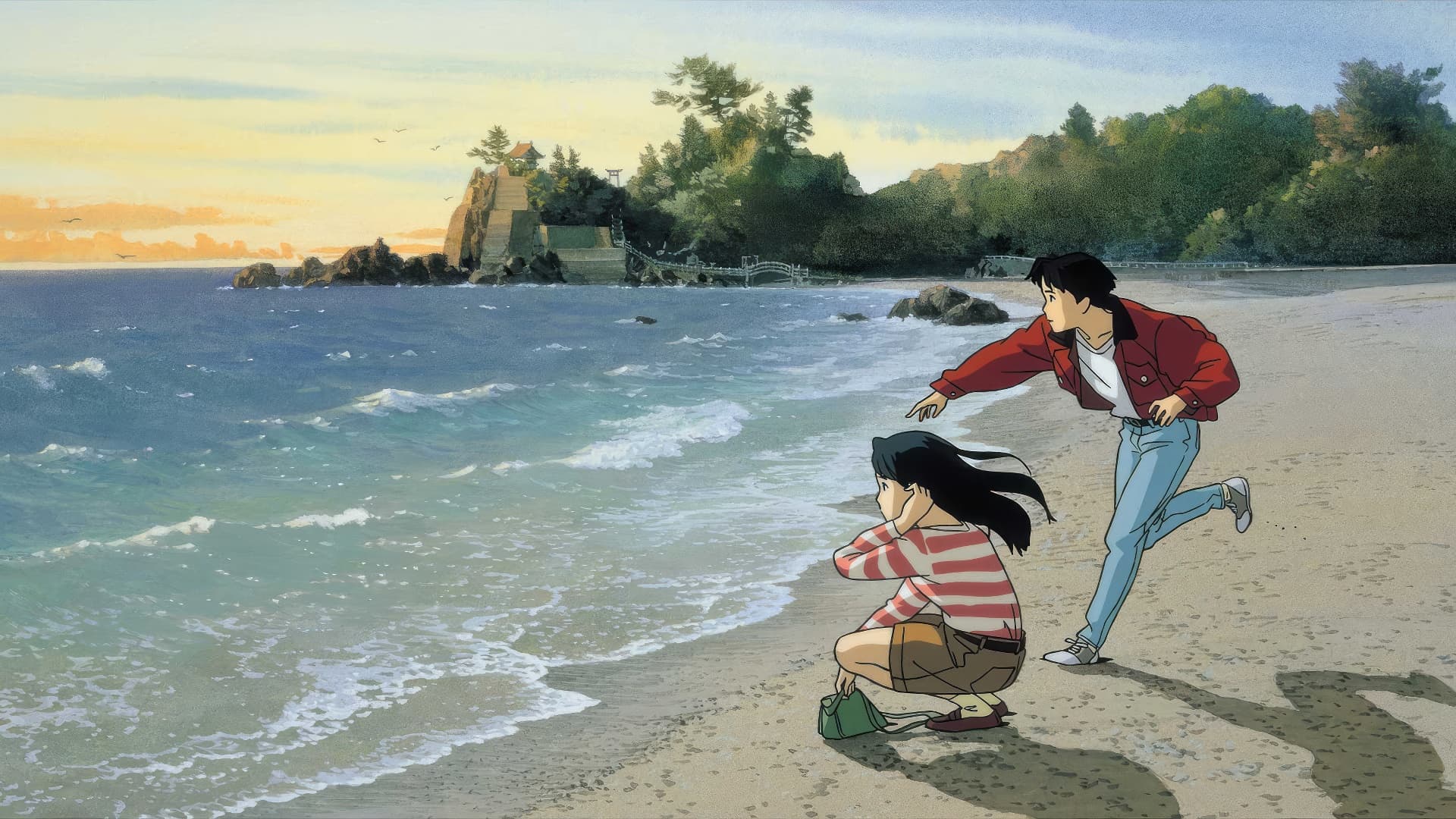

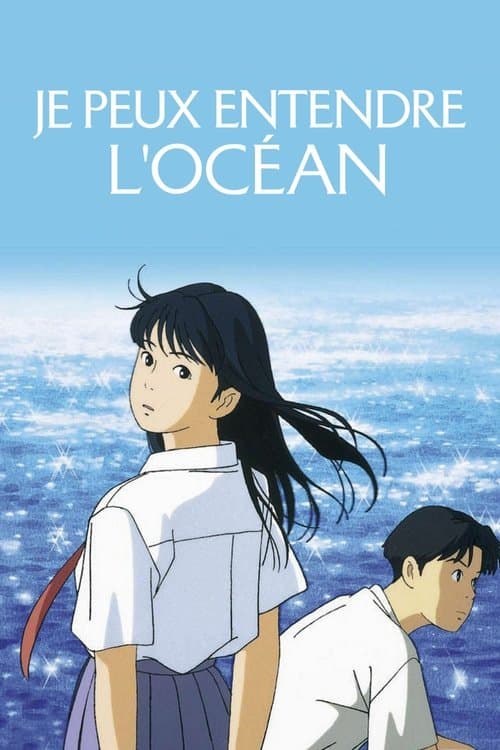
Ocean Waves
海がきこえる
Does this age rating seem accurate to you?
Detailed parental analysis
"I Can Hear the Ocean" is an intimate animated film with a melancholic and nostalgic tone, characterised by the warmth distinctive of Studio Ghibli productions. The narrative follows a high school student who recalls, years later, his ambiguous encounter with a young Tokyo girl transplanted to his provincial town, and the complex emotions that this relationship stirred in him and those around him. The film is addressed primarily to teenagers and young adults, for whom the themes of first love, jealousy and manipulation will resonate with the greatest resonance.
Underlying Values
The moral structure of the film is one of its richest and most debatable aspects. The female protagonist, Rikako, is frankly manipulative: she extorts a loan from a boy, manoeuvres him to obtain a trip to Tokyo under false pretences, and deliberately lies to the main character. The film does not easily absolve her, but it progressively invites understanding of her flaws without ever truly condemning them. In parallel, Taku embodies a quiet integrity and selfless loyalty that contrast with the ambient manipulation. The challenge for a teenager is precisely there: learning to distinguish between empathy and passive complicity towards someone who hurts others.
Substances
Two scenes of alcohol consumption directly involve high school characters, and one of them shows them drinking until they lose consciousness. The consumption is not explicitly glorified, but neither is it sanctioned in the narrative. Tobacco is also present, including in a school counsellor, which discretely normalises smoking in figures of school authority. These elements deserve to be named before watching with a young teenager.
Sex and Nudity
The film contains neither nudity nor sexual scenes, but a few remarks by high school students about a classmate's body, her breasts in particular, constitute a form of normalised hypersexualisation of the female body. A mention of a character's menstrual cycle is made naturally, without dramatisation. The rumour of a night spent together in a hotel by two characters, unfounded, feeds the social dynamics of the group. These elements remain within the ordinary suggestive register of adolescence, but may warrant a brief contextualisation.
Violence
Physical violence is brief and confined to two incidents: a slap between characters and a more forceful punch that sends a boy into rubbish. These scenes carry real emotional weight in the narrative; they express accumulated frustration rather than gratuitous brutality. They are neither aestheticised nor repeated, and their impact is narratively justified.
Parental and Family Portrayals
Rikako's family situation is central to understanding her behaviour: her parents are separated, her father lives in Tokyo and she was raised by a mother whom she rejects. The film presents this family rupture as one of the roots of her fragility and manipulative behaviours, without making it a blanket excuse. This is a valuable angle for discussion with a teenager about the link between family context and emotional development.
Strengths
The film stands out for its emotionally refined writing: it renders with precision the unspoken, misunderstandings and inner confusion inherent to adolescence, without forcing resolutions or flattering the viewer. The narrative structure in flashbacks lends the whole a reflective tone that invites reconsidering events as the story unfolds. It is one of the rare animated films to treat male jealousy, male friendship and unrequited love with such honesty and without manichaeism. It constitutes an exceptional tool for conversation about teenage relationships, precisely because it does not simplify the characters.
Age recommendation and discussion points
The film is suitable from age 13, with parental accompaniment for ages 13-14 on questions of manipulation and alcohol consumption. Two angles of discussion are essential after viewing: why does Taku continue to help Rikako despite her lies, and where does the boundary lie between understanding someone and accepting that they hurt others with impunity.
Synopsis
At Kichijōji Station, Tokyo, Taku Morisaki glimpses a familiar woman on the platform opposite boarding a train. Later, her photo falls from a shelf as he exits his apartment before flying to Kōchi Prefecture. Picking it up, he looks at it briefly before leaving. As the aeroplane takes off, he narrates the events that brought her into his life...
About this title
- Format
- Feature film
- Year
- 1993
- Runtime
- 1h 12m
- Countries
- Japan
- Original language
- JA
- Directed by
- Tomomi Mochizuki
- Main cast
- Nobuo Tobita, Yoko Sakamoto, Toshihiko Seki, Yuri Amano, Kae Araki, Jun'ichi Kanemaru, Ai Satou, Aya Hisakawa, Tomokazu Seki, Hikaru Midorikawa
- Studios
- Studio Ghibli, Tokuma Shoten, Nippon Television Network Corporation
Content barometer
- Violence2/5Moderate
- Fear1/5Mild
- Sexuality1/5Allusions
- Language0/5None
- Narrative complexity2/5Moderate
- Adult themes2/5Present
Watch-outs
- Alcohol
- Gender stereotypes
Values conveyed
- Friendship
- Compassion
- Loyalty
- empathy
- emotional growth