Nimona
Does this age rating seem accurate to you?
Detailed parental analysis
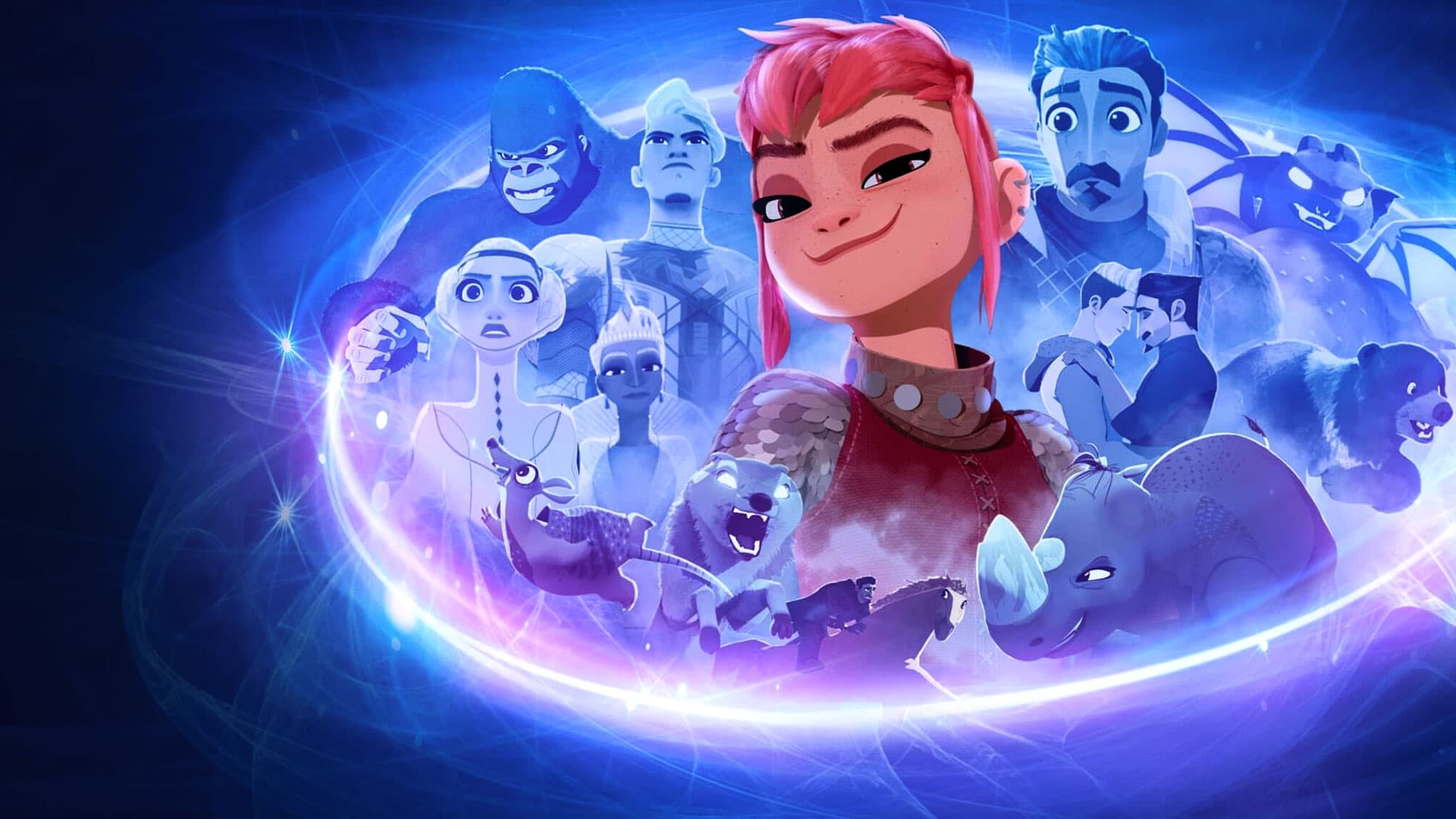
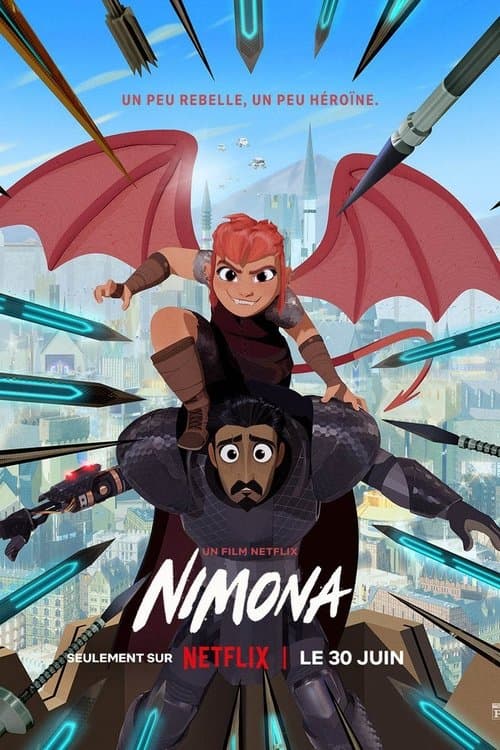
Nimona is an animated adventure film with a hybrid tone, oscillating between quirky humour, boundless energy and an openly dark emotional quality at times. The plot follows a knight unjustly accused of murder who allies with a mysterious shapeshifter to prove his innocence in a kingdom where difference is perceived as a threat. The film is aimed primarily at teenagers, but its thematic depth and certain content make it unsuitable for young children.
Violence
Violence is present throughout the film, sustained and deliberate. It alternates between cartoon action sequences, monstrous transformations used as weapons, crossbow fire and combat with weapon exchanges resulting in a death. Two moments stand out from the usual register of family animation: a visible on-screen arm amputation and an arrow extraction from the leg with visible blood. The violence serves the narrative and is not gratuitous, but its cumulative intensity far exceeds that of a mainstream animated film. The most difficult scene is a suicide attempt depicted directly and unambiguously, embedded in the emotional core of the story arc rather than treated as a simple dramatic turn of events.
Social Themes
The film constructs a coherent and legible political critique: a dominant institution deliberately manufactures enemies and sustains collective fear to consolidate its power. This mechanism is shown with enough clarity to make it a genuine subject for discussion, particularly for teenagers capable of making connections to real-world dynamics. At the same time, Nimona's shapeshifting is openly presented as a metaphor for fluid identity and gender non-conformity, integrated into the narrative structure rather than added as surface decoration. These two dimensions are consistent with each other: the film questions what society does to those it does not understand or refuses to integrate.
Underlying Values
The narrative strongly values loyalty to oneself against institutional pressure, refusal to conform to an imposed identity, and friendship as a space of unconditional recognition. The relationship between Ballister and Nimona is built around mutual devotion and self-sacrifice, which gives the film a solid emotional foundation. Implicitly, the film questions the legitimacy of instituted authority and argues that blind obedience to a system can produce systemic injustice. These structural values are consistent and asserted without ambiguity.
Discrimination
Discrimination lies at the heart of the narrative. The film's kingdom rests on a logic of exclusion: a category of individuals is defined as monstrous and dangerous in the name of social order, and this designation serves to legitimise institutional violence exercised against them. The film shows this mechanism at work and reveals its falsified foundations, making it a genuine pedagogical tool for understanding how scapegoating is constructed. The metaphor is explicit and can open a useful conversation about discrimination experienced by minority groups in real-world contexts.
Parental and Family Portrayals
Parental figures are almost entirely absent from the film. Nimona has no family and carries a past of profound rejection, presented as the source of a central wound. This absence is not incidental: it constructs the character as someone who has grown up without emotional support and who bears the consequences of that solitude. For a child or teenager going through similar family difficulties, this dimension can resonate strongly and warrants attention during shared viewing.
Substances
The presence of substances is marginal and has no narrative weight: implicit alcohol consumption and a possible mention of drugs visible in blurred background, without prominence or valorisation. This point does not warrant particular discussion.
Strengths
Nimona holds together two registers that are difficult to reconcile: visual and narrative energy close to nervous cartoon style, and authentic emotional depth around rejection, identity and solitude. The character of Nimona is particularly well written, unstable and endearing at once, carrying a genuine psychological complexity rare in animation. The film does not resolve its tensions artificially and leaves certain questions open, which gives it narrative substance above the genre average. The institutional critique is conducted with enough clarity to be accessible to teenagers without being didactic. For a parent wishing to broach subjects such as identity, difference or mechanisms of power with their child, the film offers a solid and non-moralising entry point.
Age recommendation and discussion points
The film is not suitable for children under 12 years old due to sustained violence, potentially frightening images and above all the direct representation of a suicide attempt, which requires genuine parental support. For serene and fully beneficial viewing, 13 to 14 years of age is the appropriate bracket. Two angles of discussion emerge after viewing: why does power need to designate enemies to maintain itself, and what makes us accept or reject someone who does not fit what we expect of them.
Synopsis
A knight framed for a tragic crime teams with a scrappy, shape-shifting teen to prove his innocence.
About this title
- Format
- Feature film
- Year
- 2023
- Runtime
- 1h 41m
- Countries
- United States of America, United Kingdom
- Original language
- EN
- Directed by
- Troy Quane, Nick Bruno
- Main cast
- Chloë Grace Moretz, Riz Ahmed, Eugene Lee Yang, Frances Conroy, Lorraine Toussaint, Beck Bennett, RuPaul, Indya Moore, Julio Torres, Sarah Sherman
- Studios
- Annapurna Pictures, DNEG
Content barometer
- Violence4/5Strong
- Fear4/5Intense
- Sexuality0/5None
- Language1/5Mild
- Narrative complexity2/5Moderate
- Adult themes1/5Mild
Values conveyed
- Friendship
- Acceptance of difference
- Loyalty
- courage
- acceptance
- justice