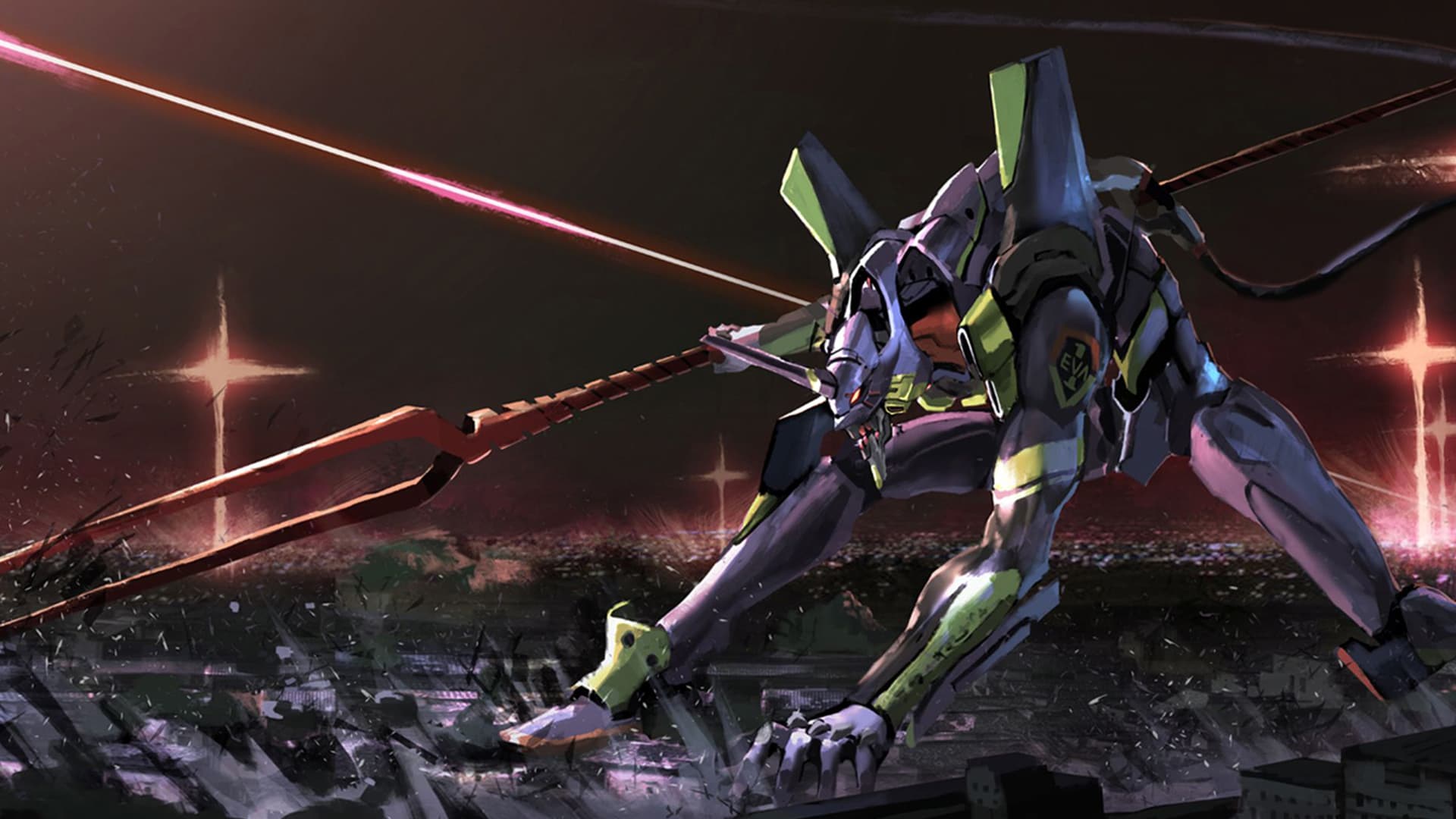


Neon Genesis Evangelion: Death and Rebirth
新世紀エヴァンゲリオン劇場版 シト新生
Does this age rating seem accurate to you?
Detailed parental analysis
Neon Genesis Evangelion: Death and Rebirth is a dark, tense and psychologically demanding animated film, composed of a recapitulative first section followed by an unprecedented segment that plunges into the inner collapse of its characters. The plot follows young adolescents piloting giant robots against entities threatening humanity, but the real subject is depression, abandonment and the dissolution of identity. This film is not intended for children or fragile adolescents: it presupposes solid emotional maturity and, ideally, prior knowledge of the television series from which it originates. Underlying Values The film constructs a world where psychological collapse is the norm and where authority figures consistently fail to protect those entrusted to them. The themes of radical solitude, alienation and the sense of the pointlessness of existence run through every sequence without being resolved or counterbalanced by credible hope. This pessimism is not presented as a passing adolescent posture but as a reading of the adult world. The question of identity, self-worth and the meaning of effort is posed with rare intensity, making it rich material for discussion but demanding material. Parental and Family Portrayals Parental figures are uniformly deficient: abandonment, maternal suicide, clinical paternal indifference, instrumentalisation of children for military or scientific purposes. No adult plays the role of refuge or reliable model. This structural absence is not incidental; it conditions the protagonist's psychological state and explains his affective paralysis. For an adolescent going through his own family tensions, the film can resonate with a particular force that warrants anticipation. Violence Violence is both spectacular and visceral. The battles between giant robots and extraterrestrial creatures are intense, with visible blood, effusions upon impact and a sequence showing an Eva devouring an angel in deliberately gory staging. The film also includes scenes of execution of civilian personnel by soldiers, presented as acts of cold bureaucratic warfare. Violence is never glorified for its own sake: it is the mirror of a system that grinds human beings, but this does not diminish its immediate visual impact. Sex and Nudity The Rebirth section contains a scene of masturbation involving the adolescent protagonist, treated not as provocation but as a sign of affective isolation and inability to form real connections. Female characters appear in tight-fitting clothing with pronounced necklines. These elements are not dominant in the film's economy, but they fully justify framing the viewing and discussing it openly, especially with a young adolescent. Social Themes The film deploys as an undercurrent a critique of military and governmental institutions that deliberately sacrifice individuals in the name of opaque collective objectives. The armed invasion of installations by governmental forces, with execution of non-combatant technicians, illustrates a cold institutional totalitarianism that deserves to be named and discussed. The question of who decides, in the name of what and with what human consequences, is posed with real acuity. Strengths This film, even in its imperfect compilatory format, testifies to exceptional narrative and emotional ambition. It takes seriously the psychology of its adolescent characters, refuses easy resolutions and treats depression and isolation with an honesty that is lacking in the vast majority of productions intended for a young audience. For an adolescent or young adult sufficiently resilient, it can open deep conversations about self-worth, relation to others, fear of abandonment and the expectations that adults project onto children. Its thematic density makes it a serious cultural object, not mere animation entertainment. Age recommendation and discussion points This film is not intended for children and remains risky for fragile adolescents or those in distress: not before age 15 as an absolute minimum, and preferably 16 to 17 for serene and fully beneficial viewing. Two angles of discussion are essential after watching: ask the adolescent what he thinks about the fact that the adults in the film entrust crushing responsibilities to children without ever protecting them, and explore with him what the film says about solitude and the difficulty in asking for help when suffering.
Synopsis
Originally a collection of clips from the Neon Genesis Evangelion TV series, Death was created as a precursor to the re-worked ending of the series. Rebirth was intended as that re-worked ending, but after production overruns Rebirth became only the first half of the first part of The End of Evangelion, with some minor differences.
About this title
- Format
- Feature film
- Year
- 1997
- Runtime
- 1h 31m
- Countries
- Japan
- Original language
- JA
- Directed by
- Hideaki Anno, Masayuki, Kazuya Tsurumaki, Ken Ando, Naoyasu Habu, Hiroyuki Ishido, Tsuyoshi Kaga, Shoichi Masuo, Seiji Mizushima, Tensai Okamura, Akira Takamura, Tetsuya Watanabe, Minoru Ohara, Masahiko Otsuka, Keiichi Sugiyama
- Main cast
- Megumi Ogata, Megumi Hayashibara, Yuko Miyamura, Kotono Mitsuishi, Fumihiko Tachiki, Koichi Yamadera, Miki Nagasawa, Takehito Koyasu, Tetsuya Iwanaga, Junko Iwao
- Studios
- GAINAX, Production I.G, Tatsunoko Production, KADOKAWA Shoten, TV Tokyo, SEGA, Toei Company
Content barometer
- Violence4/5Strong
- Fear4/5Intense
- Sexuality3/5Moderate
- Language1/5Mild
- Narrative complexity3/5Complex
- Adult themes0/5None
Watch-outs
- Violence
- Abuse
Values conveyed
- courage
- resilience
- teamwork