Ne Zha
哪吒之魔童降世
Does this age rating seem accurate to you?
Detailed parental analysis
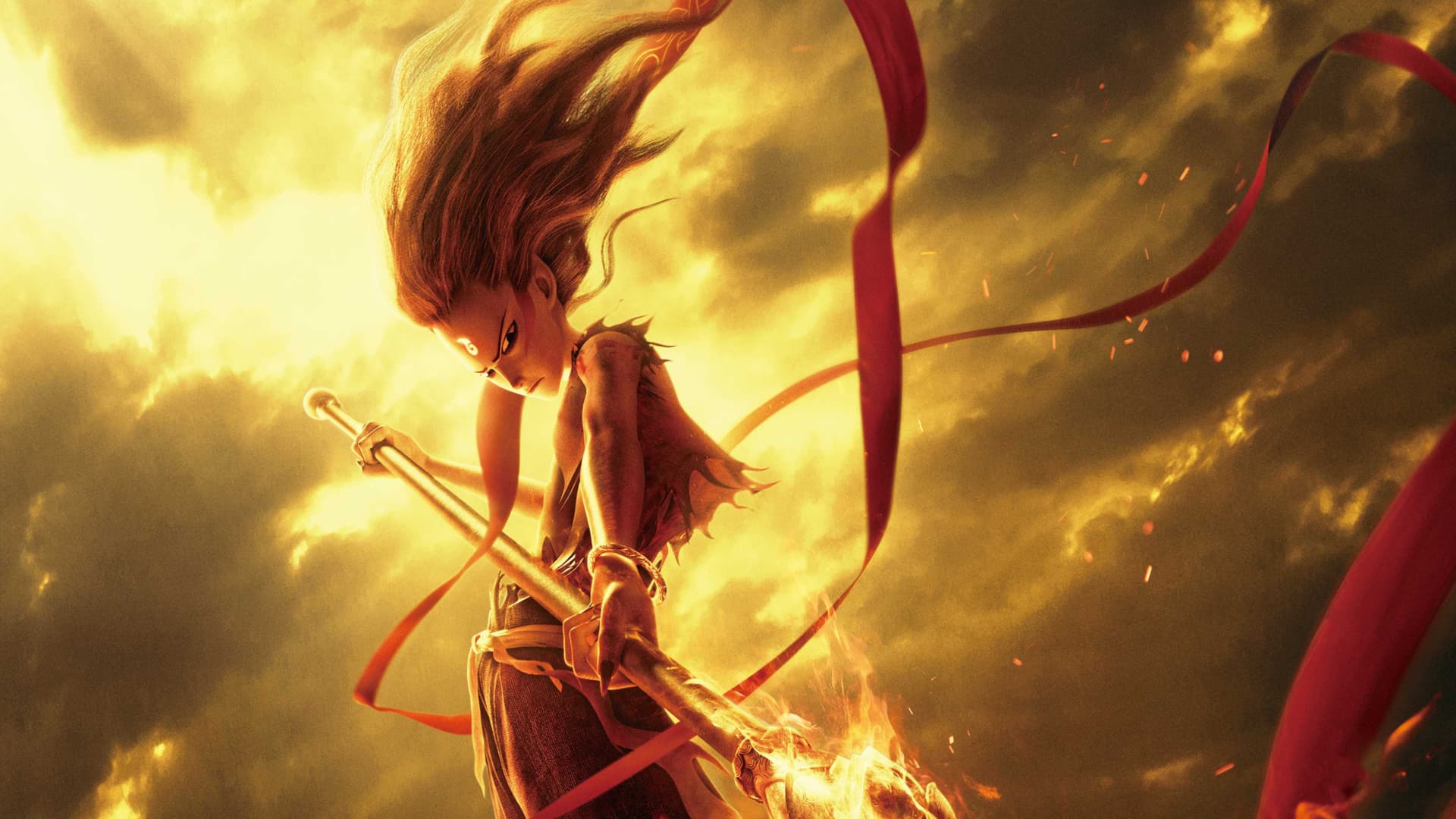
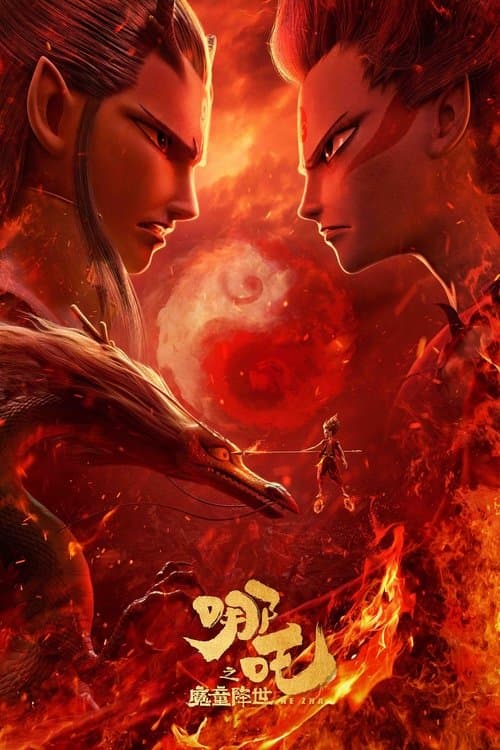
Ne Zha is a fantasy animated film drawing on Chinese mythological inspiration, with an atmosphere that alternates between explosive, comic and deeply emotional moments. The plot follows a child born of a demon, rejected by his world and forced to choose his own destiny between the grim prophecy weighing upon him and his parents' determination to protect him. The film is primarily aimed at children aged 8 and above as well as teenagers, but its emotional intensity and recurring violence make it unsuitable for younger viewers.
Violence
Violence is omnipresent throughout the film: martial arts combat, characters thrown, burned, petrified, crushed against surfaces. One sequence shows a character struck repeatedly in the stomach until he vomits. This violence is animated and stylised, never gratuitously graphic in a realistic sense, but its frequency and intensity make it one of the narrative's most defining elements. It is largely justified narratively as an expression of the protagonist's inner chaos and his struggle for self-control, which gives it purpose beyond mere spectacle. That said, younger children, particularly those sensitive to scenes of danger endangering young characters or their parents, may be unsettled.
Underlying Values
The film's central message is powerful and well-constructed: fate is not destiny, and each individual bears the responsibility of defining himself through his actions rather than through what others project onto him. Perseverance, self-mastery and inner discipline are consistently valued throughout the character's arc. These are solid themes to explore with a child, especially since the film does not deliver them as a moralising lesson but weaves them into a credible dramatic trajectory. The question of social perception, rejection and unjustly constructed reputation runs through the film and offers material for discussion.
Parental and Family Portrayals
The relationship between Ne Zha and his parents is one of the film's strongest emotional points, and several family scenes carry sufficient intensity to move both parents and children. The father is portrayed as a devoted, loving character willing to do anything to protect his son, making him a positive parental role model rarely presented as anything but trivial in this type of film. The mother, by contrast, is defined largely by her maternal role and her suffering: she faints twice and spends much of the narrative in a state of anxiety. This one-sided treatment is worth noting and can easily be discussed with a child or teenager as an example of reductive female representation.
Discrimination
The film features a portly character, a Taoist master, whose physique is systematically used as a source of comedy. One line shows him claiming to be a potential model, belly forward, designed to provoke laughter. This form of weight-based mockery, embedded in an otherwise benevolent and competent character, creates a tension worth pointing out explicitly to a child: why do we laugh at someone's body, and is that laughter always harmless?
Language
The French-subtitled version contains terms such as 'merde', 'bâtard', 'idiot' or 'crétin', representing moderate vulgar language, common in action films for this audience. These words carry no particular narrative weight and do not define the overall tone, but their regular presence is worth noting for parents whose children have not yet been exposed to such language.
Substances
A Taoist character is shown in a state of intoxication after consuming large quantities of wine, in a scene intended to be comic. Alcohol is neither glorified nor presented as problematic: it is an isolated gag. Its presence remains incidental but noticeable to attentive children.
Strengths
Ne Zha draws its strength from its grounding in Chinese Taoist mythology, which it restores with visual generosity and controlled narrative pacing. The protagonist's emotional arc, a rejected child who learns to build himself against others' perceptions, is treated with genuine depth and transcends the usual action film formula for children. The father-son relationship in particular achieves a rare intensity in the genre, capable of moving adults. The film also provides a concrete gateway into classical Chinese culture and cosmology, making it a vehicle for intellectual and cultural curiosity for children who may not previously have been exposed to such material.
Age recommendation and discussion points
The film is recommended from age 8 with parental guidance, and can be watched confidently from age 10 independently. Two discussion angles are worth exploring after viewing: first, the question of others' perceptions and unjust reputation, by asking the child whether he has ever experienced a situation where he was judged before being known; secondly, the comic scene featuring the portly character, to reflect together on why someone's body can become a subject of mockery and whether that laughter is always as innocent as it appears.
Synopsis
A young boy is born as the reincarnation of a demonic power, into a society that hates and fears him. Destined by prophecy to bring destruction to the world, Nezha must choose between good and evil to see if he can change his fate.
About this title
- Format
- Feature film
- Year
- 2019
- Runtime
- 1h 50m
- Countries
- China
- Original language
- ZH
- Studios
- Beijing Enlight Pictures, Horgos Coloroom Pictures, October Media, Chengdu Coco Cartoon
Content barometer
- Violence3/5Notable
- Fear3/5Notable tension
- Sexuality0/5None
- Language2/5Moderate
- Narrative complexity2/5Moderate
- Adult themes1/5Mild
Watch-outs
- Alcohol
- Strong language
- Violence
- Gender stereotypes
Values conveyed
- Acceptance of difference
- Perseverance
- courage
- friendship
- self-surpassing
- embracing one's difference
- family loyalty
- chosen destiny