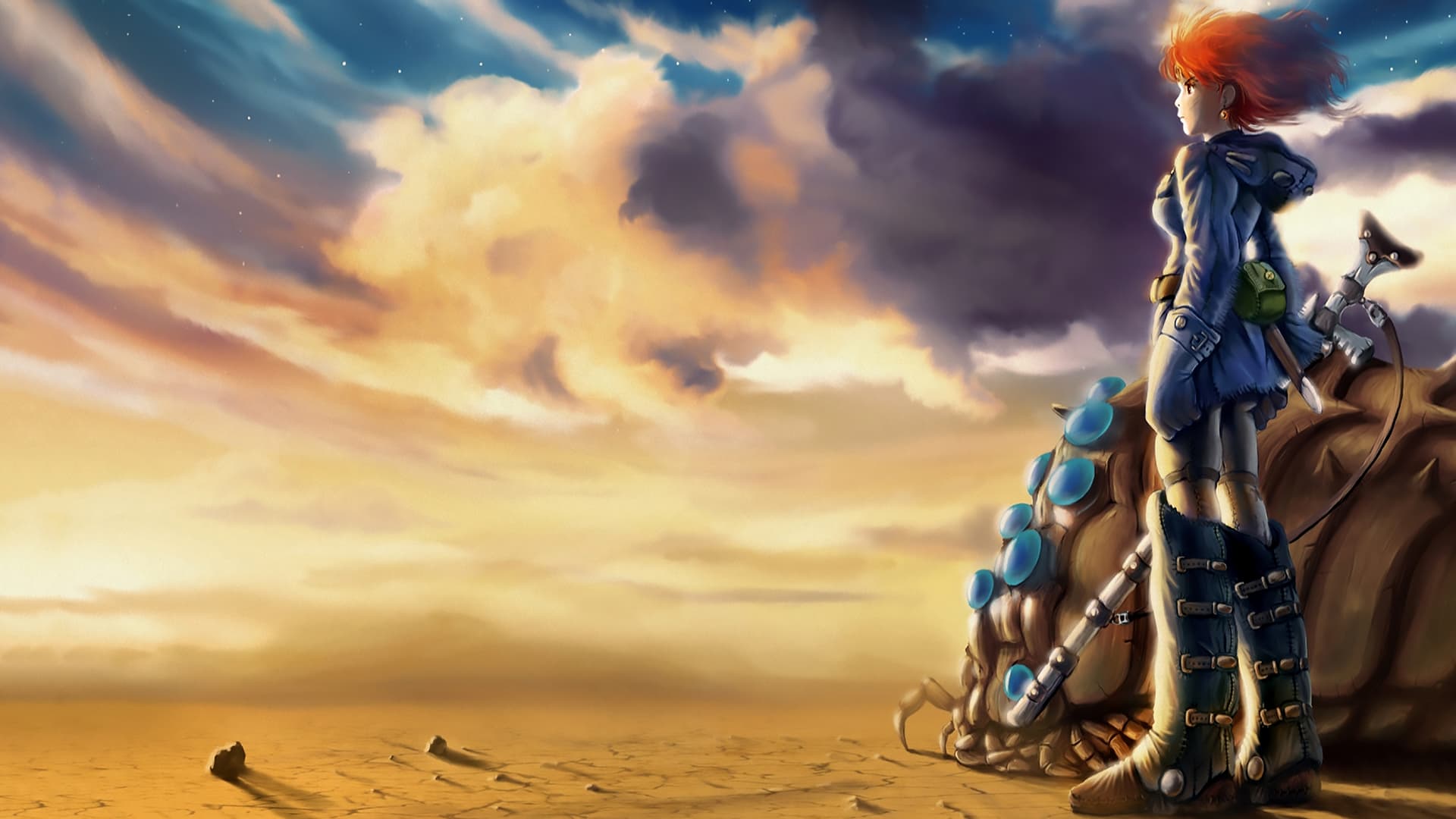
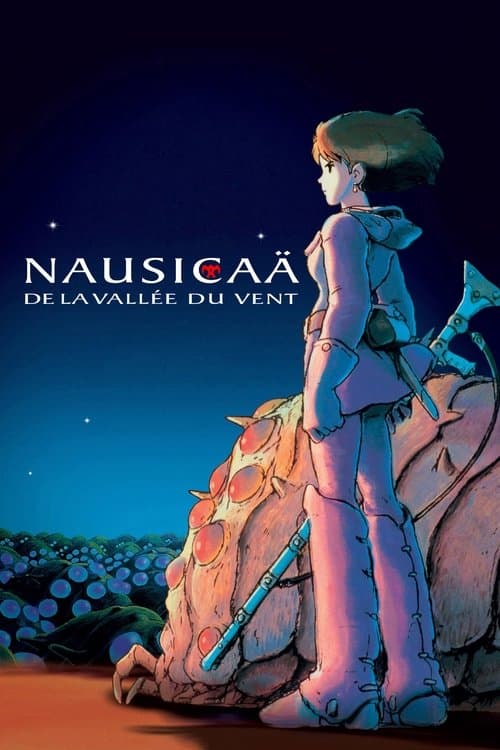
Nausicaä of the Valley of the Wind
風の谷のナウシカ
Does this age rating seem accurate to you?
Detailed parental analysis
Nausicaä of the Valley of the Wind is an animated adventure and science-fiction film with an epic atmosphere, contemplative at times and intensely dramatic at others. In a post-apocalyptic world invaded by a toxic forest populated by giant insects, a young princess seeks to prevent a devastating war by understanding what others fear or blindly fight against. The film is primarily directed at children from a certain age onwards and at teenagers, but its thematic depth fully holds the attention of adults. It is a Studio Ghibli production, a cultural landmark firmly established among families and film-loving teenagers.
Social Themes
War and ecology are the two thematic pillars of the film. Nations clash over control of resources and ancient weapons, and the narrative clearly shows the human and moral devastation wrought by this military logic. Ecology occupies an even more central place: the toxic forest, perceived as a threat to be destroyed, is revealed in reality to be the only healing mechanism for a planet devastated by humans. This reversal of perspective forms the heart of the film's message and offers particularly rich material for discussion with a child or teenager, notably on the difference between what frightens us and what is actually harmful.
Violence
Violence is present and real, without being gratuitous. A woman is shot with visible blood, the main character is wounded twice with apparent bleeding, and a father is assassinated before the spectator's eyes. War sequences involve explosions and aerial combat, and a giant creature is impaled. Violence is never aestheticised for the pleasure of spectacle: it is consistently shown as a tragedy, a mistake, or the consequence of fear and ignorance. This clear narrative purpose does not remove the emotional impact, particularly for younger children, but it orientates the meaning of each difficult scene.
Underlying Values
The film constructs an entire narrative around the refusal of violence as a solution and understanding as an alternative to fear. The protagonist embodies a rare form of moral courage in adventure cinema: she does not resolve conflicts through force but through empathy, including towards creatures that threaten her life. This pacifism is not presented as naive: it is tested credibly and costs the character something. The film also values independent thought in the face of dominant collective narratives, an angle particularly relevant to explore with teenagers.
Parental and Family Portrayals
Nausicaä's father is an affectionate and respected figure, but his assassination occurs relatively early in the narrative and constitutes one of the most emotionally charged moments of the film. His death is not softened and may affect sensitive children. The paternal figure is here a benevolent model whose loss motivates the protagonist's journey without plunging her into vengeance, which is in itself a significant narrative choice.
Strengths
Nausicaä of the Valley of the Wind is a work of remarkable thematic coherence: ecology, war and fear of the other are articulated here without didactic heavyhandedness. The character of Nausicaä is one of the most fully formed female portraits in animated cinema of its era: she acts, reflects, doubts and decides without her femininity being a subject or an obstacle. The film proposes a complex vision of the world, in which antagonists have their own logics and where good and evil are not distributed simply. For a child or teenager, it is a high-quality introduction to systems thinking on the relationship between humanity and nature, and to the idea that fear is often a poor guide.
Age recommendation and discussion points
The film is suitable from age 7 onwards for children accompanied by an adult, bearing in mind that certain scenes of violence and the father's death may affect sensitive children. From age 10 onwards, viewing is more straightforward and the thematic richness fully accessible. Two angles to explore after viewing: why does Nausicaä choose not to fight when she could, and what does the film say about our tendency to destroy what we do not yet understand?
Synopsis
After a global war, the seaside kingdom known as the Valley of the Wind remains one of the last strongholds on Earth untouched by a poisonous jungle and the powerful insects that guard it. Led by the courageous Princess Nausicaä, the people of the Valley engage in an epic struggle to restore the bond between humanity and Earth.
Where to watch
Availability checked on Apr 04, 2026
About this title
- Format
- Feature film
- Year
- 1984
- Runtime
- 1h 57m
- Countries
- Japan
- Original language
- JA
- Directed by
- Hayao Miyazaki
- Main cast
- Sumi Shimamoto, Ichiro Nagai, Gorō Naya, Yoji Matsuda, Yoshiko Sakakibara, Iemasa Kayumi, Hisako Kyoda, Mahito Tsujimura, Mina Tominaga, Kohei Miyauchi
- Studios
- Topcraft, Tokuma Shoten, Hakuhodo
Content barometer
- Violence3/5Notable
- Fear3/5Notable tension
- Sexuality0/5None
- Language0/5None
- Narrative complexity2/5Moderate
- Adult themes0/5None
Values conveyed
- Courage
- Acceptance of difference
- Compassion
- Autonomy
- love of nature
- peace
- empathy
- ecology
- hope
- sacrifice
- mutual understanding