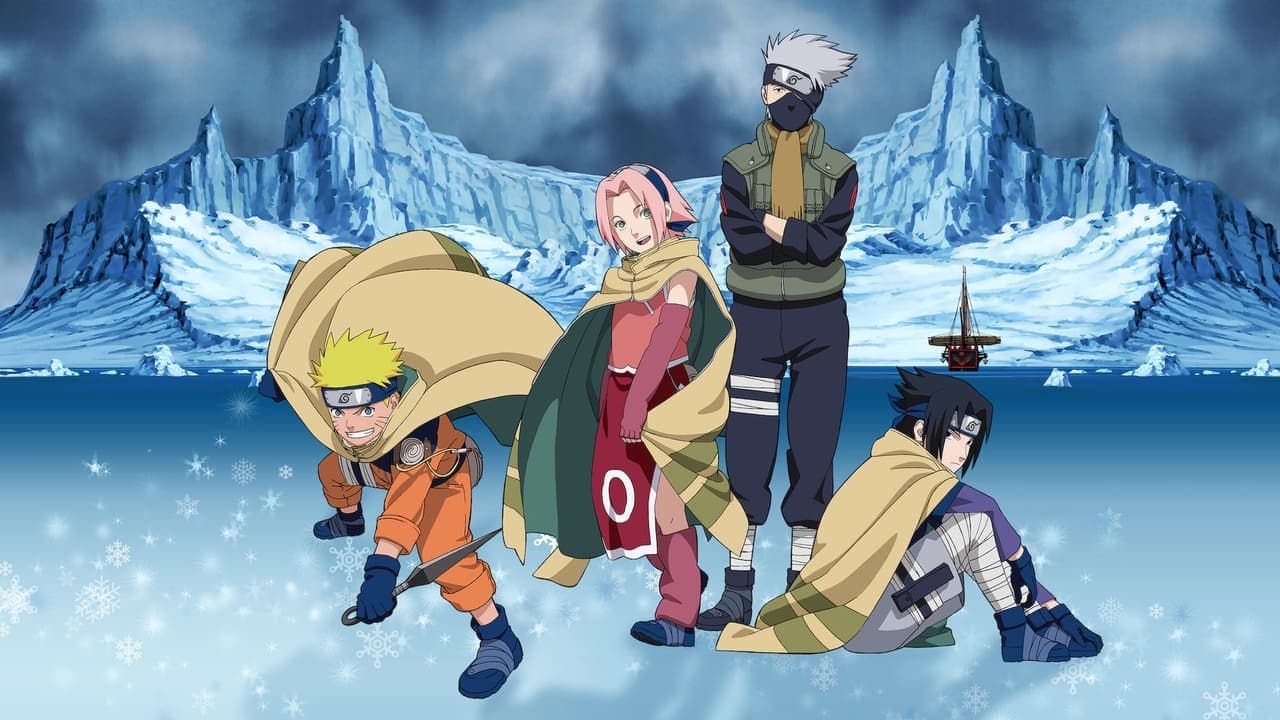

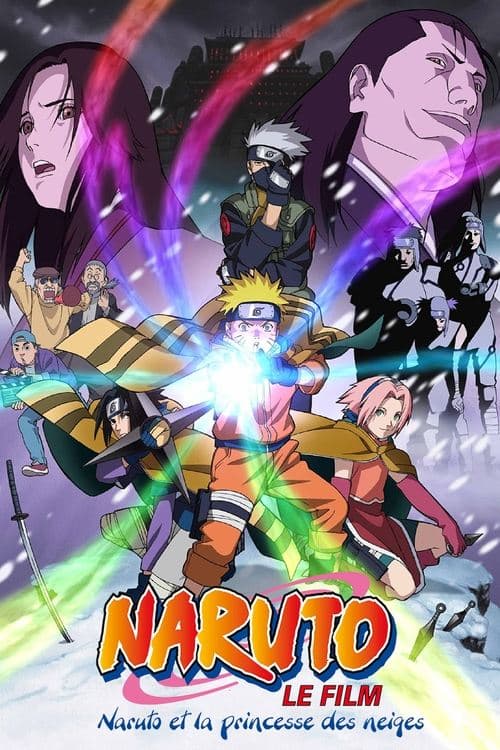
Naruto the Movie: Ninja Clash in the Land of Snow
劇場版 NARUTO 大活劇! 雪姫忍法帖だってばよ!!
Does this age rating seem accurate to you?
Detailed parental analysis
Naruto and the Princess of the Snow is a ninja adventure and action film with contrasting atmosphere, alternating between tense combat scenes and moments of camaraderie between characters. The plot follows a team of ninjas tasked with protecting a famous actress who harbours a secret identity linked to an oppressed nation. The film is primarily aimed at young teenagers already familiar with the Naruto universe, without targeting an adult audience or a general audience.
Violence
Ninja combat is frequent, intense and forms the backbone of the film. Several characters are killed by thrown blades, with some visible blood, and the hero suffers repeated electrocutions. The violence remains stylised and consistent with the codes of the ninja genre, without veering into gore, but its frequency and intensity exceed what a child under 10 years old can absorb peacefully. It serves the plot and carries clear narrative purpose, which prevents it from being gratuitous. The death of a secondary character is treated with a certain emotional weight, giving the film genuine dramatic weight beyond mere spectacle.
Underlying Values
The film consistently upholds values of solidarity and perseverance, notably through the team dynamic which overcomes internal tensions to accomplish its mission. Bravery in the face of adversity is valued, and the princess's journey raises questions about the courage required to embrace one's responsibilities rather than flee. Her arc, initially presented as cold and disdainful before evolving towards acceptance of her heritage, constitutes the most solid structural message of the narrative.
Parental and Family Portrayals
The parental figure is central to the film's emotional development, particularly through the memory of the princess's father and the weight of his disappearance. The filial relationship is presented as both a source of strength and unresolved injury, and its symbolic resolution gives the film its final momentum. This motif can naturally open a conversation with a child about grief and family legacy.
Substances
A scene shows the main female character drinking alcohol in a bar. The scene is not presented as problematic or as a cautionary tale; it is simply integrated into the character's atmosphere. Alcohol plays no major narrative role, but its normalised presence for an adult character merits flagging to parents of young viewers.
Strengths
The film delivers what it promises: a brisk ninja adventure, faithful to the spirit of the series, with an emotional arc sufficiently developed to transcend mere promotional film. The journey to the snow country offers a visually distinct atmosphere from the rest of the universe, and the princess is a supporting character well-written enough that her evolution is credible. The pacing management, between action sequences and narrative breathing space, remains accessible to young viewers without sacrificing dramatic tension. This is not a demanding film, but it honestly fulfils its function as a coming-of-age narrative within a coherent universe.
Age recommendation and discussion points
The film is suitable from age 10 for young viewers already familiar with the series, without major reservations at that age. Two angles deserve to be addressed after viewing: the question of courage in facing one's responsibilities, illustrated by the princess's trajectory, and the meaning of sacrifice within friendship or teamwork, which Naruto and his teammates embody throughout the film.
Synopsis
Naruto is thrilled when he is sent on a mission to protect his favorite actress, Yukie Fujikaze, on the set of her new movie, The Adventures of Princess Gale. But when the crew ventures out to film in the icy, foreboding Land of Snow, Yukie mysteriously flees! Naruto and his squad set off to find her... unaware that three Snow Ninja lie in wait, with a sinister purpose that will force Yukie to face her hidden past!
About this title
- Format
- Feature film
- Year
- 2004
- Runtime
- 1h 22m
- Countries
- Japan
- Original language
- JA
- Studios
- Pierrot, dentsu, Aniplex, Shueisha, TV Tokyo, TOHO, Bandai Visual
Content barometer
- Violence3/5Notable
- Fear2/5A few scenes
- Sexuality0/5None
- Language1/5Mild
- Narrative complexity1/5Accessible
- Adult themes1/5Mild