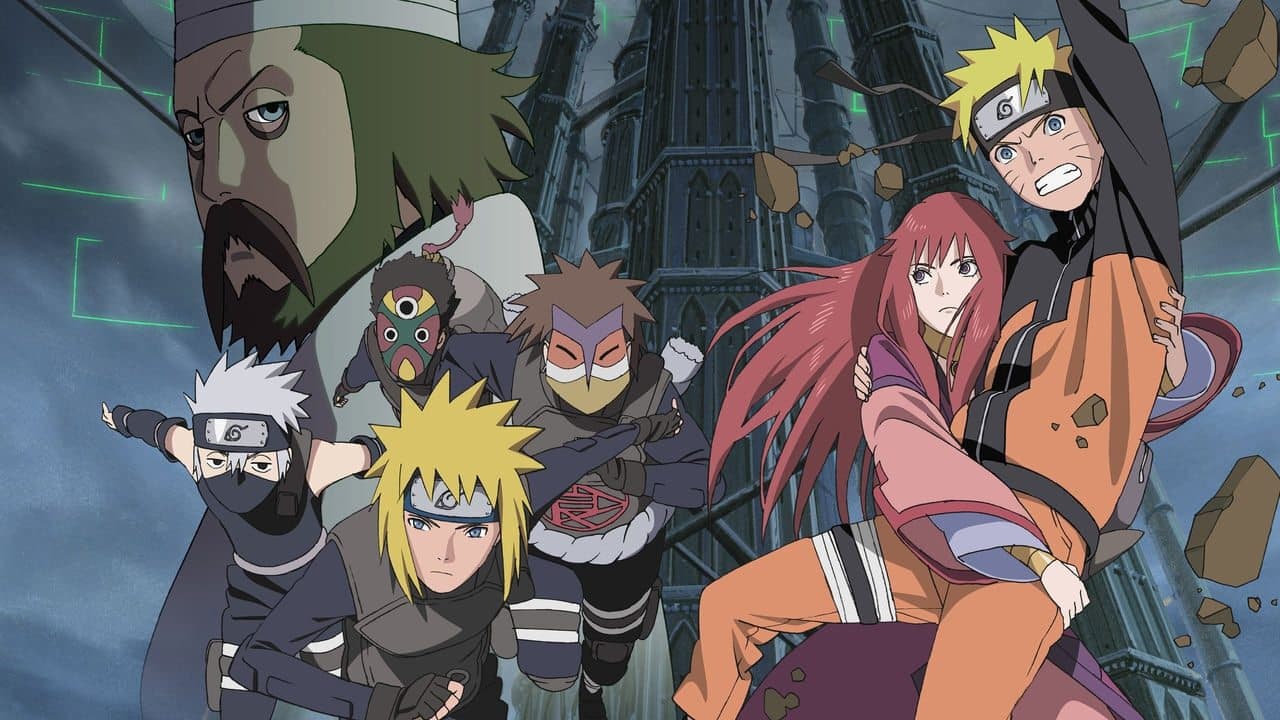

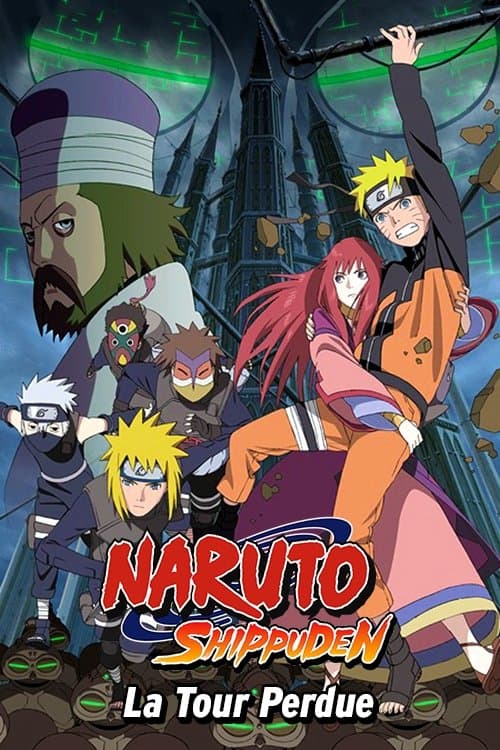
Naruto Shippuden the Movie: The Lost Tower
劇場版 NARUTO -ナルト- 疾風伝 ザ・ロストタワー
Does this age rating seem accurate to you?
Detailed parental analysis
Naruto Shippuden: The Lost Tower is an action and adventure animation film with a tense atmosphere and touches of humour characteristic of the franchise. Naruto and his team are thrown into the past and must protect a young queen whose life is threatened by a man of power willing to do anything to establish his control. The film is primarily aimed at teenagers who are fans of the series, but remains accessible to children from secondary school age onwards.
Violence
Violence is present and regular, structured around several combat sequences that form the core of the film's pacing. Naruto confronts and destroys a large number of puppet soldiers, which diminishes the direct emotional impact by avoiding face-to-face encounters with clearly identified human victims. A scene of attempted murder against the queen, as well as the revelation that a character has assassinated the queen's mother, introduce a graver criminal dimension. This violence, however, always remains within a narrative logic of protecting the innocent, and is never presented as gratifying or gratuitous. It stays within the usual conventions of the shōnen genre.
Social Themes
The film addresses the question of forced labour in a clear and repeated manner: several scenes depict characters treated as slaves, forced to labour under the coercion of an authoritarian power. This theme is not sidestepped and constitutes one of the central moral drivers of the narrative, with the villain deriving his power from the exploitation of the weakest. It is a natural entry point for a discussion with a child about social justice and abuse of authority.
Underlying Values
The film consistently upholds values of solidarity, sacrifice and protection of others, embodied notably by the character of Naruto whose generosity is the main driver of action. Friendship and loyalty towards loved ones are presented as concrete forces, capable of turning desperate situations around. Perseverance in the face of adversity is also valued without falling into performative discourse on elitism or individual achievement. These messages are coherent and sincere, with no notable moral ambiguity.
Language
The film contains a few mild swear words of a familiar register, notably phrases such as 'good grief' or the equivalent of 'drat' and 'blast' depending on the version. Nothing particularly striking or shocking, but worth noting for families who are sensitive to language in content aimed at young people.
Strengths
The film offers a well-executed time-travel plot, with sufficient internal consistency to maintain interest throughout. The character of Queen Sara benefits from writing more nuanced than the typical supporting characters of the genre, which gives a certain depth to the relationship she develops with Naruto. The whole works well as a piece of family entertainment for fans of the franchise, and the themes of exploitation and resistance to abusive power give the narrative real thematic substance, even in a short format.
Age recommendation and discussion points
The film is accessible from age 10 for a child familiar with the Naruto universe, without major reservations for a teenager aged 12 and above. After viewing, two discussion points deserve to be opened: why do certain people in the film accept being dominated and exploited, and at what point does the refusal of injustice become a duty rather than a choice?
Synopsis
Assigned on a mission to capture Mukade, a missing-nin, Naruto Uzumaki sets out for the once glorious historic ruins of "Ouran", where he pursues and corners the rouge ninja. Mukade's goal is revealed to be a dormant leyline within the ruins; he unleashes the power of the leyline, causing a light to envelop Naruto, sending him into the past, 20 years before the series began. When Naruto awakens, he comes into contact with the Fourth Hokage, Minato Namikaze.
About this title
- Format
- Feature film
- Year
- 2010
- Runtime
- 1h 45m
- Countries
- Japan
- Original language
- JA
- Directed by
- Masahiko Murata
- Main cast
- Junko Takeuchi, Kazuhiko Inoue, Toshiyuki Morikawa, Chie Nakamura, Satoshi Hino, Rikiya Koyama, Nobuaki Fukuda, Kenji Hamada, Keiko Nemoto, Saori Hayami
- Studios
- TOHO, TV Tokyo, Shueisha, Pierrot, Aniplex, dentsu, Bandai Visual
Content barometer
- Violence3/5Notable
- Fear2/5A few scenes
- Sexuality0/5None
- Language1/5Mild
- Narrative complexity2/5Moderate
- Adult themes0/5None
Watch-outs
- Death
- Abuse
- Violence
Values conveyed
- Courage
- Perseverance
- Loyalty
- friendship
- protection