
My Neighbors the Yamadas
ホーホケキョ となりの山田くん
Does this age rating seem accurate to you?
Detailed parental analysis
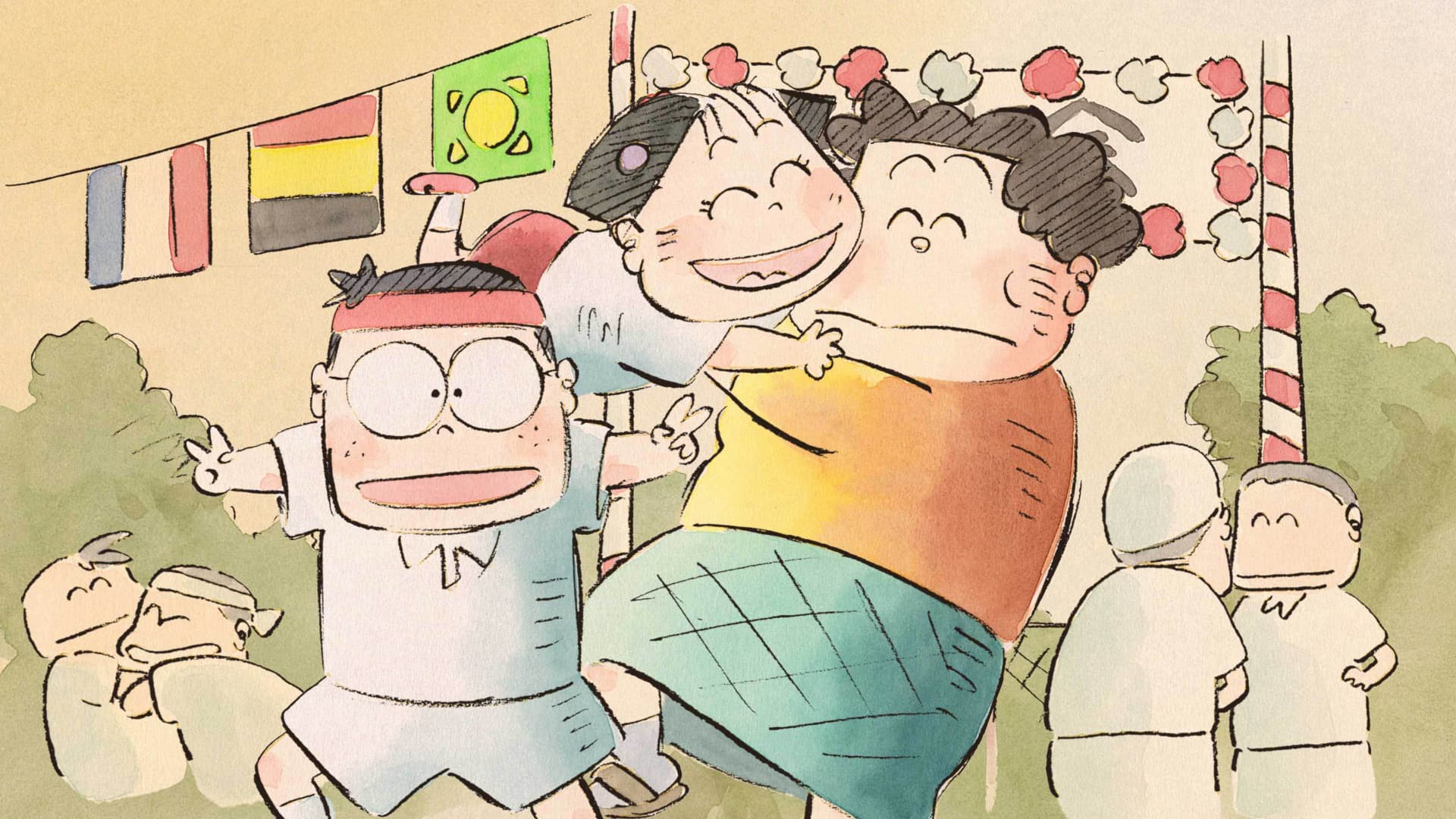
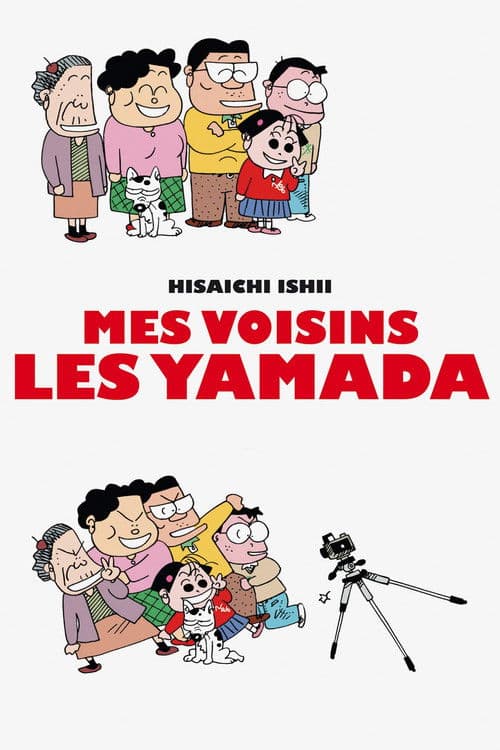
My Neighbours the Yamadas is a gentle and contemplative family comedy, constructed as a succession of sketches inspired by a Japanese newspaper comic strip. The film follows the everyday life of an ordinary Tokyo family, with its small mishaps, misunderstandings and moments of unlikely tenderness. It is primarily aimed at adults and older children, although its apparent lightness makes it accessible from primary school age with parental guidance.
Parental and Family Portrayals
The film places the family at the absolute centre of its subject matter, and this is where its essential substance lies. The father is a procrastinating salaryman, often out of his depth, incapable of fully assuming his role as head of the household. The mother is presented as a whimsical housewife, lacking rigour in domestic tasks and sometimes scatterbrained enough to forget her youngest daughter in a shopping centre. These portraits are deliberately caricatural and affectionate: the film does not condemn these imperfect parents, it loves them. The structural message is that parental imperfection does not prevent either love or family cohesion. This is a rich angle to explore with a child or teenager, particularly to distinguish what falls within tender humour and what might, in reality, raise genuine questions of responsibility.
Discrimination
The characters embody well-identified Japanese social stereotypes: the overwhelmed housewife, the unremarkable middle-ranking father, the son buckling under academic pressure. The film deliberately plays with these archetypes to highlight their absurdity and the pressure they exert on each family member. This is not a naive representation: the criticism is implicit but readable, particularly in scenes where each character fails to match what Japanese society expects of them. For a child or teenager unfamiliar with this cultural context, a brief explanation of academic and professional pressure in Japan considerably enriches the film's interpretation.
Underlying Values
The film values family resilience in the face of everyday small disasters, and places the acceptance of imperfections above any form of performance or conformism. It does not preach: it observes with a slightly ironic tenderness. Implicitly, it questions Japanese social injunctions related to work, studies and gender roles, without ever confronting them head-on. This gentle stance can be a starting point for discussing with a teenager the difference between accepting imperfections and abandoning all standards.
Substances
The father is shown smoking cigarettes in several scenes, without this being commented on or explicitly valorised. The cigarette is part of the décor of the Japanese salaryman of the 1990s and is not presented as behaviour to imitate. The impact is limited, but the subject can be briefly mentioned with a young child.
Violence
One scene involves threatening motorcyclists who briefly confront the family, before another motorcyclist intervenes to defend them. The tension is very brief, without actual physical violence, and resolved in an almost comic register. There is nothing in this film that could worry a school-age child.
Strengths
The film derives its singularity from its fragmented structure in autonomous sketches, which faithfully reproduces the rhythm of a newspaper comic strip: each sequence functions as a complete vignette, with its own punchline. This unusual form for animated cinema gives the film a rare lightness and honesty: it does not seek to construct an artificial dramatic arc, it observes. Cultural transmission is genuine, offering a precise and affectionate window onto ordinary Japanese domestic life in the 1990s. Certain sequences achieve unexpected emotional refinement, particularly those showing the grandmother as a figure of discreet wisdom. The film may, however, disconcert children accustomed to linear narration, and its mosaic structure demands a certain patience.
Age recommendation and discussion points
The film is accessible from 7 or 8 years old with parental viewing, and fully appreciated from 10 years onwards. Two discussion angles are worth exploring after viewing: ask the child whether the film's parents are good parents despite their mishaps, and why we laugh at their clumsiness rather than judge them, then explore together what the film says about the pressure society places on each family member.
Synopsis
The Yamadas are a typical middle class Japanese family in urban Tokyo and this film shows us a variety of episodes of their lives. With tales that range from the humorous to the heartbreaking, we see this family cope with life's little conflicts, problems, and joys in their own way.
About this title
- Format
- Feature film
- Year
- 1999
- Runtime
- 1h 44m
- Countries
- Japan
- Original language
- JA
- Directed by
- Isao Takahata
- Main cast
- Hayato Isohata, Masako Araki, Naomi Uno, Toru Masuoka, Yukiji Asaoka, Akiko Yano, Kosanji Yanagiya, Tamao Nakamura, Chōchō Miyako, Suguru Egawa
- Studios
- Studio Ghibli, Nippon Television Network Corporation, Tokuma Shoten, Hakuhodo
Content barometer
- Violence1/5Mild
- Fear1/5Mild
- Sexuality0/5None
- Language0/5None
- Narrative complexity2/5Moderate
- Adult themes1/5Mild
Watch-outs
- Alcohol
- Gender stereotypes
Values conveyed
- Acceptance of difference
- Compassion
- family
- humor
- warmth
- everyday life