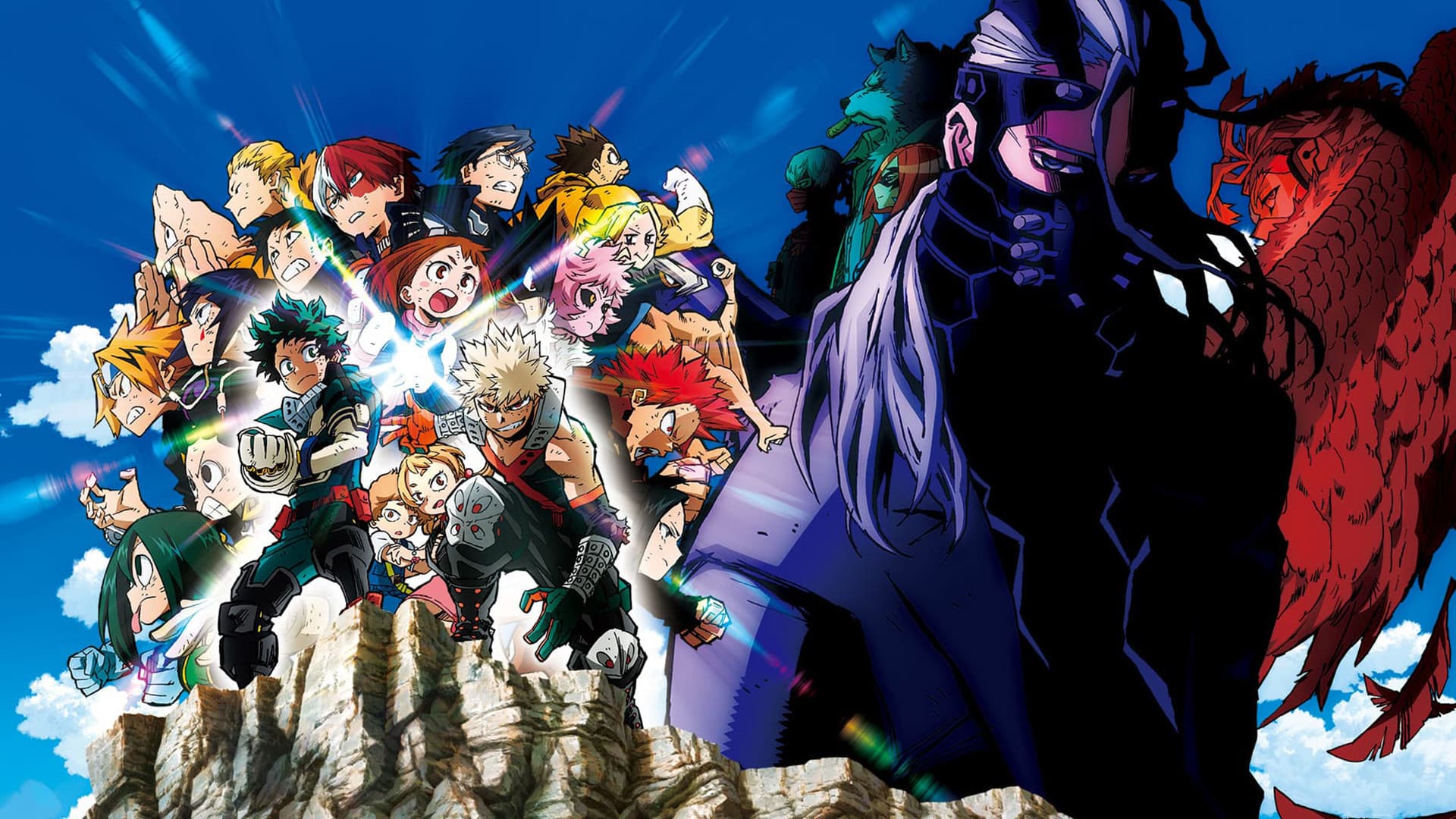

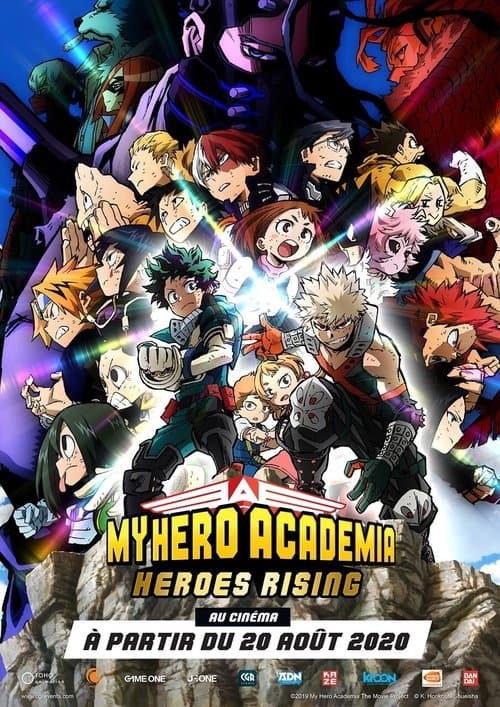
My Hero Academia: Heroes Rising
僕のヒーローアカデミア THE MOVIE ヒーローズ:ライジング
Does this age rating seem accurate to you?
Detailed parental analysis
My Hero Academia: Heroes Rising is a shonen animation film with explosive energy and elevated emotional tone, built upon the universe of the eponymous manga franchise. The plot follows a group of young heroes in training who must protect an isolated island against a powerful and merciless villain, without the support of professional adults. The film is aimed primarily at adolescents and young adults already familiar with the franchise, though a curious newcomer to action Japanese animation will find plenty to engage with.
Violence
Violence is the primary driving force of the film and occupies a substantial portion of the narrative. Confrontations are frequent, intense and visually spectacular: punches, throws, strangulation, massive infrastructure destruction and explosions follow one after another without prolonged respite. One scene is particularly striking: a villain seizes a young girl by the throat whilst explicitly threatening to suffocate her. Violence is nonetheless inscribed within a clear heroic logic, directed towards protecting others rather than towards the pleasure of causing harm, which gives it a readable narrative purpose for teenagers. It remains stylised and non-graphic, but its sustained intensity and frequency render it unsuitable for younger children.
Underlying Values
The narrative is structured around strong and coherent values: willing sacrifice for the benefit of the group, cooperation as a condition for the impossible, and perseverance in the face of overwhelming adversity. The film pushes the logic of self-giving far, to the point of a central personal sacrifice that touches upon the very identity of the main character. This emotional radicality is both the film's strength and its most valuable point for discussion with a teenager: how far should one sacrifice oneself for others, and at what cost?
Sex and Nudity
A female character is regularly shown wearing very short clothing, with visible cleavage and a miniskirt that rides up to her underwear in several shots. This hypersexualisation, characteristic of a certain register of shonen animation, is not connected to a narrative arc: it is purely decorative and repeated. This is the most questionable aspect of the film regarding representations, particularly for adolescents in the process of forming their relationship with bodies and gender.
Language
The language is moderately crude, with regular occurrences of 'damn' and 'dammit', and a few stronger words such as 'bastards' or 'hell', chiefly in scenes of tension. Nothing that exceeds what is commonly found in this type of action-adventure production, but it is worth flagging for parents of younger children.
Substances
A villain is shown smoking a cigar, without this being valorised or commented upon. The presence is incidental but visible.
Strengths
The film deploys a sense of pacing and effective dramatic construction, with a build-up of tension that delivers on its promises through to an emotionally strong climax. Attachment to the characters, built across several seasons of the series, is skillfully exploited to lend weight to narrative choices without requiring lengthy exposition. The themes of sacrifice, transcending one's limits and the transmission between generations of heroes are treated with a sincerity that exceeds pure action entertainment. For a teenager who is a fan of the franchise, the film also functions as an exploration of what it means to grow up and take responsibility when faced with a situation that exceeds one's capabilities.
Age recommendation and discussion points
The film is suitable from age 12 onwards for adolescents familiar with the universe, with particular attention for the younger end of this range owing to the intensity of the violence scenes and the presentation of the hypersexualised female character. Two angles of discussion are worthwhile after viewing: ask the adolescent what they think of the sacrifice made by the hero and whether this form of self-denial seems right or excessive to them, then return to the way the female character is dressed and filmed in comparison to others, to open a conversation about representations of the body in animation.
Synopsis
Class 1-A visits Nabu Island where they finally get to do some real hero work. The place is so peaceful that it's more like a vacation... until they're attacked by a villain with an unfathomable Quirk! His power is eerily familiar, and it looks like Shigaraki had a hand in the plan. But with All Might retired and citizens' lives on the line, there's no time for questions. Deku and his friends are the next generation of heroes, and they're the island's only hope.
About this title
- Format
- Feature film
- Year
- 2019
- Runtime
- 1h 44m
- Countries
- Japan
- Original language
- JA
- Directed by
- Kenji Nagasaki
- Main cast
- Daiki Yamashita, Nobuhiko Okamoto, Yoshio Inoue, Mio Imada, Yuka Terasaki, Tomoyo Kurosawa, Yuki Kaji, Kaito Ishikawa, Ayane Sakura, Toshiki Masuda
- Studios
- BONES, dentsu, movic, Nippon Television Network Corporation, Shueisha, Sony Music Entertainment (Japan), Yomiuri Telecasting Corporation, TOHO
Content barometer
- Violence4/5Strong
- Fear3/5Notable tension
- Sexuality2/5Mild
- Language2/5Moderate
- Narrative complexity2/5Moderate
- Adult themes1/5Mild
Watch-outs
- Death
- Gender stereotypes
- Violence
Values conveyed
- Courage
- Perseverance
- Loyalty
- friendship
- teamwork
- protection