
He-Man and the Masters of the Universe
He-Man and the Masters of the Universe
Your feedback improves this guide
Your feedback highlights guides that need a second look and keeps the rating trustworthy.
Does this age rating seem accurate to you?
Sign in to vote
Watch-outs
What this film brings
Content barometer
Violence
3/5
Notable
Fear
3/5
Notable tension
Sexuality
0/5
None
Language
1/5
Mild
Narrative complexity
1/5
Accessible
Adult themes
0/5
None
Expert review
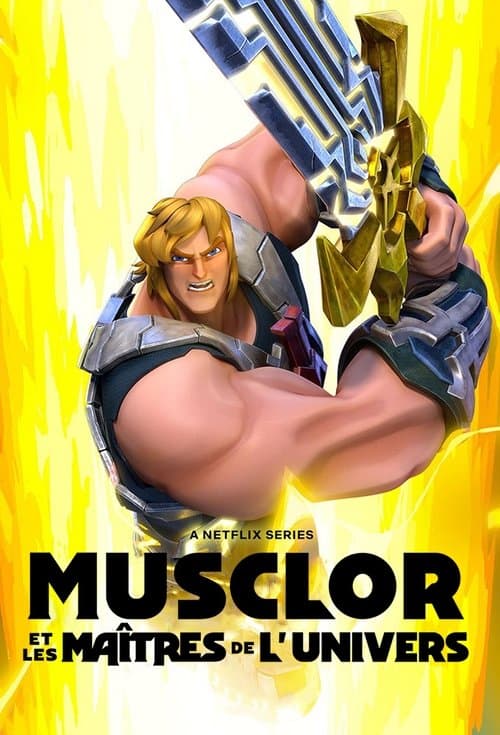
This 2021 Netflix animated series reimagines the classic He-Man franchise with a modern take, focusing on a young amnesiac prince who discovers his powers and builds alliances to protect the planet Eternia from his uncle turned evil sorcerer. The atmosphere blends heroic fantasy and teen humor, with frequent battles, unsettling creatures, and a clearly threatening antagonist, making it noticeably more intense than the original 1980s cartoon. Sensitive elements include recurring sword and fantasy weapon fights, occasionally striking physical transformations, the presence of Skeletor whose skull-faced design and menacing demeanor may unsettle younger viewers, and a central storyline built around family betrayal. These elements appear at a sustained pace throughout the series without being graphically violent, but with enough visual and emotional intensity to unsettle very young or sensitive children. Parents may want to watch alongside their children to help contextualize the action sequences and open a conversation about the themes of identity, loyalty, and belonging that run throughout the story.
Synopsis
Mighty teen Adam and his heroic squad of misfits discover the legendary power of Grayskull — and their destiny to defend Eternia from sinister Skeletor.
Difficult scenes
Keldor's transformation into Skeletor is one of the most striking moments in the series. Adam's uncle undergoes a physical metamorphosis that strips the flesh from his face to reveal a living skull. The scene is presented in a stylized manner but remains visually arresting and may surprise or frighten children under 8, especially since it is tied to a painful family betrayal. Battles between He-Man and Skeletor's henchmen, particularly Beast Man and Trap Jaw, occur frequently and involve repeated blows, throws, and environmental destruction. No blood is shown, but the physical violence is sustained and characters are placed in credible life-threatening danger on multiple occasions. Skeletor is designed as a genuinely intimidating villain, with a deep voice, a prominent skeletal design, and clearly malevolent intentions. His on-screen presence is consistently associated with a dark and threatening atmosphere that may weigh on young or particularly sensitive children. The story places Adam in a prolonged situation of amnesia and family separation, compounded by betrayal from a trusted adult figure. This emotional layer of loss, broken trust, and uncertain identity may resonate differently depending on the child's sensitivity, even though it is handled within an adventure framing rather than an explicitly dramatic one.
Where to watch
No verified platform for the US market yet. We keep this section updated as availability changes.
Availability checked on Apr 03, 2026
About this title
- Format
- TV series
- Year
- 2021
- Runtime
- 25m
- Countries
- United States of America
- Original language
- EN
- Directed by
- Rob David
- Main cast
- Yuri Lowenthal
- Studios
- Mattel Television
Content barometer
Violence
3/5
Notable
Fear
3/5
Notable tension
Sexuality
0/5
None
Language
1/5
Mild
Narrative complexity
1/5
Accessible
Adult themes
0/5
None
Expert review
This 2021 Netflix animated series reimagines the classic He-Man franchise with a modern take, focusing on a young amnesiac prince who discovers his powers and builds alliances to protect the planet Eternia from his uncle turned evil sorcerer. The atmosphere blends heroic fantasy and teen humor, with frequent battles, unsettling creatures, and a clearly threatening antagonist, making it noticeably more intense than the original 1980s cartoon. Sensitive elements include recurring sword and fantasy weapon fights, occasionally striking physical transformations, the presence of Skeletor whose skull-faced design and menacing demeanor may unsettle younger viewers, and a central storyline built around family betrayal. These elements appear at a sustained pace throughout the series without being graphically violent, but with enough visual and emotional intensity to unsettle very young or sensitive children. Parents may want to watch alongside their children to help contextualize the action sequences and open a conversation about the themes of identity, loyalty, and belonging that run throughout the story.
Synopsis
Mighty teen Adam and his heroic squad of misfits discover the legendary power of Grayskull — and their destiny to defend Eternia from sinister Skeletor.
Difficult scenes
Keldor's transformation into Skeletor is one of the most striking moments in the series. Adam's uncle undergoes a physical metamorphosis that strips the flesh from his face to reveal a living skull. The scene is presented in a stylized manner but remains visually arresting and may surprise or frighten children under 8, especially since it is tied to a painful family betrayal. Battles between He-Man and Skeletor's henchmen, particularly Beast Man and Trap Jaw, occur frequently and involve repeated blows, throws, and environmental destruction. No blood is shown, but the physical violence is sustained and characters are placed in credible life-threatening danger on multiple occasions. Skeletor is designed as a genuinely intimidating villain, with a deep voice, a prominent skeletal design, and clearly malevolent intentions. His on-screen presence is consistently associated with a dark and threatening atmosphere that may weigh on young or particularly sensitive children. The story places Adam in a prolonged situation of amnesia and family separation, compounded by betrayal from a trusted adult figure. This emotional layer of loss, broken trust, and uncertain identity may resonate differently depending on the child's sensitivity, even though it is handled within an adventure framing rather than an explicitly dramatic one.