
Mulan
Does this age rating seem accurate to you?
Detailed parental analysis
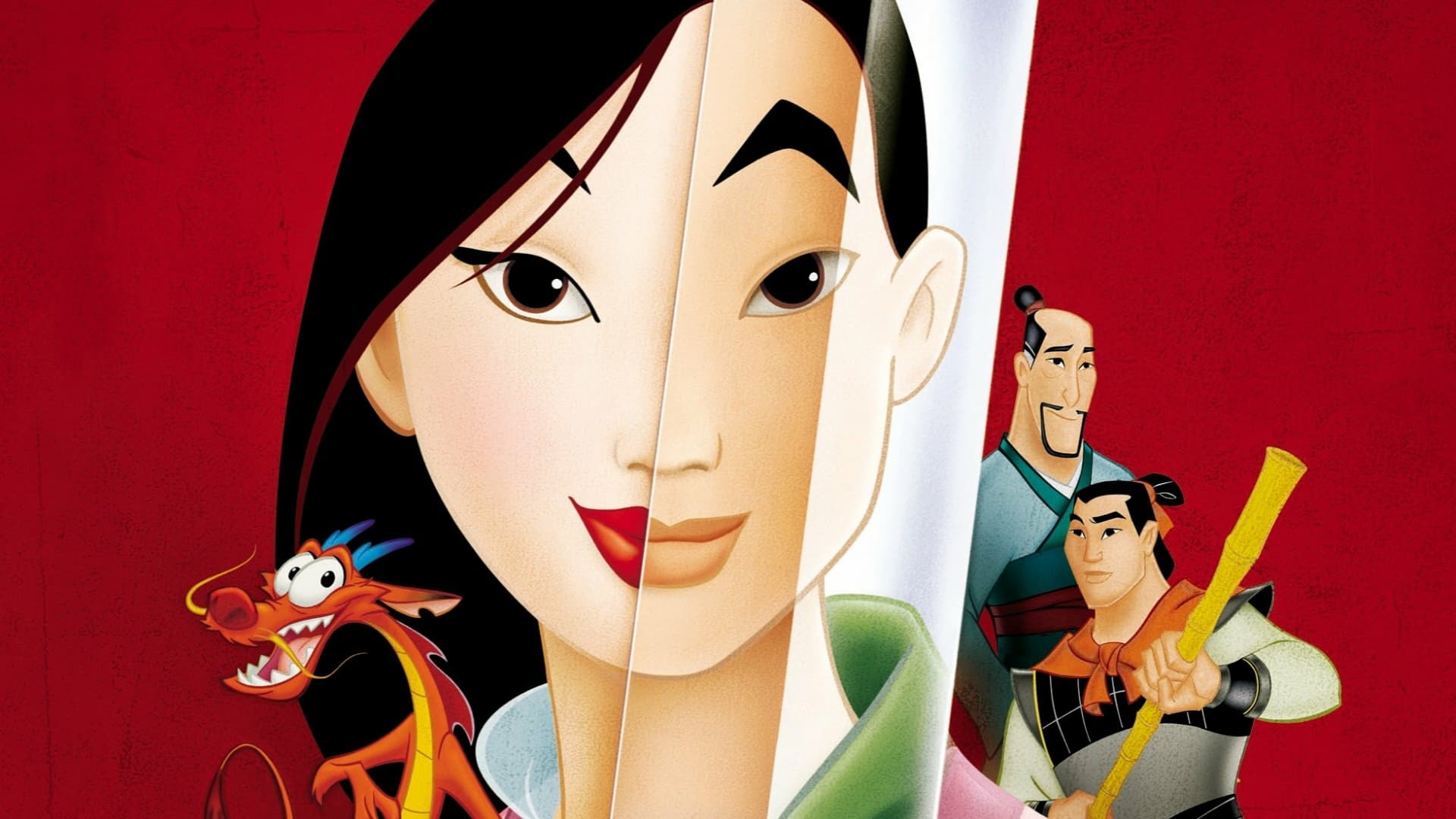
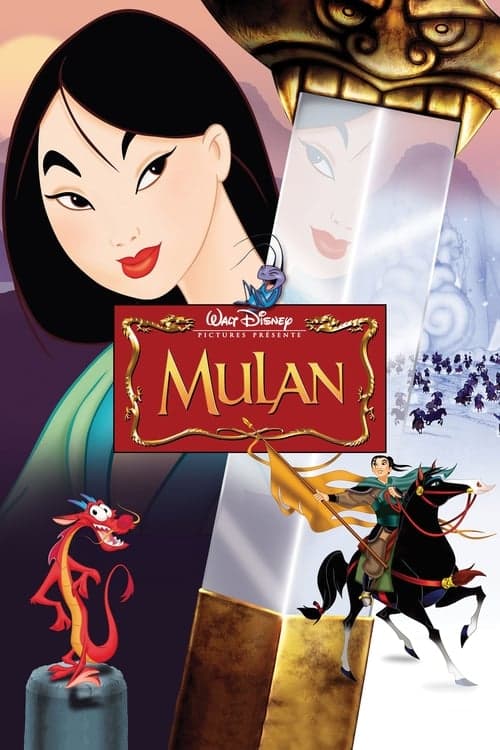
Mulan is a Disney animated film with contrasting atmosphere, alternating between lightness and frankly dark passages. The plot follows a young woman who disguises herself as a man to take her ageing father's place in the Chinese imperial army and face an invasion. The film is aimed primarily at children from 7-8 years old and pre-teenagers, but its sequences of violence and themes of war make it an object for supervised parental viewing for younger audiences.
Violence
Violence is the most striking dimension of the film for a young audience. One sequence shows a village reduced to ashes with visible corpses in the snow, including a child's doll placed against a dead man's sword: the image is sober but of genuine emotional brutality. Bodies pierced by arrows and amputated limbs also appear. The avalanche triggered by Mulan buries an entire army before the viewer's eyes. These elements serve the gravity of the war narrative and are not gratuitous, but their intensity clearly exceeds what one spontaneously associates with a family animated film. For a sensitive child under 8 years old, these scenes can leave difficult images behind.
Underlying Values
The film builds its narrative around a tension between conformity and self-assertion: Mulan transgresses gender norms and filial obedience to act according to her own moral compass, and it is precisely this transgression that saves China. The narrative thus clearly values individual autonomy and meritocracy over blind respect for tradition. This orientation actually led the film to be perceived as culturally discordant upon its release in China, where Confucian values of modesty, filial piety and collective belonging dominate. This is a rich angle for discussion with an adolescent: can one distinguish the universal values of a narrative from the specific culture that clothes them?
Discrimination
The film places explicit gender discrimination at the heart of its plot: women are excluded from the army, confined to marriage and submission, and Mulan must pass herself off as a man to be taken seriously. The narrative does not naturalise these inequalities; it puts them to the test and exposes them as unjust. On the other hand, a few secondary male characters fall into stereotyped comic register. Overall, this presents no moral problem, but offers a natural opportunity to discuss with a child what it means to have a role imposed by society and the legitimacy of refusing it.
Parental and Family Portrayals
Mulan's father occupies a central symbolic place. An honourable man exhausted by his wounds, he embodies a loving but rigid authority, rooted in military code and family pride. The father-daughter relationship is the emotional engine of the film: Mulan acts partly to protect him, but above all to earn a recognition that transcends traditional expectations. The resolution of this arc is one of the film's strongest moments, and can open a conversation about what each person seeks to prove to their parents, and why.
Sex and Nudity
A scene briefly shows Mulan naked behind a screen before a bath, then a collective bathing scene with soldiers. These sequences are treated in a comic register and are not sexualised, but they deserve to be flagged for families who wish to anticipate questions from a young child.
Social Themes
War structures the entire narrative and is never softened: the human consequences of combat are shown without detour. The film also addresses the question of individual sacrifice for collective good, and explores in the background the relationship between personal identity and national belonging. These dimensions give the film a thematic density rare for the genre.
Strengths
Mulan is one of the Disney animated films of the 1990s that most frankly assumes a dramatic tone, without seeking to soften everything. The writing of the heroine is solid: her motivations are complex, her mistakes have real consequences, and her success rests on ingenuity rather than magical power. The original score and artistic direction restore an aesthetic inspired by traditional Chinese painting with visible care. From a pedagogical standpoint, the film offers a gateway into Chinese history and culture, even if this entry remains filtered through a Western lens that is better named with an adolescent. The tension between cultural belonging and individual assertion makes this film a more stimulating object of discussion than the average of its kind.
Age recommendation and discussion points
The film is suitable from 8 years old with supervised viewing, and can be watched confidently from 10 years old. For sensitive children, the scenes of destroyed village and corpses in the snow deserve verbal preparation before viewing. Two angles naturally lend themselves to discussion: why must Mulan lie about her identity to be useful and recognised, and what does this say about the rules that society imposes according to each person's gender? You can also ask the child whether Mulan would have been right to obey her father and stay at home.
Synopsis
When Imperial China calls one man from every family to defend the empire from invading Huns, a young woman disguises herself as a soldier to take her ailing father’s place. Facing ruthless invaders, brutal training, and the risk of execution if discovered, she must decide who she truly is— and what she’s willing to fight for.
About this title
- Format
- Feature film
- Year
- 1998
- Runtime
- 1h 28m
- Countries
- United States of America
- Original language
- EN
- Studios
- Walt Disney Feature Animation, Walt Disney Pictures
Content barometer
- Violence3/5Notable
- Fear3/5Notable tension
- Sexuality1/5Allusions
- Language0/5None
- Narrative complexity1/5Accessible
- Adult themes0/5None
Watch-outs
- Death
- Violence
Values conveyed
- Courage
- Perseverance
- Loyalty
- Autonomy
- family
- identity