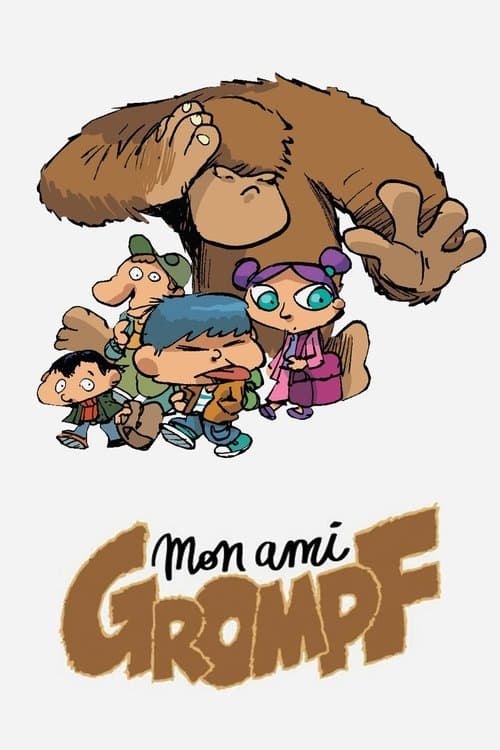
Mon ami Grompf
Does this age rating seem accurate to you?
Detailed parental analysis
My Friend Grompf is a light-hearted family comedy with a brisk pace, sustained by a warm atmosphere and repeated slapstick situations. The plot follows Arthur, a boy who befriends a whimsical creature named Grompf, whose antics regularly turn the family upside down. The film targets young children from around five or six years old, with no ambition to appeal to teenagers or adults beyond ironic enjoyment.
Underlying Values
The film carries a clear message about friendship despite differences: Arthur and Grompf form a duo where loyalty matters more than likeness, which constitutes the film's most solid narrative foundation. In parallel, the story establishes a logic in which adults are systematically overwhelmed, mocked or circumvented, whilst it is the child who attempts to maintain some semblance of reason. This inversion is not presented critically but as a source of comic pleasure, which merits pointing out to the child: in real life, adult authority has genuine utility. Criticism of parental over-caution is present and offers an opportunity for discussion, even if it remains within the classical conventions of the genre.
Parental and Family Portrayals
The father is the most caricatured character: grumpy, often out of his depth, regularly the victim of situations created by Grompf, he nonetheless ends up giving in, which makes him likeable without being truly credible. The mother is loving and well-meaning, but narratively sidelined. This pattern of the ridiculed father and the gentle mother is a classic of the genre, but its repetition establishes a representation of the father as a comic figure rather than as a point of reference. It is worth not leaving this image without comment, particularly with young children who easily internalise this type of model.
Discrimination
An antagonistic character is represented with caricatured physical traits, spectacles, sallow complexion and protruding teeth, visually signalling his wickedness. This association between physical appearance and moral value is an old narrative stereotype, but its unquestioned use in a children's film merits explicit mention. A brief conversation after viewing, to remind that one does not judge someone by their appearance, is sufficient to defuse the effect.
Sex and Nudity
The film introduces a slight romantic subplot between Arthur and a classmate named Nathalie, without ever going beyond the stage of childish infatuation. Grompf sometimes interferes in this relationship, which generates harmless comic situations. No nudity, no suggestive content.
Strengths
The film delivers on its promise of offering clean comic material, without scatology or vulgarity, in a genre where such shortcuts are frequent. The friendship between Arthur and Grompf is treated with a sincerity that works for young viewers, and the theme of an only child finding in an atypical companion a form of kinship is honestly embodied. The irony, readable for parents, also offers a few moments of intergenerational complicity without condescension. It is a film modest in its ambitions, but solid in its execution for the audience it targets.
Age recommendation and discussion points
The film is suitable from age five, and can be shared peacefully with children of that age without particular preparation. Two angles of discussion are worth opening after viewing: why is the father always the one who makes a fool of himself, and does this match what the child observes in their own family? And most importantly, can one really tell whether someone is kind or wicked just by looking at their face?
Synopsis
This is the story of a little boy who feels very alone at home. To remedy this, his dad decided to offer him a pet. He comes face to face with a monkey in a box; the seller explained that this is a Tibetan dwarf monkey. In fact, it was a yeti! And the animal takes up space in the family that lives to the rhythm of the big blunders and hairy little master.
About this title
- Format
- TV series
- Year
- 2011
- Runtime
- 13m
- Countries
- France
- Original language
- FR
- Directed by
- Patrick George, Bruno Chevrier
- Main cast
- Benoît Allemane, Fanny Bloc, Nathalie Bienaimé, Martial Le Minoux
- Studios
- France Télévisions
Content barometer
- Violence1/5Mild
- Fear2/5A few scenes
- Sexuality0/5None
- Language0/5None
- Narrative complexity1/5Accessible
- Adult themes0/5None
Watch-outs
- Gender stereotypes
Values conveyed
- Friendship
- Acceptance of difference
- Loyalty
- family
- acceptance