
Mobile Suit Gundam Hathaway
機動戦士ガンダム 閃光のハサウェイ
Does this age rating seem accurate to you?
Detailed parental analysis
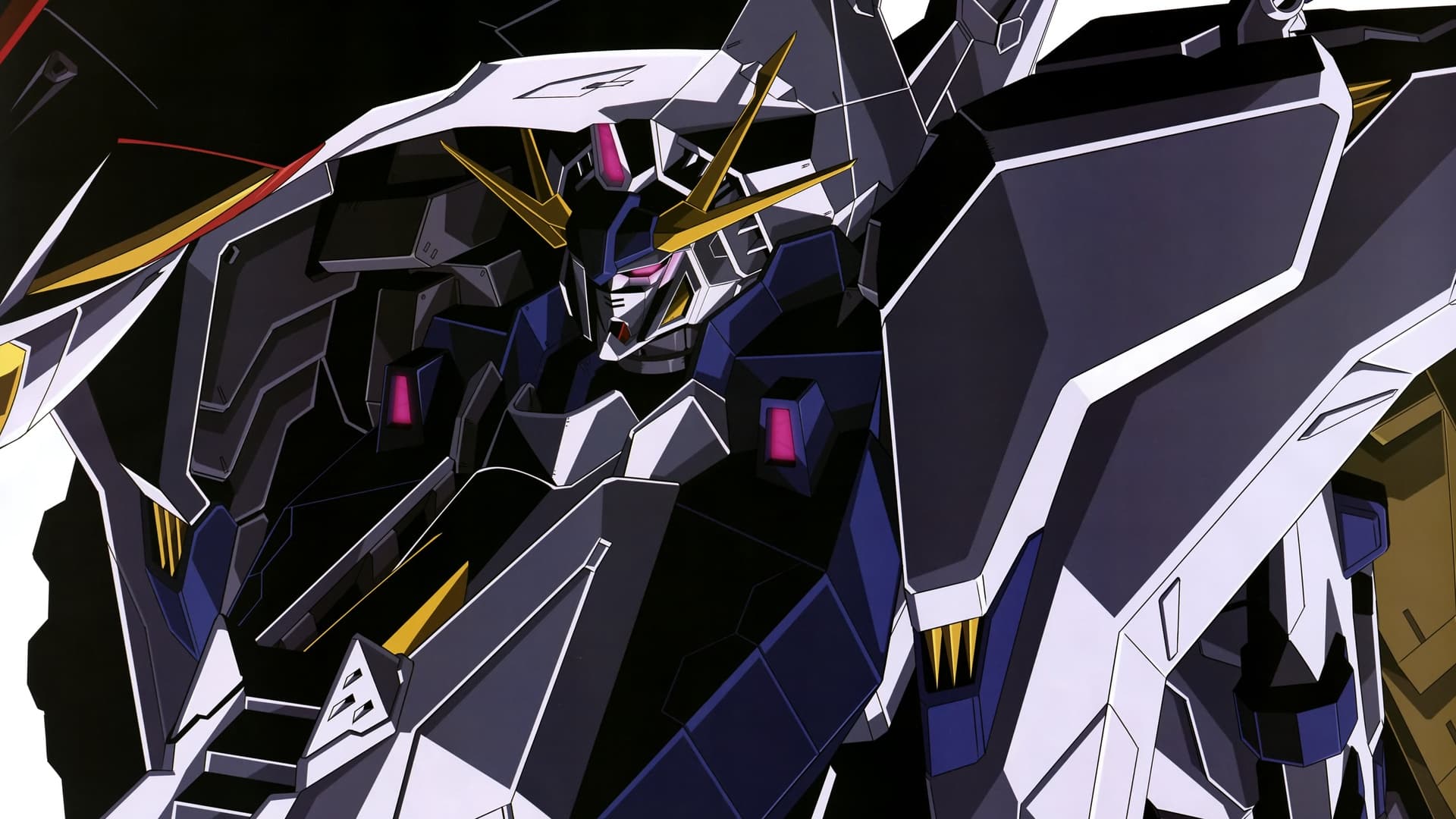
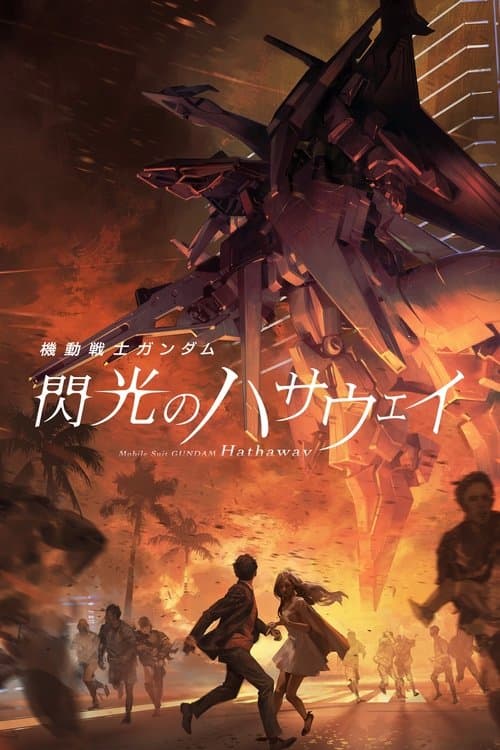
Mobile Suit Gundam: Hathaway's Flash is a military science-fiction animated film with a dense and dark atmosphere, intended for adult or older teenage audiences. It follows Hathaway Noa, the son of a famous admiral, who secretly leads an anti-government terrorist organisation whilst becoming entangled in a troubling encounter with a mysterious woman and a federal officer. The film is set within an expansive universe that requires prior familiarity with the Gundam saga, and is not suited to uninitiated audiences or children under fourteen.
Violence
Violence is omnipresent and forms the very fabric of the film. From the opening, passengers are shot at close range with machine gun fire and visible blood, in a sequence that establishes trauma without softening it. Battles between giant robots devastate urban areas through bombardments, explosions and fires that trigger civilian panic. An interrogation scene shows an officer crushing a suspect's head against a table. This violence is never gratuitous in the strict sense: it serves real narrative and moral tension surrounding the consequences of terrorism and the use of force. Nevertheless, it remains intense, repeated, and little softened, making it unsuitable for children and pre-adolescents.
Underlying Values
The film constructs a profoundly ambiguous protagonist: Hathaway believes in a just cause but employs terrorist methods, and the narrative takes no clear position on this contradiction. This moral ambiguity is one of the film's strengths and one of its challenges for a young viewer, as no character serves as a clear ethical compass. The narrative offers no reassuring answers about the legitimacy of political violence, nor about the boundary between resistance and terrorism. This is rich material for parent-child discussion, but it requires sufficient maturity to not receive the moral ambiguity as a validation.
Social Themes
The film takes place in a dystopian future where a corrupt governmental elite dominates an impoverished and displaced population. Criticism of institutional totalitarianism and the concentration of power is central, even if it remains in the background rather than made explicit. The question of armed resistance against an unjust system runs throughout the narrative without being resolved. These political themes are treated with a certain sophistication, without manichaeism, which makes them stimulating for a curious teenager but disorienting for someone approaching the film without contextual background.
Sex and Nudity
One scene shows a female character appear in a bra, remove it and cover her breasts with her hands for several seconds. This sequence is not explicit but carries a clear suggestive dimension. Allusions to spending the night together and sharing a hotel suite are present in the dialogue. These elements remain in the realm of suggestion without becoming explicit, but they contribute to placing the film outside the scope of young adolescents.
Substances
Wine and cocktails are shown consumed on several occasions in social and diplomatic contexts. Alcohol is neither valorised nor criticised: it forms part of the film's social class décor, associated with an elite on display. No drugs are present. This point is minor but worth noting for families attentive to such representations.
Strengths
The film impresses through its ability to construct political and emotional tension without resorting to narrative shortcuts. The writing of the main character is of genuine subtlety: a man convinced of the righteousness of his cause but eaten away by the concrete implications of his actions, which gives the film a rare depth within the genre. The direction effectively alternates moments of intimacy with the chaos of combat, and the artistic direction is carefully crafted. For a teenager or adult familiar with the Gundam universe, the film offers a serious entry into questions of political philosophy and situational morality, which gives it value far beyond simple action entertainment.
Age recommendation and discussion points
The film is not recommended before age 14 due to explicit violence, traumatic sequences and the unresolved moral complexity of the narrative. A truly comfortable viewing is better suited to age 16 onwards, at which point a teenager has the tools to inhabit the ambiguity of the protagonist without receiving it as a model. Two discussion angles emerge after viewing: firstly, the question of whether a just cause justifies violent means, and secondly, why the film refuses to give a clear answer and what this narrative choice says about the real nature of political conflicts.
Synopsis
Twelve years after Char's rebellion, Hathaway Noa leads an insurgency against Earth Federation, but meeting an enemy officer and a mysterious woman alters his fate.
Where to watch
Availability checked on Apr 26, 2026
About this title
- Format
- Feature film
- Year
- 2021
- Runtime
- 1h 36m
- Countries
- Japan
- Original language
- JA
- Directed by
- Shukou Murase
- Main cast
- Kensho Ono, Reina Ueda, Junichi Suwabe, Soma Saito, Atsumi Tanezaki, Kenjiro Tsuda, Toru Furuya, Shunpei Kusano, Atsuko Sakuraoka, Eiji Yoshitomi
- Studios
- SUNRISE, TFC