Mickey's Good Deed
Does this age rating seem accurate to you?
Detailed parental analysis
Mickey's Christmas Carol is a 1932 Disney animated short with a melancholic tone and restrained lyricism that contrasts sharply with the cheerful image usually associated with the character. The plot follows Mickey who, in order to give Christmas gifts to an impoverished family, consents to part with what he holds most dear. The film appears on the surface to be aimed at young children, but its dark emotional register and social themes make it more suitable for a somewhat more mature audience, accompanied by an adult.
Underlying Values
Sacrifice is the moral engine of the narrative: Mickey willingly gives up his only companion to relieve a family in destitution. This gesture is not presented as heroic or obviously rewarded, which lends it genuine depth. In counterpoint, the film draws a severe portrait of wealth: the rich child refuses all his toys yet covets what belongs to others, symbolising greed incapable of satisfaction even in abundance. Generosity here is costly and sincere, not spectacular. It is solid ground for discussion with a child about the difference between giving what is not needed and giving what truly matters.
Social Themes
The film is made in the midst of the Great Depression and carries that reality without evasion: a mother in tears, hungry children, a father imprisoned, visible destitution. These images are not softened. Poverty is not a picturesque backdrop but a precise condition, treated with a gravity rare in animation of that era. The reference to the imprisoned father, even if brief, introduces the carceral system as an element of family context, without explanation or judgment. For a young child, this social density can be destabilising; for an older child, it opens a valuable conversation about inequality and solidarity.
Parental and Family Portrayals
Parental figures are dual and contrasted. On the side of the poor family, the mother is loving but helpless, in tears at her inability to provide Christmas for her children, and the father is absent because imprisoned. On the side of the rich family, the father is authoritarian and quick to correct his son with a spanking administered on screen, a gesture presented as deserved punishment in the face of the child's tantrums. This last scene provokes legitimate discomfort: corporal punishment is normalised here, even implicitly applauded by the narrative structure. This is a point to name clearly with a child, distinguishing what the film presents as just from what is now recognised as inappropriate.
Violence
Violence is present in two distinct forms. The rich child mistreats Pluto repeatedly: blows, thrown objects, brutal handling of the animal. These scenes are prolonged enough to be disturbing, particularly for a child attached to animals. The spanking administered to the same child is visible and explicit. None of these violences is gory, but they are not inconsequential: animal cruelty especially risks marking a sensitive young viewer, and corporal punishment is treated as a comic and deserved epilogue rather than as a problem.
Strengths
The film strikes through its narrative economy: in a few minutes, without elaborate dialogue, it manages to establish genuine emotion and construct a convincing moral opposition. The scene of separation between Mickey and Pluto achieves an emotional sincerity unusual for a short film of that era. The animation, sober and effective, serves the purpose without embellishment. On an educational level, the film is an authentic historical document of the spirit of solidarity in times of crisis, and its brevity makes it accessible as a starting point for a conversation about what truly giving means.
Age recommendation and discussion points
The film is not recommended for children under 5 and is best viewed from age 6 or 7 onwards, accompanied by an adult available to discuss it. Two angles of discussion naturally impose themselves: why does Mickey choose to give something that genuinely costs him, rather than a mere surplus, and how does one react to the spanking of the rich child, a scene the film treats as a comic ending but which deserves to be named for what it is.
Synopsis
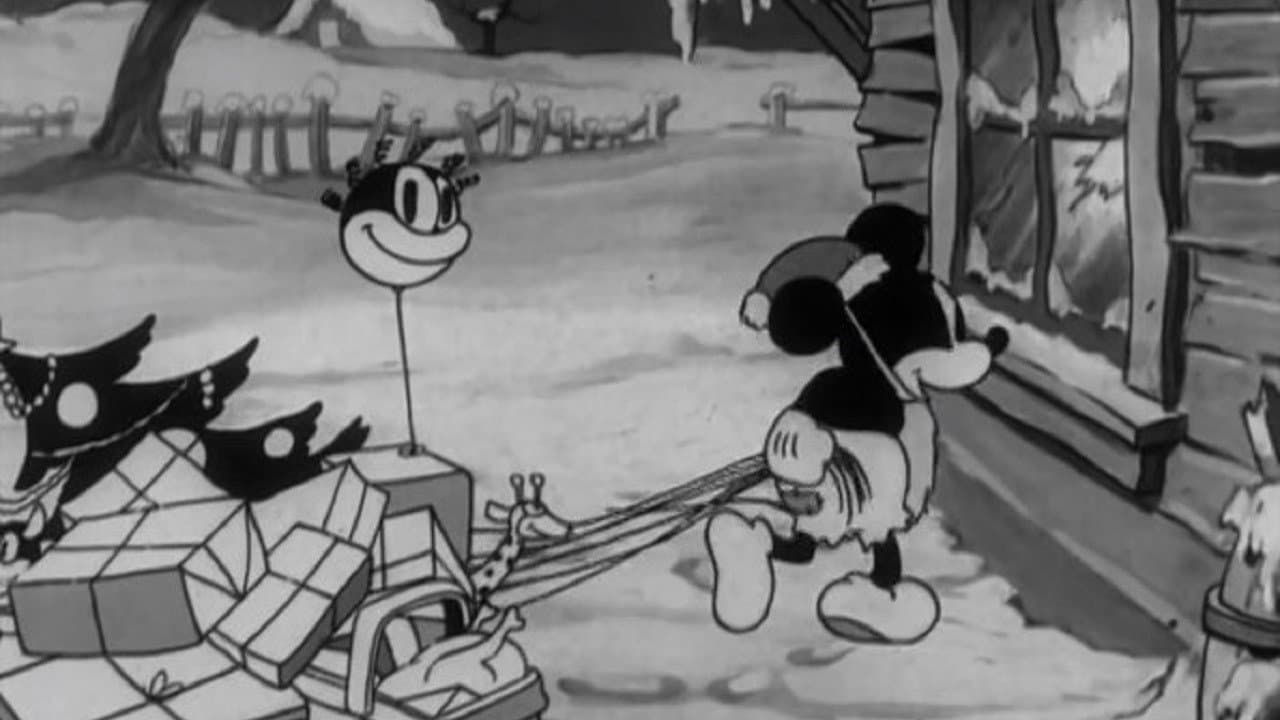
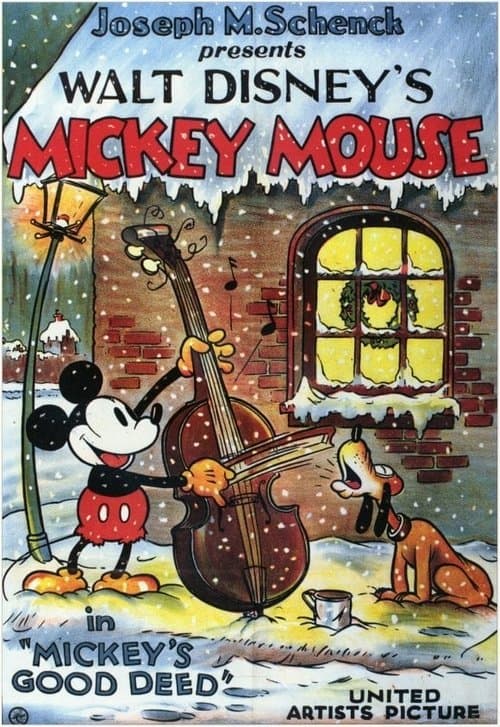
Mickey is playing Christmas carols on a standup bass for change. Alas, all he gets is screws, rocks, and other useless stuff. He plays outside a rich man's window, and the spoiled brat kid inside decides he wants Pluto. Mickey isn't selling, but when his bass gets destroyed by a passing sleigh and he sees a house full of orphans with no presents, he changes his mind. Mickey plays Santa to the kids. Meanwhile, the brat has been torturing Pluto; his father finally has enough and throws Pluto out and spanks the child. Pluto and Mickey are reunited, and as a bonus, the kid has tied the Christmas turkey to Pluto's tail. (Also included: Chip an' Dale 1947, Lend a Paw 1941)
About this title
- Format
- Short film
- Year
- 1932
- Runtime
- 7m
- Countries
- United States of America
- Original language
- EN
- Studios
- Walt Disney Productions
Content barometer
- Violence2/5Moderate
- Fear2/5A few scenes
- Sexuality0/5None
- Language0/5None
- Narrative complexity0/5Simple
- Adult themes0/5None
Watch-outs
- Grief
- Abuse
- Death / grief
Values conveyed
- Compassion
- friendship
- generosity
- empathy
- kindness