

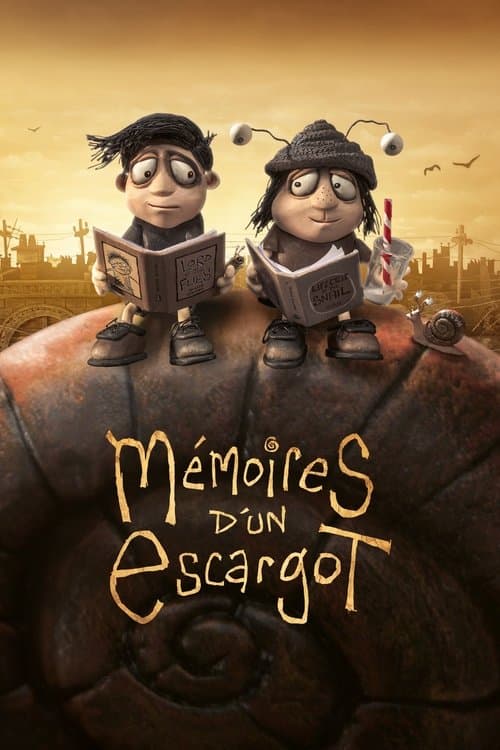
Memoir of a Snail
Does this age rating seem accurate to you?
Detailed parental analysis
Memoirs of a Snail is an animated film for adults with a dark and melancholic atmosphere, which follows Grace, a solitary and marginalised young woman, as she retraces the thread of her troubled life during a conversation with her pet snail. The narrative spans her heroine's childhood, adolescence and adulthood through a succession of losses, separations and decisive encounters. The film is exclusively aimed at an adult or emotionally mature older teenage audience, and its animated form must in no way lead one to believe it is suitable for children.
Underlying Values
The film constructs its central reflection around the question of whether one can live fully despite an accumulation of traumas. The answer it proposes is affirmative but clear-eyed: hope does not erase pain, it coexists with it. The metaphor of the snail and its shell carries the idea that withdrawing into oneself is an understandable protection but not a destination. Genuine friendship, notably the bond between Grace and an eccentric old lady, is presented as a concrete antidote to isolation. These values are conveyed with real narrative coherence and offer rich angles for discussion about what it means to resist the temptation to wall oneself off in one's pain.
Parental and Family Portrayals
Parental and family figures are massively absent or deficient in this film. The father is an alcoholic incapable of caring for his children, the mother is absent, and Grace and her twin brother are forcibly separated after their father's death, placed in dysfunctional foster families. The brother falls under the influence of an ideologically toxic couple of adults. This pervasive presence of absent or harmful protective figures is at the heart of the narrative and deserves to be named and discussed with a child or teenager after viewing: it goes a long way towards explaining why the characters seek family substitutes and struggle to trust.
Violence
Violence is present in several forms and at times reaches a marked visual intensity. A finger is severed by a fan with blood sprayed on screen, and a character falls onto a knife with the blade visibly embedded in their abdomen. These scenes are sporadic but raw, not aestheticised in a spectacular sense, and fit within a narrative logic of accumulated misfortune rather than gratuitous violence. Nevertheless, they have a strong impact and can startle abruptly, even for a forewarned adult viewer.
Social Themes
The film directly addresses conversion therapy through electroshock treatment administered to a homosexual character, presented unambiguously as institutional violence. This subject is treated with seriousness and not as a background detail. It constitutes a legitimate opening to discuss with a teenager the history of discrimination against homosexual people and the forms that violence can take in the name of social norms.
Substances
Alcoholism is a structuring narrative theme: Grace's father is shown in repeated states of intoxication, incapable of functioning, and this dysfunction has direct consequences for the children's trajectories. Other characters consume alcohol and narcotics, notably cannabis incorporated into culinary preparations. Tobacco is also present. These uses are not glorified; they contribute to the portrayal of a socially fragile environment, but their repeated presence and their direct link to dramatic consequences make this a subject worth addressing.
Sex and Nudity
The film contains several scenes of frontal nudity in animation, involving adult male and female characters. Explicit sexual references are present, notably around a libertine lifestyle including wife-swapping and swinger parties. These elements are not at the heart of the main narrative but occupy a real narrative place in the arc of a secondary character. They are treated without excessive moralising but assume an adult viewer, or at least a teenager for whom these realities are not a completely destabilising discovery.
Language
The register of language is raw and includes varied insults as well as a homophobic slur. These elements fit within the realistic social portrait the film draws and are not employed carelessly, but their presence is constant and unvarnished.
Strengths
The film demonstrates a rare emotional coherence: it does not seek to console the viewer on the cheap and refuses easy resolutions, which gives it precious narrative honesty. The writing constructs Grace as a character of great psychological subtlety, whose resistance to hope is as convincing as her progression towards it. The fragmented narration, which mixes dark humour and profound pain, testifies to a mastery of rhythm and tone difficult to maintain over the course of a film. For a mature teenager, this film can constitute an emotionally formative experience on the themes of grief, isolation and reconstruction, provided it is accompanied and discussed.
Age recommendation and discussion points
This film is not suitable before the age of 15, and truly comfortable viewing actually assumes 16 years old and genuine emotional maturity, not merely calendar age. The cumulative intensity of represented traumas can be taxing even for an adult. After viewing, two angles of discussion deserve to be opened: why does Grace take so long to accept that she can be loved, and what does the film say about the way parental failures reverberate in a child's capacity to build themselves.
Synopsis
Forcibly separated from her twin brother when they are orphaned, a melancholic misfit learns how to find confidence within herself amid the clutter of misfortunes and everyday life.
About this title
- Format
- Feature film
- Year
- 2024
- Runtime
- 1h 34m
- Countries
- Australia, United Kingdom, France
- Original language
- EN
- Directed by
- Adam Elliot
- Main cast
- Sarah Snook, Kodi Smit-McPhee, Jacki Weaver, Magda Szubanski, Dominique Pinon, Tony Armstrong, Paul Capsis, Eric Bana, Bernie Clifford, Davey Thompson
- Studios
- Arenamedia, MIFF Premiere Fund, Anton, Charades
Content barometer
- Violence3/5Notable
- Fear3/5Notable tension
- Sexuality3/5Moderate
- Language3/5Notable
- Narrative complexity3/5Complex
- Adult themes4/5Strong
Values conveyed
- Friendship
- Perseverance
- resilience
- sibling bond
- compassion