
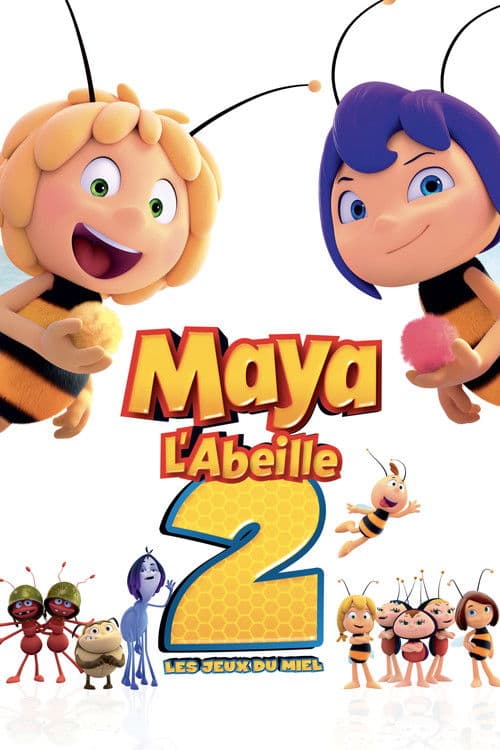
Maya the Bee: The Honey Games
Does this age rating seem accurate to you?
Detailed parental analysis
Maya the Bee 2 is a light and colourful animated adventure comedy, driven by a brisk pace and an overall joyful atmosphere. The plot follows Maya, an impulsive little bee, who must assemble an unlikely team of insects to compete in sporting games and restore her hive's honour. The film is aimed primarily at nursery and early primary school children, with no particular ambition to appeal to an adult audience.
Underlying Values
The film builds its narrative around two complementary and well-articulated messages. On one hand, collective solidarity takes precedence over individual performance: Maya learns to trust her teammates, to recognise the hidden talents in each of them, and to accept that collective victory is worth more than personal glory. On the other, the film values humility and the ability to own one's mistakes, with Maya learning to listen to adults rather than rushing headlong into things. The redemption arc of her rival Violette, who moves from manipulation to kindness, reinforces the idea that no one is fixed in their behaviour. These messages are conveyed with coherence and without excessive moralising heavyhandedness.
Discrimination
The film plays on a fairly marked city-countryside dichotomy: the city bees, embodied by Violette, openly despise Maya and her country friends, presented as naive but authentic. This pattern is ultimately reversed, with rural simplicity being valued against urban arrogance, but the initial caricature is sufficiently pronounced to warrant mention. Furthermore, Violette uses her physical charm to manipulate Willy, reproducing the stereotype of the seductive girl who exploits her appearance to get what she wants. This latter point passes quickly on screen but may be an opportunity for a brief discussion with older children.
Violence
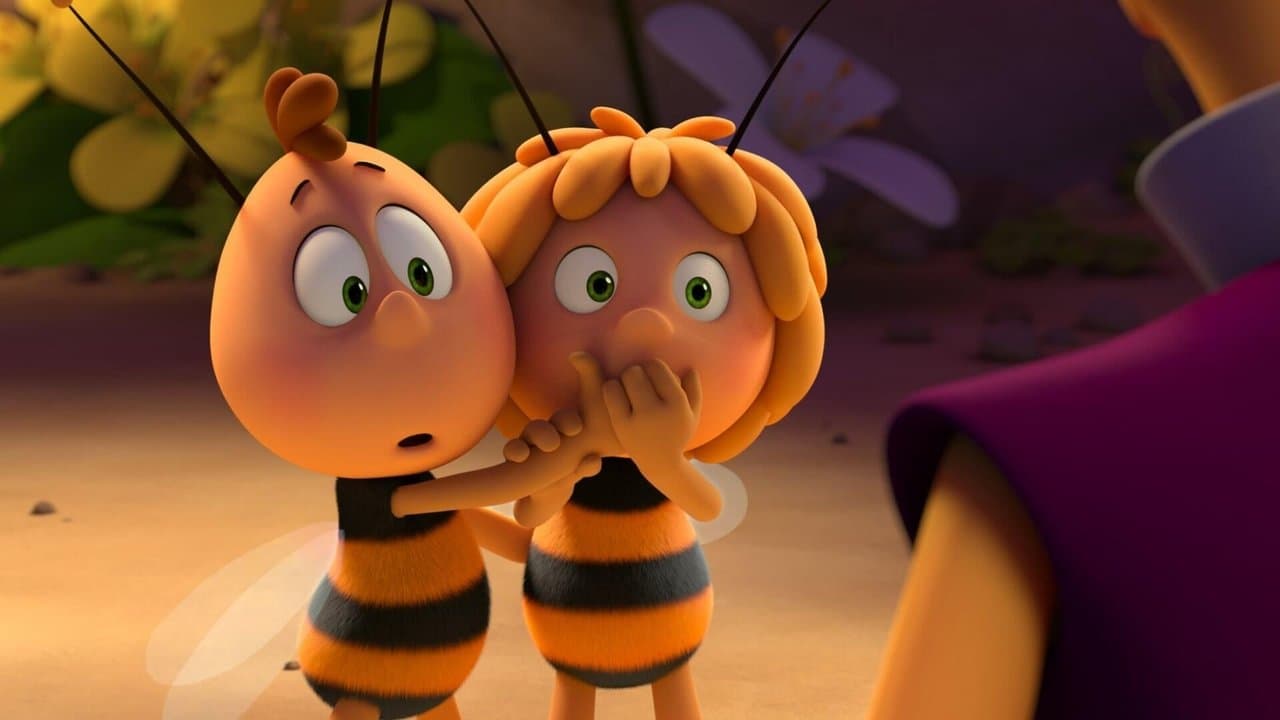
Violence is absent in the strict sense, but the film contains several sequences of tension and fear designed as game obstacles: a giant roaring tortoise with gleaming eyes in a dark maze, a threatening spider that captures insects in the shadows, chases with falls and narrow escapes. These scenes are clearly framed within a logic of children's adventure and resolve without serious consequence, but their visual intensity may surprise or frighten younger or more sensitive children, particularly those under 4 years old.
Strengths
The film honestly fulfils its contract with its target audience: it is paced well, easy to follow, and its secondary characters bring genuine diversity of temperament that makes the team endearing. Violette's redemption arc is handled with sufficient narrative coherence that children understand the change without it feeling contrived. On the other hand, the film offers no layer of meaning for adults, the humour remains one-dimensional, and the direction makes no attempt to surprise. It is a functional film, without particular artistic ambition, that works well for young viewers without claiming to transcend that remit.
Age recommendation and discussion points
The film is suitable from age 4 for children who are not sensitive to scenes of tension, and rather from age 5 for fully relaxed viewing. Two angles of discussion are worth exploring after the film: ask your child why Maya needed her friends to win, and what they think of Violette's change in behaviour, to explore together the idea that people can evolve.
Synopsis
Following an unproductive harvest season, it’s up to Maya and her brave friends to save their hive by competing in a series of games.
About this title
- Format
- Feature film
- Year
- 2018
- Runtime
- 1h 24m
- Countries
- Australia, Germany
- Original language
- EN
- Directed by
- Noel Cleary, Sergio Delfino
- Main cast
- Coco Jack Gillies, Benson Jack Anthony, Sam Haft, Justine Clarke, Jimmy James Eaton, Rupert Degas, Linda Ngo, Tess Meyer, Stavroula Adameitis, Marney McQueen
- Studios
- Studio B Animation, Studio 100 Media, Flying Bark Productions
Content barometer
- Violence1/5Mild
- Fear2/5A few scenes
- Sexuality0/5None
- Language0/5None
- Narrative complexity1/5Accessible
- Adult themes0/5None
Watch-outs
- Gender stereotypes
Values conveyed
- Courage
- Friendship
- Acceptance of difference
- Perseverance
- teamwork
- responsibility
- fair play