Maya & Miguel
Does this age rating seem accurate to you?
Detailed parental analysis
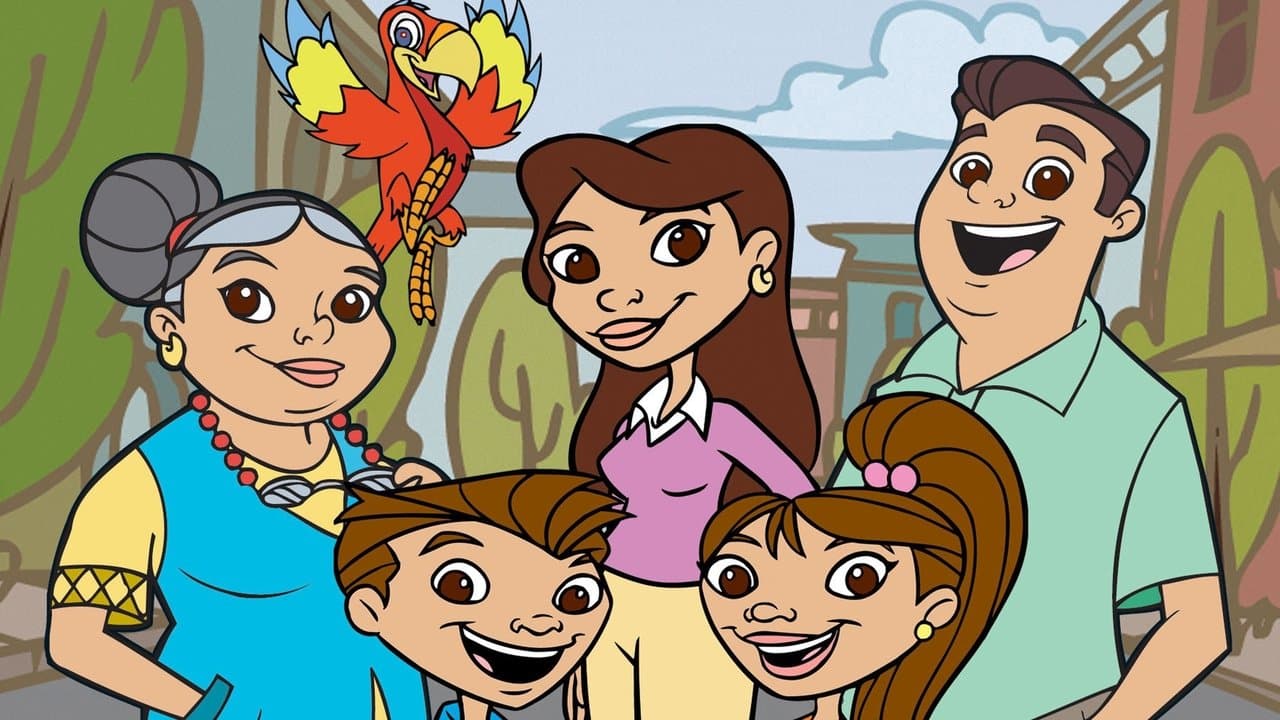
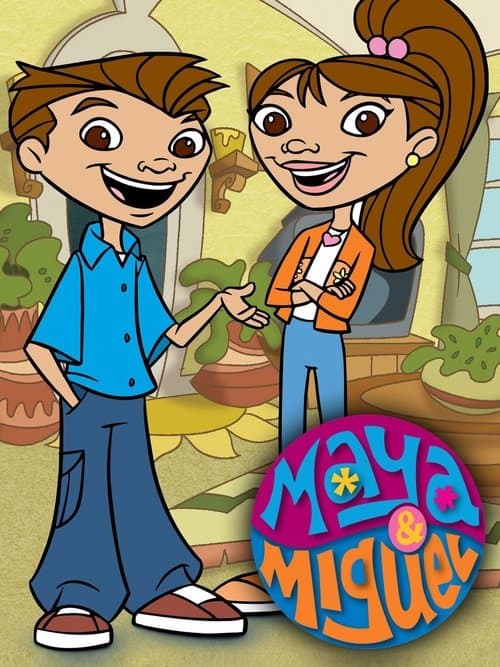
Maya & Miguel is a colourful, warm-hearted and resolutely optimistic animated television series designed for school-age children. Each episode follows the adventures of Maya Santos and her twin brother Miguel, two children from a Latin American family living in the United States, whose generous initiatives sometimes take an unexpected turn. The series targets an audience aged 5 to 10 and fully embraces an educational purpose centred on bilingualism, family solidarity and openness to difference.
Underlying Values
The series' moral engine is explicit and constant: acting for others rather than for oneself. Maya regularly takes initiatives aimed at helping her family or community, sometimes making mistakes that prompt reflection on good intentions and their consequences. Empathy, communication and respect for cultural differences are recurring threads, treated in a concrete and age-appropriate way. One episode specifically addresses Mexican Day of the Dead culture through the calavera, contextualising this imagery within a school presentation rather than aestheticising it: it is a good entry point for discussing with a young child the diverse ways of honouring the deceased.
Discrimination
The series treats the representation of disability positively and with care. A deaf character, Marco, is integrated into the group of friends and teaches sign language to his peers, without his disability being presented as a dramatic obstacle or an object of pity. Similarly, Andy Arlington, a boy born with one arm, participates fully in sporting activities without differential treatment. These representations do not fall into condescending overvaluation: they simply normalise the presence of these children in shared space, which is pedagogically sound for a young audience.
Social Themes
The question of bicultural identity runs through the series in the background. Characters evolve in an environment that blends Latin American heritage and daily life in the United States, and several episodes explore specific traditions, celebrations or cultural practices. This dimension is never presented as a problem to be solved but as a natural wealth, making it a useful framework for introducing children to the notion of cultural coexistence.
Parental and Family Portrayals
Adults, parents, grandparents and teachers are represented in a coherent and benevolent way. Intergenerational interactions are presented as balanced exchanges where children are heard and adults remain stable points of reference. This reassuring family model is an asset for younger viewers, even if it remains idealised.
Strengths
The series succeeds in what few children's animations manage to do without heaviness: integrating Spanish vocabulary learning into the narrative in an organic way, without interrupting the pace of the stories. Words are repeated in context, which encourages natural memorisation. The episodes on disability are particularly well constructed, because they show without explaining, which is the right balance for an audience of 6 to 10 year-olds. The series also has the merit of dealing with the consequences of missed good intentions, a narrative device more sophisticated than the simple good/evil scheme, even if the whole remains in a light register.
Age recommendation and discussion points
The series is suitable from age 5 without reservation, with maximum relevance between 6 and 9 years old. Two discussion angles merit opening after viewing: how do we truly help someone, and is a good intention enough if the outcome is bad? And, on the episodes dealing with disability, what does it change or not change in a friendship?
Synopsis
Centering around the lives of pre-teen Hispanic twins named Maya and Miguel Santos and their friends, the program is aimed at promoting multiculturalism and education in general. It is geared to the 5-9 age range. Part of the dialogue in each episode in the English version is in Spanish but only individual words or phrases which are explained in English.
About this title
- Format
- TV series
- Year
- 2004
- Runtime
- 23m
- Countries
- United States of America
- Original language
- EN
- Directed by
- Deborah Forte, Beth A. Richman
- Main cast
- Candi Milo, Nika Futterman, Carlos Ponce, Elizabeth Peña, Lupe Ontiveros, Carlos Alazraqui, Lucy Liu, Jeannie Elias, Jerod Mixon, Beth Payne
- Studios
- Scholastic Productions
Content barometer
- Violence0/5None
- Fear1/5Mild
- Sexuality0/5None
- Language0/5None
- Narrative complexity1/5Accessible
- Adult themes0/5None
Watch-outs
- Grief
- Death / grief
Values conveyed
- Friendship
- Acceptance of difference
- Compassion
- family solidarity
- multiculturalism
- education
- mutual aid
- cultural identity