Roald Dahl's Matilda the Musical
Roald Dahl's Matilda the Musical
Your feedback improves this guide
Your feedback highlights guides that need a second look and keeps the rating trustworthy.
Does this age rating seem accurate to you?
Sign in to vote
Watch-outs
What this film brings
Content barometer
Violence
2/5
Moderate
Fear
2/5
A few scenes
Sexuality
0/5
None
Language
1/5
Mild
Narrative complexity
2/5
Moderate
Adult themes
0/5
None
Expert review
This musical adaptation of Matilda blends fantasy, lively songs and dark humor in a story that is clearly aimed at families, yet it includes a very intimidating villain and a world where adults are often unfair to children. The main sensitive elements involve parental neglect, repeated humiliation, cruel school punishments, and a secondary story that mentions a severe injury and a death connected to a performance accident. The film remains stylized and non graphic, with no sexual content and little realistic violence, but the psychological pressure is frequent, especially around the headmistress and the way children are treated. For many children, the most upsetting part will not be physical danger, but the ongoing injustice and threatening adult behavior. I would recommend it from about age 8 for most viewers, with parental support if a child is especially sensitive to shouting, bullying, or authoritarian adults.
Synopsis
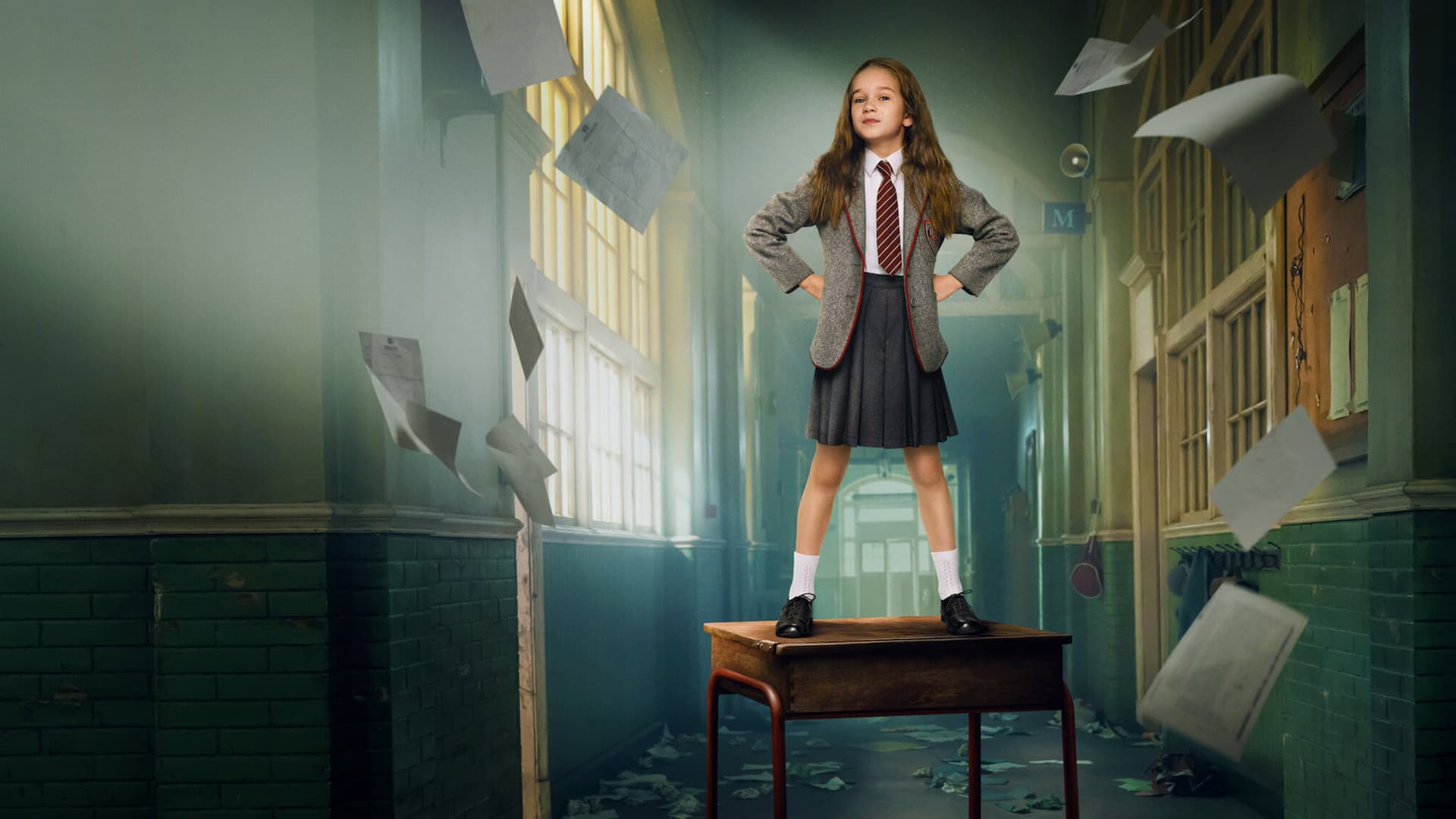
An extraordinary young girl discovers her superpower and summons the remarkable courage, against all odds, to help others change their stories, whilst also taking charge of her own destiny. Standing up for what's right, she's met with miraculous results.
Difficult scenes
From the beginning, Matilda is neglected and put down by her parents, who treat her as a problem instead of listening to her or protecting her. These scenes are often played with comic exaggeration, yet younger children may still be affected by the emotional rejection, the mocking tone, and the sense that no caring adult is available at home. At school, the headmistress creates an atmosphere of fear through shouting, threats, and humiliating punishments. Even the idea of the punishment cupboard, described as a frightening place for children, may stay with sensitive viewers, although the film remains stylized rather than realistic. One scene shows a child being forced to eat an enormous amount of chocolate cake in front of everyone while the headmistress watches and controls the situation. This can feel uncomfortable for children because it combines public humiliation, physical pressure, and strong tension, even though there is no graphic violence. Matilda also tells a darker story about stage performers, including a severe injury, a death after childbirth, and a child mistreated by a cruel adult. The presentation is still theatrical and not explicit, but the emotional material is heavier than in many family musicals and may raise questions about loss, abandonment, and cruelty.
Where to watch
No verified platform for the US market yet. We keep this section updated as availability changes.
Availability checked on Apr 01, 2026
About this title
- Format
- Feature film
- Year
- 2022
- Runtime
- 1h 57m
- Countries
- United Kingdom
- Original language
- EN
- Directed by
- Matthew Warchus
- Main cast
- Alisha Weir, Emma Thompson, Lashana Lynch, Stephen Graham, Andrea Riseborough, Sindhu Vee, Carl Spencer, Lauren Alexandra, Winter Jarrett Glasspool, Andrei Shen
- Studios
- Working Title Films, The Roald Dahl Story Company
Content barometer
Violence
2/5
Moderate
Fear
2/5
A few scenes
Sexuality
0/5
None
Language
1/5
Mild
Narrative complexity
2/5
Moderate
Adult themes
0/5
None
Expert review
This musical adaptation of Matilda blends fantasy, lively songs and dark humor in a story that is clearly aimed at families, yet it includes a very intimidating villain and a world where adults are often unfair to children. The main sensitive elements involve parental neglect, repeated humiliation, cruel school punishments, and a secondary story that mentions a severe injury and a death connected to a performance accident. The film remains stylized and non graphic, with no sexual content and little realistic violence, but the psychological pressure is frequent, especially around the headmistress and the way children are treated. For many children, the most upsetting part will not be physical danger, but the ongoing injustice and threatening adult behavior. I would recommend it from about age 8 for most viewers, with parental support if a child is especially sensitive to shouting, bullying, or authoritarian adults.
Synopsis
An extraordinary young girl discovers her superpower and summons the remarkable courage, against all odds, to help others change their stories, whilst also taking charge of her own destiny. Standing up for what's right, she's met with miraculous results.
Difficult scenes
From the beginning, Matilda is neglected and put down by her parents, who treat her as a problem instead of listening to her or protecting her. These scenes are often played with comic exaggeration, yet younger children may still be affected by the emotional rejection, the mocking tone, and the sense that no caring adult is available at home. At school, the headmistress creates an atmosphere of fear through shouting, threats, and humiliating punishments. Even the idea of the punishment cupboard, described as a frightening place for children, may stay with sensitive viewers, although the film remains stylized rather than realistic. One scene shows a child being forced to eat an enormous amount of chocolate cake in front of everyone while the headmistress watches and controls the situation. This can feel uncomfortable for children because it combines public humiliation, physical pressure, and strong tension, even though there is no graphic violence. Matilda also tells a darker story about stage performers, including a severe injury, a death after childbirth, and a child mistreated by a cruel adult. The presentation is still theatrical and not explicit, but the emotional material is heavier than in many family musicals and may raise questions about loss, abandonment, and cruelty.