
Mary Poppins
Does this age rating seem accurate to you?
Detailed parental analysis
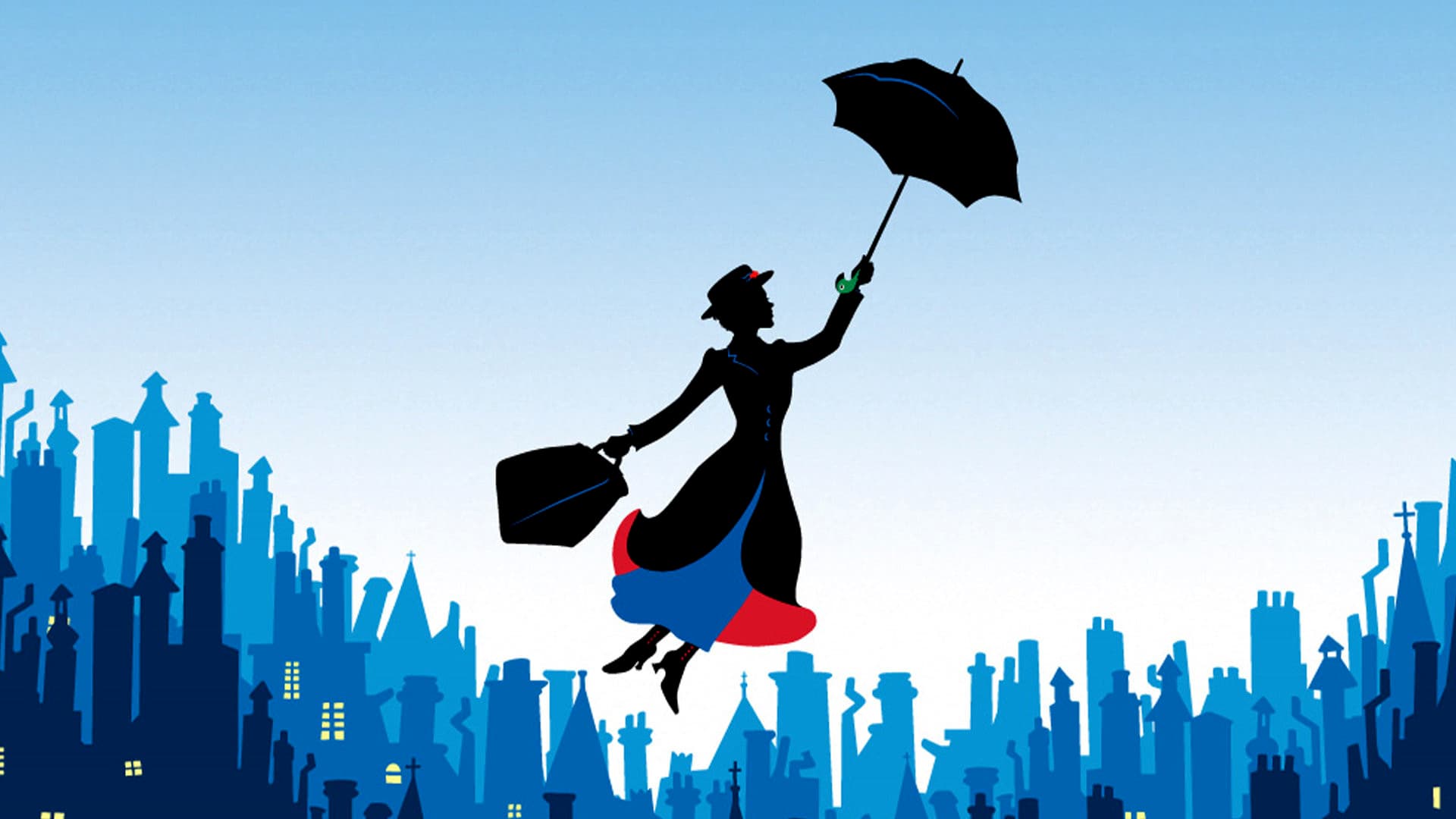
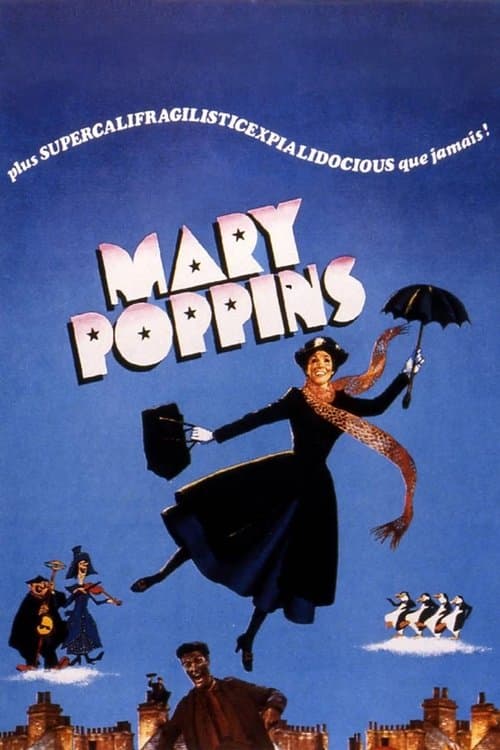
Mary Poppins is a whimsical musical comedy with a luminous and warm atmosphere, carried by an enchanted world blending animated sequences and colourful sets. The plot follows the arrival of a magical and mysterious governess in the home of a London family whose children are desperately lacking parental presence. The film is primarily aimed at children from 3 or 4 years old, but its length and certain layers of meaning make it a genuinely multigenerational viewing experience. Disney is here associated with one of its most emblematic productions, which can serve as a landmark for parents.
Parental and Family Portrayals
This is the film's thematic heart. The father, a rigid man entirely devoted to his banking career, is presented as loving but blind to what matters most: presence, play, emotional connection with his children. The narrative arc leads him to gradual awareness, and his transformation constitutes the true emotional resolution of the story. The mother is treated with greater ambivalence: a passionate suffragette activist, she is portrayed with a lightness that borders on mockery, reducing her political engagement to the whim of a distracted bourgeois. Mary Poppins herself functions as a substitute parental figure, firm without being rigid, attentive without being enmeshed. This trio offers rich material for discussing with a child what it means to be present as a parent.
Underlying Values
The film carries a discreet but structuring anticapitalist message: the bank scene, complex for very young children, presents financial accumulation as a cold absurdity opposed to human warmth. The relationship with money is treated with irony, and the banker character is explicitly caricatured. In counterpoint, the film values imagination, lightness and play as serious modes of apprehending the world. This tension between the world of serious adults and the living world that Mary Poppins embodies can easily become a point of entry for discussing with a child what truly matters in life.
Discrimination
The film contains two occurrences of the term 'Hottentots', a historically pejorative designation for the Khoikhoi people of South Africa, used by the Admiral character. This detail, rooted in the usage of the production period, prompted British film classification authorities to revise the film's rating in 2024. These occurrences are brief and do not constitute elaborated racist discourse, but they merit being flagged to parents wishing to discuss them with their children. The representation of the suffragette mother, moreover, offers an angle on how feminism was treated in popular cinema of this period: her struggle is shown with surface benevolence but ridiculed by the very structure of the narrative.
Substances
Alcohol consumption is present in a secondary way, notably through sherry drunk by the father. Tobacco appears fleetingly. These elements are normalised without being glorified and remain within the register of social representation of the period. Their impact is weak in terms of valorisation, but they are sufficiently visible that parents may wish to anticipate them with younger children.
Strengths
Mary Poppins is one of the rare films to have endured sixty years without losing its capacity to create a moment of transmission between generations. Its songs, crafted with genuine melodic care, imprint themselves on memory with an effectiveness that few works of this era still match. The dramatic construction, despite generous length, maintains a balance between dreamlike sequences and coherent narrative progression. From a pedagogical standpoint, the film poses lasting questions about the role of adults in children's emotional lives, without ever tipping into moral heaviness. It is also a cultural document of Edwardian English society, with its class codes and tensions between modernity and tradition, which parents can contextualise with their children.
Age recommendation and discussion points
The film is suitable from 5 or 6 years old for serene viewing, younger children potentially being unsettled by the length and by certain more tense scenes. Two angles of discussion naturally suggest themselves after viewing: ask the child what he or she thinks of the father at the beginning and end of the film, and why he changes, to engage conversation about what children truly expect from their parents. One can also return to the use of the hurtful term spoken by the Admiral, by simply explaining why this word was hurtful then and remains so today.
Synopsis
In turn of the century London, a magical nanny employs music and adventure to help two neglected children become closer to their father.
Where to watch
Availability checked on Apr 04, 2026
About this title
- Format
- Feature film
- Year
- 1964
- Runtime
- 2h 14m
- Countries
- United States of America
- Original language
- EN
- Directed by
- Robert Stevenson
- Main cast
- Julie Andrews, Dick Van Dyke, David Tomlinson, Glynis Johns, Hermione Baddeley, Karen Dotrice, Matthew Garber, Elsa Lanchester, Arthur Treacher, Reginald Owen
- Studios
- Walt Disney Productions
Content barometer
- Violence1/5Mild
- Fear1/5Mild
- Sexuality0/5None
- Language1/5Mild
- Narrative complexity2/5Moderate
- Adult themes1/5Mild
Watch-outs
- Alcohol
- Gender stereotypes
- Ethnic or racial stereotypes
Values conveyed
- imagination
- family bond
- friendship
- creativity
- kindness
- wonder