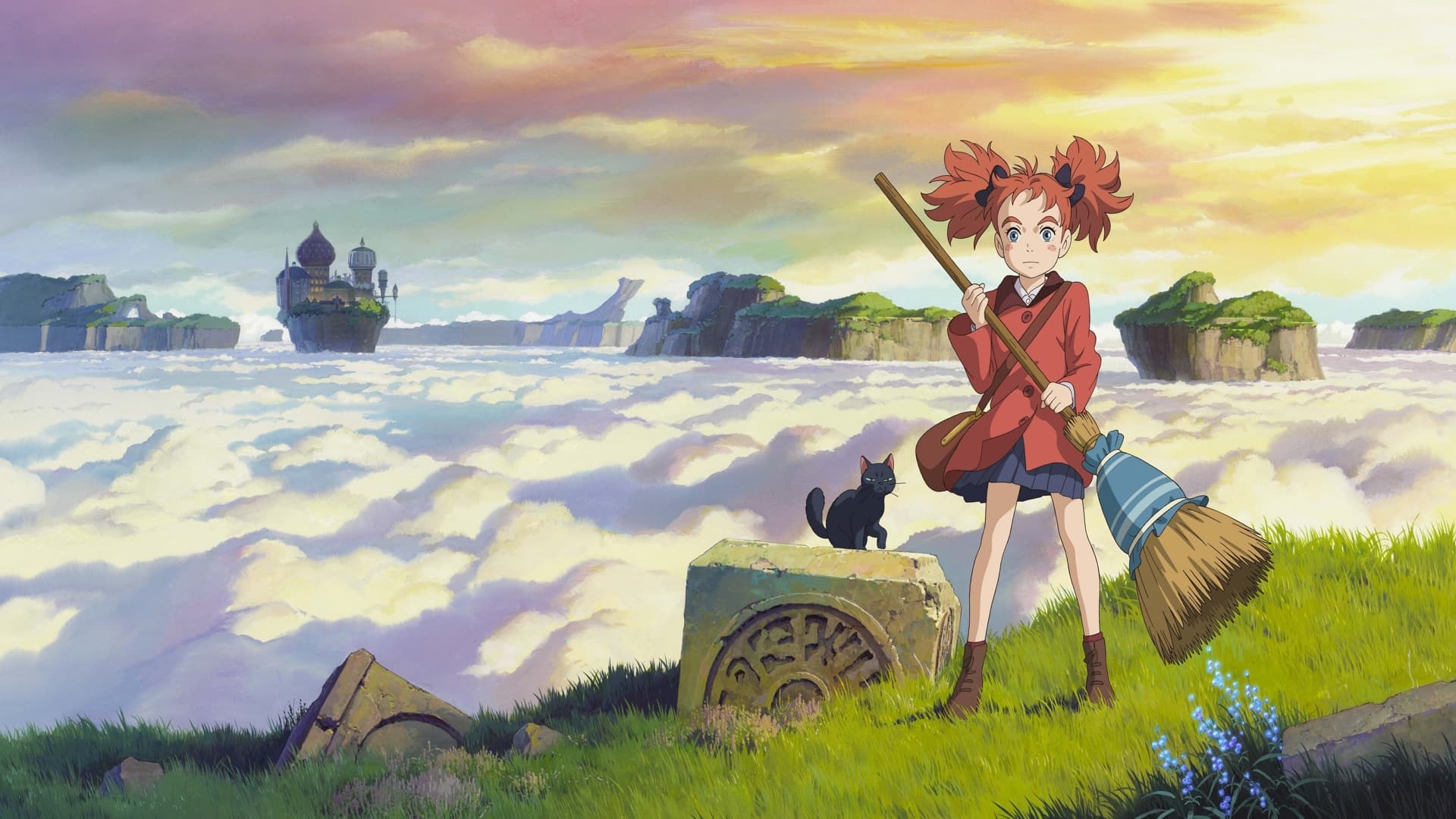

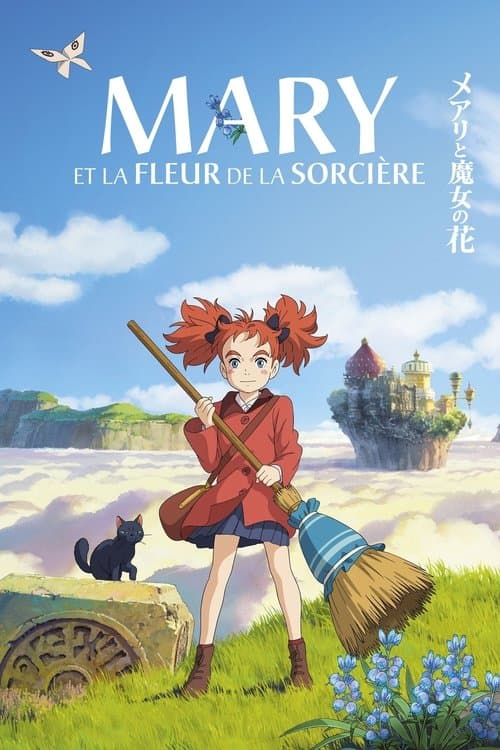
Mary and The Witch's Flower
メアリと魔女の花
Mary and The Witch's Flower
メアリと魔女の花
Your feedback improves this guide
Your feedback highlights guides that need a second look and keeps the rating trustworthy.
Does this age rating seem accurate to you?
Sign in to vote
Watch-outs
What this film brings
Content barometer
Violence
2/5
Moderate
Fear
3/5
Notable tension
Sexuality
0/5
None
Language
0/5
None
Narrative complexity
2/5
Moderate
Adult themes
0/5
None
Expert review
Mary and the Witch's Flower is a Japanese animated film from Studio Ponoc with an adventurous and dreamlike tone, following an ordinary young girl thrust into a world of magic and witchcraft. The story introduces several notably unsettling elements, including a headmistress who turns out to be threatening and manipulative, scientific experiments that transform animals into deformed creatures, and a child kidnapping used as leverage. These tense scenes, though rendered in a stylized animated style, recur throughout the second half of the film and may leave a lasting impression on sensitive young viewers. The film is ultimately carried by a positive message about courage and honesty, but its dramatic intensity makes it better suited for children already familiar with darker fantasy worlds. Parents can reassure younger viewers by explaining that the film's magic is rooted in kindness and perseverance, and by discussing the laboratory and kidnapping scenes that may raise questions.
Synopsis
Mary Smith, a young girl who lives with her great-aunt in the countryside, follows a mysterious cat into the nearby forest where she finds a strange flower and an old broom, none of which is as ordinary as it seems.
Difficult scenes
Headmistress Madam Mumblechook, initially presented as welcoming, quickly reveals an authoritarian and threatening side when she coerces Mary into handing over Peter's address. This abrupt shift may unsettle young children who had begun to trust her during the school tour. Peter is kidnapped by the headmistress and held captive at Endor College in order to force Mary to hand over the magical flowers. The depiction of a child being held against his will, even briefly shown, is a significant source of tension that may distress younger viewers. In Doctor Dee's laboratory, Mary and Peter discover that animals including the cat Gib have been subjected to transformation experiments that have left them unrecognizable and misshapen. These images of hybrid creatures and uncontrolled science may be visually disturbing for sensitive children. Peter is on the verge of being forcibly transformed into a warlock during an experiment that goes wrong, temporarily trapping him inside a monstrous gelatinous creature. This sequence is visually intense and places a child in direct, prolonged danger.
Where to watch
No verified platform for the US market yet. We keep this section updated as availability changes.
About this title
- Format
- Feature film
- Year
- 2017
- Runtime
- 1h 42m
- Countries
- Japan
- Original language
- JA
- Directed by
- Hiromasa Yonebayashi
- Main cast
- Yuki Amami, Ryunosuke Kamiki, Hana Sugisaki, Fumiyo Kohinata, Hikari Mitsushima, Jiro Sato, Kenichi Endo, Eri Watanabe, Shinobu Otake, Ikue Otani
- Studios
- STUDIO PONOC
Content barometer
Violence
2/5
Moderate
Fear
3/5
Notable tension
Sexuality
0/5
None
Language
0/5
None
Narrative complexity
2/5
Moderate
Adult themes
0/5
None
Expert review
Mary and the Witch's Flower is a Japanese animated film from Studio Ponoc with an adventurous and dreamlike tone, following an ordinary young girl thrust into a world of magic and witchcraft. The story introduces several notably unsettling elements, including a headmistress who turns out to be threatening and manipulative, scientific experiments that transform animals into deformed creatures, and a child kidnapping used as leverage. These tense scenes, though rendered in a stylized animated style, recur throughout the second half of the film and may leave a lasting impression on sensitive young viewers. The film is ultimately carried by a positive message about courage and honesty, but its dramatic intensity makes it better suited for children already familiar with darker fantasy worlds. Parents can reassure younger viewers by explaining that the film's magic is rooted in kindness and perseverance, and by discussing the laboratory and kidnapping scenes that may raise questions.
Synopsis
Mary Smith, a young girl who lives with her great-aunt in the countryside, follows a mysterious cat into the nearby forest where she finds a strange flower and an old broom, none of which is as ordinary as it seems.
Difficult scenes
Headmistress Madam Mumblechook, initially presented as welcoming, quickly reveals an authoritarian and threatening side when she coerces Mary into handing over Peter's address. This abrupt shift may unsettle young children who had begun to trust her during the school tour. Peter is kidnapped by the headmistress and held captive at Endor College in order to force Mary to hand over the magical flowers. The depiction of a child being held against his will, even briefly shown, is a significant source of tension that may distress younger viewers. In Doctor Dee's laboratory, Mary and Peter discover that animals including the cat Gib have been subjected to transformation experiments that have left them unrecognizable and misshapen. These images of hybrid creatures and uncontrolled science may be visually disturbing for sensitive children. Peter is on the verge of being forcibly transformed into a warlock during an experiment that goes wrong, temporarily trapping him inside a monstrous gelatinous creature. This sequence is visually intense and places a child in direct, prolonged danger.