Mary and The Witch's Flower
メアリと魔女の花
Does this age rating seem accurate to you?
Detailed parental analysis
Mary and the Witch's Flower is a fantasy animated film with a contrasting atmosphere, alternating between luminous wonder and frankly unsettling sequences. A clumsy young girl discovers a magical flower that opens the doors to a school of witchcraft, but this enchanted world conceals dangerous experiments and troubling secrets. The film targets young children and pre-adolescents, with an important caveat for the more sensitive among them.
Violence
The most intense scenes in the film do not involve direct physical violence, but rather sustained visual distress that can deeply disturb young viewers. Deformed creatures are locked in cages as a result of failed magical experiments, and the death of a student who falls victim to a botched transformation is clearly suggested. A transformation of an adult into a gelatinous monster that engulfs a child constitutes the most harrowing sequence in the film. Aerial chases with falls from great heights and threatening creatures of a robotic or avian type add repeated tension. These elements serve a genuine narrative purpose, demonstrating the consequences of the abuse of magical power, but their visual impact remains strong for sensitive children.
Underlying Values
The film constructs a coherent message around the rejection of performance at any cost and the dangers of knowledge used without ethics. The antagonists are scientist-witches convinced that the end justifies the means, including experimentation on children and animals. In parallel, Mary learns that lying and usurping an identity one has not earned leads to serious consequences for oneself and others. The protagonist's arc around accepting her red hair, a symbol of her difference, anchors the narrative in a genuine valorisation of authenticity over conformity. The film also questions institutional authority by showing that figures in positions of power can be profoundly malevolent.
Parental and Family Portrayals
Mary lives with her great-aunt, a benevolent and reassuring figure who replaces absent parents without this absence being dramatised. The atypical family structure is presented as natural and functional, without apparent lack. The adults at the school of witchcraft, by contrast, embody a corrupted and dangerous authority, which creates a sharp contrast between the warmth of home and the coldness of the institution.
Social Themes
The film develops a clear critique of non-consensual scientific experimentation and the logic of progress at any cost. Animals transformed and mutilated by magical experiments constitute an accessible metaphor for the ethical treatment of living beings. This is not a campaigning film, but these images raise concrete questions about the limits of science and power that can be discussed with a child.
Strengths
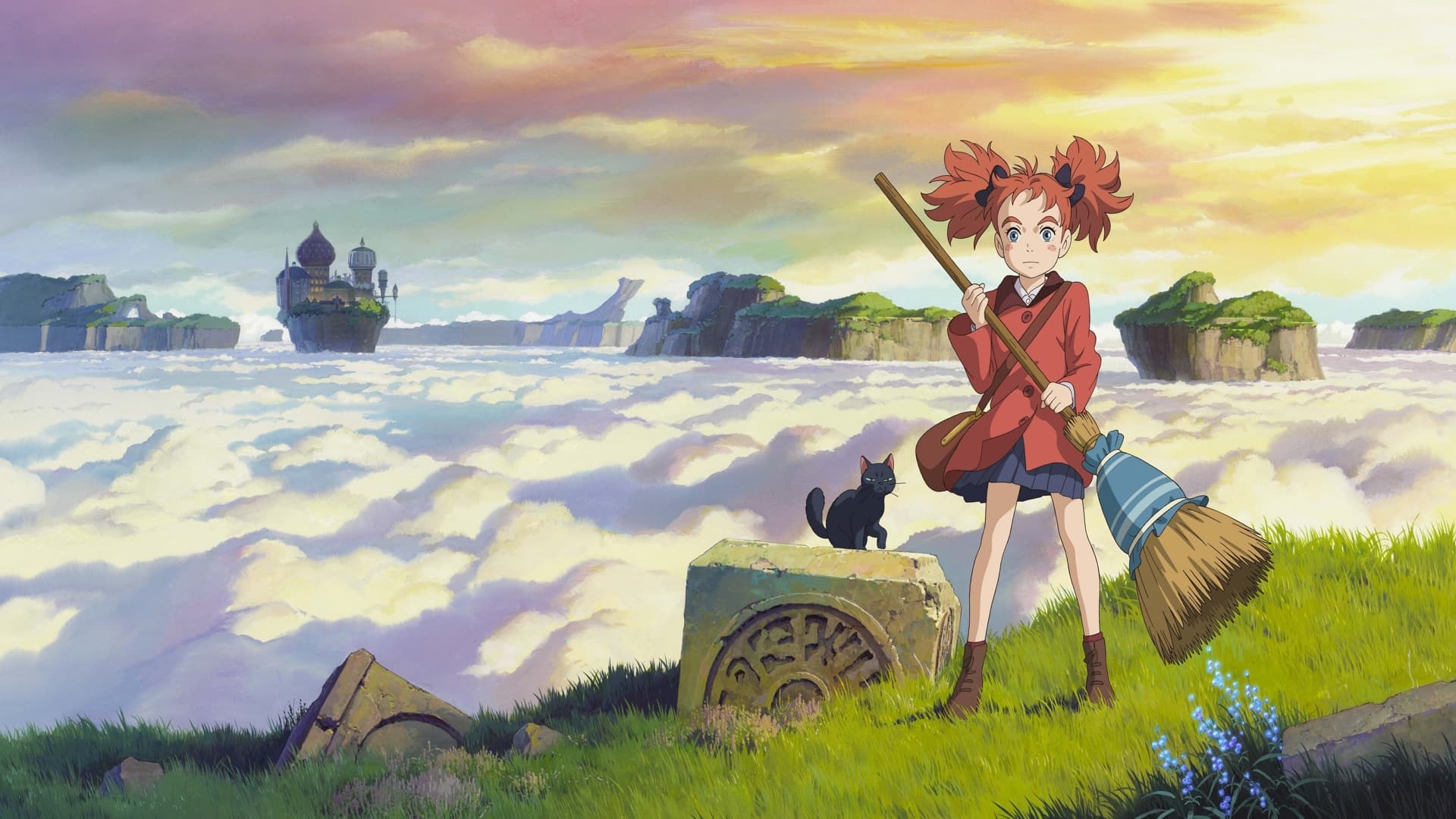
The animation is of remarkable visual richness, with natural environments and flight sequences that achieve genuine contemplative beauty. The film succeeds in constructing an imperfect and endearing heroine, whose clumsiness and lack of self-confidence are treated with a sincerity rare in the genre. The narrative progression is deliberately measured, which may disconcert children accustomed to a faster pace, but offers space for emotions to settle. The narrative draws from the tradition of initiation tales without mechanically reproducing their codes, and the resolution avoids easy triumph in favour of a lesson on responsibility.
Age recommendation and discussion points
The film is not recommended for children under 8 years old due to several visually distressing sequences. From 8 years old, supervised viewing is recommended for sensitive children, and the film can be watched comfortably from 10 years old. Two angles of discussion naturally emerge after viewing: why does Mary choose to lie about her abilities, and what does it cost her, and how far did the scientists at the school believe they had the right to go in the name of progress.
Synopsis
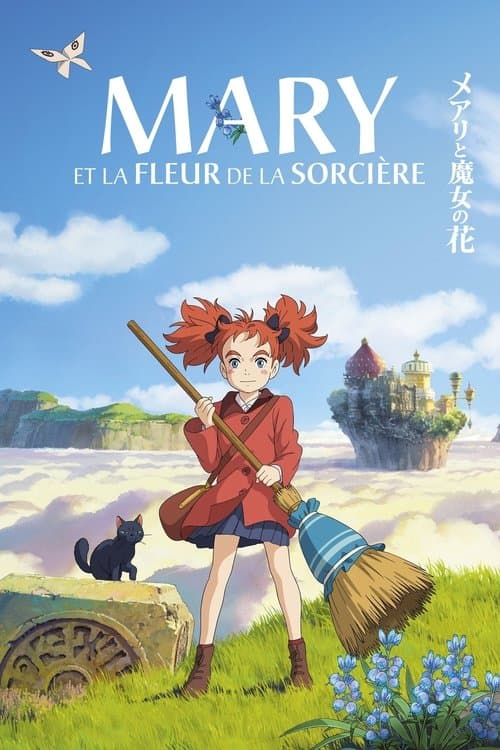
Mary Smith, a young girl who lives with her great-aunt in the countryside, follows a mysterious cat into the nearby forest where she finds a strange flower and an old broom, none of which is as ordinary as it seems.
About this title
- Format
- Feature film
- Year
- 2017
- Runtime
- 1h 42m
- Countries
- Japan
- Original language
- JA
- Directed by
- Hiromasa Yonebayashi
- Main cast
- Yuki Amami, Ryunosuke Kamiki, Hana Sugisaki, Fumiyo Kohinata, Hikari Mitsushima, Jiro Sato, Kenichi Endo, Eri Watanabe, Shinobu Otake, Ikue Otani
- Studios
- STUDIO PONOC
Content barometer
- Violence3/5Notable
- Fear4/5Intense
- Sexuality0/5None
- Language0/5None
- Narrative complexity2/5Moderate
- Adult themes0/5None
Watch-outs
- Death
- Abuse
Values conveyed
- Courage
- Acceptance of difference
- Perseverance
- honesty
- friendship
- self-acceptance
- responsibility