

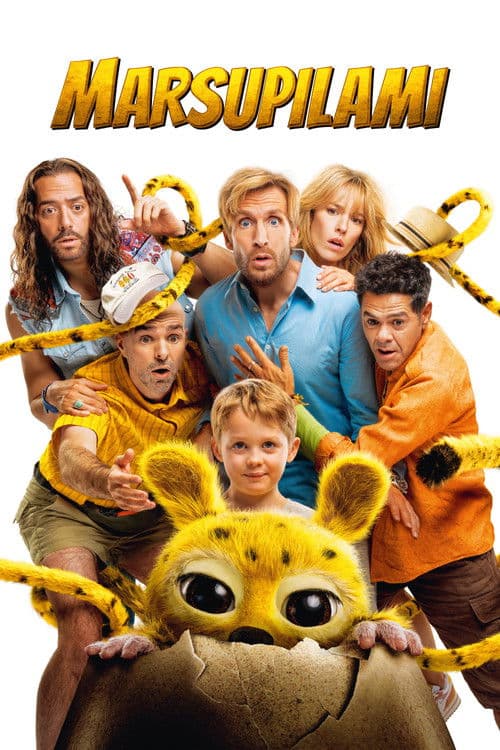
Marsupilami
Does this age rating seem accurate to you?
Detailed parental analysis
Marsupilami (2026) is a family adventure comedy with a joyful and uninhibited atmosphere, adapted from the famous Belgian comic strip character. The story follows the Marsupilami through a series of wild escapades blending jungle, discoveries and human relationships, set against a backdrop of visual humour and rapid-fire gags. The film targets families with children, but the humour incorporates a layer of references and jokes that appeal more to adults than to younger viewers.
Language
The film contains ribald jokes that exceed the expected register of a family comedy: references to Viagra, gags involving toilets and gross-out humour on several occasions. These elements are sufficiently present to be far from trivial. Younger children may not necessarily grasp them, but they constitute a clear signal that the tone oscillates between family comedy and assumed adult humour, which may surprise or disturb some parents.
Violence
The film relies on a register of burlesque and slapstick violence: falls, blows, physically absurd situations repeated at a brisk pace. Scenes involving children in these situations of visual violence have been noted, which can be upsetting depending on the viewer's sensitivity. This violence remains within the register of classic physical comedy, without gore or dramatic consequences, but its frequency and application to child characters merit being flagged.
Underlying Values
The film displays a desire to marry irreverent comedy and family adventure, with values of camaraderie and discovery in the background. Irreverence is assumed as a comic driver, which can be a useful invitation to discuss with a child what it means to mock conventions without crossing certain boundaries. The structural message remains positive, but it is delivered with little subtlety.
Strengths
The film draws from a Franco-Belgian comic heritage deeply rooted in collective memory, which gives it an appreciable dimension of cultural transmission for parents who grew up with the character. The visual humour and physical gags work well for children comfortable with this register, and the overall pace remains brisk. Feedback from child viewers, enthusiastic and asking to watch the film again, indicates that the entertainment delivers on its promise to the primary target audience.
Age recommendation and discussion points
The film is accessible from age 7-8 as far as physical humour and pacing are concerned, but the ribald jokes and recurrent adult humour mean that parental accompaniment is recommended below age 10. Two useful discussion angles after viewing: ask the child which jokes he or she understood and which seemed odd, to open a conversation about different levels of humour and their intended audiences, and revisit the scenes of physical violence to distinguish what makes people laugh on screen from what would hurt in real life.
Synopsis
David is tasked to deliver a mysterious package from South America, only to find out he is carrying a baby Marsupilami!
About this title
- Format
- Feature film
- Year
- 2026
- Runtime
- 1h 39m
- Countries
- France, Belgium
- Original language
- FR
- Directed by
- Philippe Lacheau
- Main cast
- Philippe Lacheau, Jamel Debbouze, Tarek Boudali, Élodie Fontan, Julien Arruti, Jean Reno, Corentin Guillot, Gérard Jugnot, Didier Bourdon, Alban Ivanov
- Studios
- Pathé, Dupuis, BAF Prod, TF1 Films Production, Artémis Productions, Logical Content Ventures
Content barometer
- Violence2/5Moderate
- Fear1/5Mild
- Sexuality1/5Allusions
- Language2/5Moderate
- Narrative complexity2/5Moderate
- Adult themes1/5Mild
Watch-outs
- Strong language
- Violence
Values conveyed
- Courage
- Friendship
- Autonomy
- blended family
- parental love
- acceptance of difference
- responsibility
- solidarity