

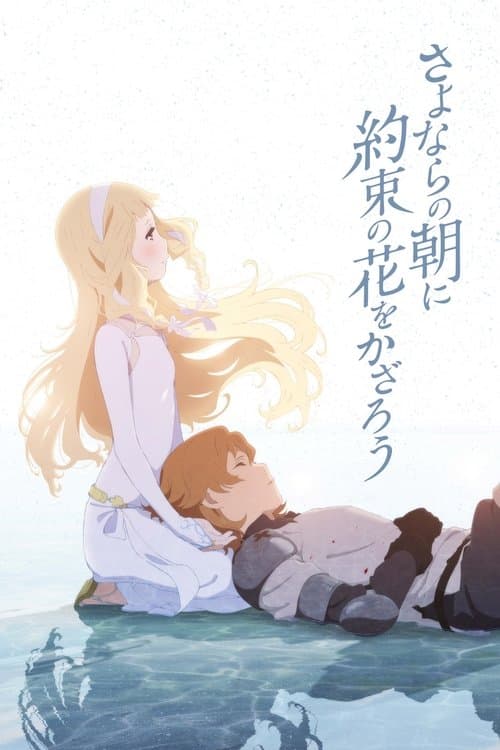
Maquia: When the Promised Flower Blooms
さよならの朝に約束の花をかざろう
Does this age rating seem accurate to you?
Detailed parental analysis
Maquia is a fantasy animated film with a contemplative and melancholic atmosphere, driven by rare emotional depth and narrative complexity unusual for the genre. The plot follows a young woman belonging to an immortal people who, after her village is destroyed, takes in a human infant and raises him as her own son, traversing decades and hardship alongside him. The film is unambiguously aimed at mature adolescents and adults, and is in no way a work intended for children.
Parental and Family Portrayals
Motherhood is the absolute heart of the film. Maquia adopts a child with no biological connection and devotes her entire life to him, in a narrative that addresses with great honesty the tensions of parenthood: unconditional love, the difficulty of letting go, the pain of watching a child grow and drift away. The film does not romanticise adoptive motherhood; it shows its renunciations, misunderstandings and real sacrifices. It is precisely this complexity that makes it rich material for discussion in blended or adoptive families, but also for any adolescent beginning to understand what their parents have endured for them.
Violence
The film contains several significant sequences of violence. The military invasion of the opening village is brutal and deadly, with armed soldiers killing the majority of inhabitants in a scene that does not attempt to soften the brutality of war. A later battle is described as bloody, with visible injuries and sprayed blood. One particularly striking scene shows Maquia breaking the fingers of a dead mother to extract a living infant from her grasp. These moments are narratively justified and do not amount to gratuitous gore, but their intensity is real and may disturb young or sensitive viewers. The violence here serves to anchor the narrative in harsh human reality, which strengthens the film's emotional impact without ever turning it into spectacle.
Social Themes
The film unfolds against a backdrop of political conflict between a military empire and minority peoples, including Maquia's own, coveted for their exceptional biological capacities. This dynamic of oppression, captivity and exploitation of a people by a dominant power gives the narrative a discreet yet real political dimension. A woman is held prisoner for years, separated from her child, in a situation that evokes forms of servitude and institutional violence. These elements are not treated didactically but constitute a coherent background that can open conversation about relations of domination and freedom.
Underlying Values
The film constructs a sober and non-moralising reflection on mortality and time. Maquia's immortality is not presented as a privilege but as a form of structural loneliness: she watches those she loves grow old and die without being able to follow them. The narrative values the acceptance of finitude as a condition of a fully lived life, and poses the question of what it means to love someone whom one is destined to lose. These themes are treated with a maturity that far exceeds the scope of conventional animated cinema.
Strengths
Maquia is a work of emotional and narrative ambition uncommon in animated cinema. The screenplay is carefully constructed with a long chronology spanning several decades, never losing sight of its central character or sacrificing nuance for spectacle. The portrayal of adoptive motherhood is of rare accuracy: neither idealised nor dramatised to excess, it captures something true about what it means to raise a child who is not biologically one's own. The film provokes a strong and lasting emotional response, making it a particularly effective conversation starter for families ready to address together subjects such as loss, the passage of time and unconditional love.
Age recommendation and discussion points
The film is not recommended before age 13 due to the violence in certain scenes and the emotional density of the subject matter, and is recommended from age 15 onwards for fully serene viewing. After the film, two angles of discussion naturally present themselves: ask the adolescent what they think about the difference between biological love and chosen love, and explore with them what the film says about the fear of losing those we love and how we learn to live with this reality.
Synopsis
Fleeing the war, the immortal Machia, graced with eternal youth, finds a baby abandoned in the forest and decides to raise it as her own child, sparking a moving story between a mortal and a being who does not age.
About this title
- Format
- Feature film
- Year
- 2018
- Runtime
- 1h 54m
- Countries
- Japan
- Original language
- JA
- Studios
- P.A.WORKS, Bandai Visual, Hakuhodo DY Music & Pictures, Lantis, Cygames, Rakuonsha
Content barometer
- Violence3/5Notable
- Fear3/5Notable tension
- Sexuality0/5None
- Language0/5None
- Narrative complexity3/5Complex
- Adult themes0/5None
Values conveyed
- Acceptance of difference
- Compassion
- Loyalty
- maternal love
- resilience
- sacrifice
- attachment