Madagascar 3: Europe's Most Wanted
Madagascar 3: Europe's Most Wanted
Your feedback improves this guide
Your feedback highlights guides that need a second look and keeps the rating trustworthy.
Does this age rating seem accurate to you?
Sign in to vote
Watch-outs
What this film brings
Content barometer
Violence
2/5
Moderate
Fear
2/5
A few scenes
Sexuality
1/5
Allusions
Language
0/5
None
Narrative complexity
1/5
Accessible
Adult themes
0/5
None
Expert review
This animated sequel is a fast, colorful, comedy adventure designed for broad family viewing, with constant motion, visual gags, and energetic circus spectacle. The main sensitive elements come from a relentless villain who hunts the heroes, several chase and capture sequences, cartoon style accidents such as a crash and cannon shots, and an explicit taxidermy threat that may unsettle sensitive children. The film stays highly stylized, with no realistic injury detail or graphic suffering, yet the tension returns regularly across the story, more often than in a very gentle preschool film. A few moments also involve humiliation, deception, and characters feeling rejected, which can land emotionally for children who are sensitive to social conflict. Most children are likely to enjoy it comfortably from about age 6, and parental support can help if a child is easily worried by determined villains, repeated pursuit scenes, or moments when the heroes appear briefly trapped.
Synopsis
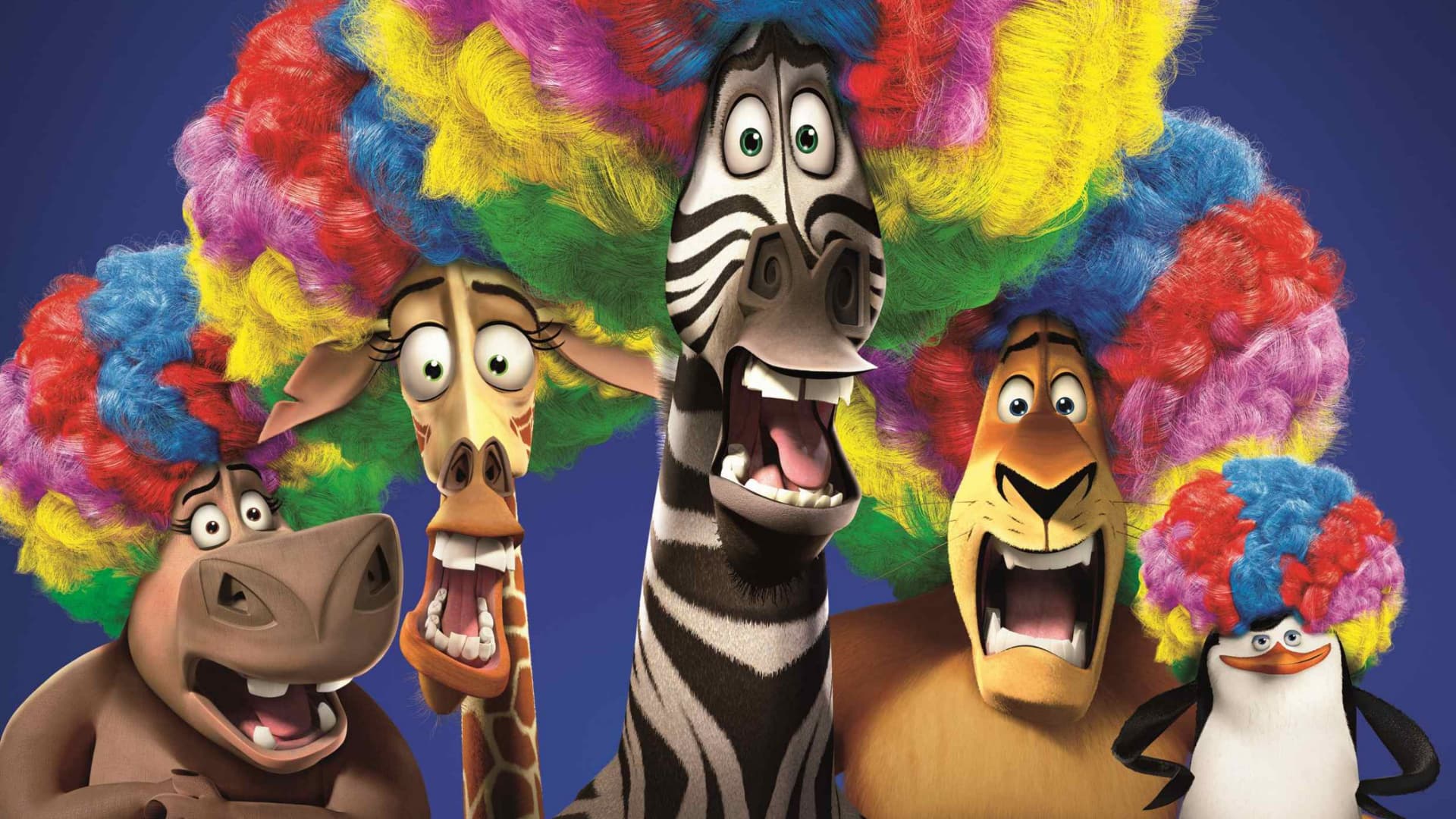
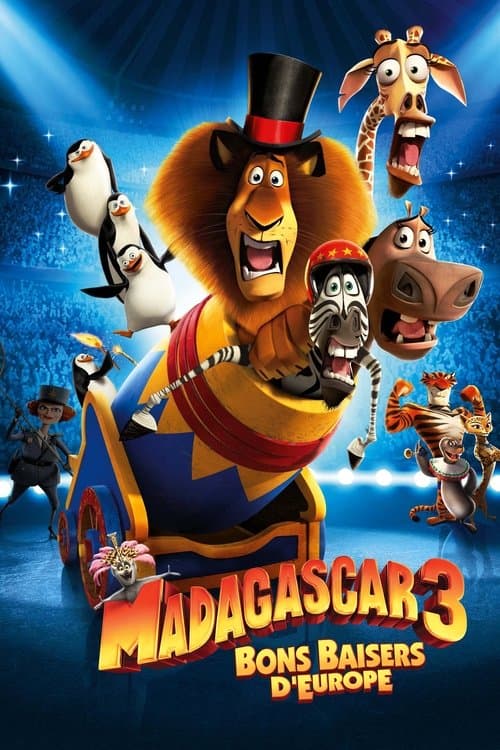
Animal pals Alex, Marty, Melman, and Gloria are still trying to make it back to New York's Central Park Zoo. They are forced to take a detour to Europe to find the penguins and chimps who broke the bank at a Monte Carlo casino. When French animal-control officer Capitaine Chantel DuBois picks up their scent, Alex and company are forced to hide out in a traveling circus.
Difficult scenes
Early in the European adventure, the heroes are hunted by an animal control officer who is unusually intense for a family comedy, and she wants to capture Alex and mount his head in her collection. The idea is stated clearly, even though the tone stays cartoonish, so younger children who understand what that means may find it upsetting. The Monte Carlo sequence is packed with visual chaos, loud action, and fast movement, including a major chase through the casino and a frantic escape. For children who are sensitive to sensory overload, this scene may feel more overwhelming than violent, because it stacks surprise, comic impact, and a strong sense of pursuit. After the escape, the story includes a plane crash played for slapstick rather than realism. The scene is light in style, but the accident context and brief survival stakes may still worry very young viewers, especially children already anxious about travel, heights, or sudden falls. The film also features several risky circus acts, including being shot from a cannon, balancing on a tightrope, and performing dangerous stunts. These moments are framed as exciting and funny, yet they still depend on a real sense of danger and the fear of failing or getting hurt. One notable scene discusses Vitaly's past accident, which left him burned and deeply shaken as a performer. Nothing is shown in a graphic way, but the injury, embarrassment, and fear of repeating the failure give this moment more emotional weight than most of the movie.
Where to watch
No verified platform for the US market yet. We keep this section updated as availability changes.
Availability checked on Apr 01, 2026
About this title
- Format
- Feature film
- Year
- 2012
- Runtime
- 1h 33m
- Countries
- United States of America
- Original language
- EN
- Studios
- DreamWorks Animation, Pacific Data Images
Content barometer
Violence
2/5
Moderate
Fear
2/5
A few scenes
Sexuality
1/5
Allusions
Language
0/5
None
Narrative complexity
1/5
Accessible
Adult themes
0/5
None
Expert review
This animated sequel is a fast, colorful, comedy adventure designed for broad family viewing, with constant motion, visual gags, and energetic circus spectacle. The main sensitive elements come from a relentless villain who hunts the heroes, several chase and capture sequences, cartoon style accidents such as a crash and cannon shots, and an explicit taxidermy threat that may unsettle sensitive children. The film stays highly stylized, with no realistic injury detail or graphic suffering, yet the tension returns regularly across the story, more often than in a very gentle preschool film. A few moments also involve humiliation, deception, and characters feeling rejected, which can land emotionally for children who are sensitive to social conflict. Most children are likely to enjoy it comfortably from about age 6, and parental support can help if a child is easily worried by determined villains, repeated pursuit scenes, or moments when the heroes appear briefly trapped.
Synopsis
Animal pals Alex, Marty, Melman, and Gloria are still trying to make it back to New York's Central Park Zoo. They are forced to take a detour to Europe to find the penguins and chimps who broke the bank at a Monte Carlo casino. When French animal-control officer Capitaine Chantel DuBois picks up their scent, Alex and company are forced to hide out in a traveling circus.
Difficult scenes
Early in the European adventure, the heroes are hunted by an animal control officer who is unusually intense for a family comedy, and she wants to capture Alex and mount his head in her collection. The idea is stated clearly, even though the tone stays cartoonish, so younger children who understand what that means may find it upsetting. The Monte Carlo sequence is packed with visual chaos, loud action, and fast movement, including a major chase through the casino and a frantic escape. For children who are sensitive to sensory overload, this scene may feel more overwhelming than violent, because it stacks surprise, comic impact, and a strong sense of pursuit. After the escape, the story includes a plane crash played for slapstick rather than realism. The scene is light in style, but the accident context and brief survival stakes may still worry very young viewers, especially children already anxious about travel, heights, or sudden falls. The film also features several risky circus acts, including being shot from a cannon, balancing on a tightrope, and performing dangerous stunts. These moments are framed as exciting and funny, yet they still depend on a real sense of danger and the fear of failing or getting hurt. One notable scene discusses Vitaly's past accident, which left him burned and deeply shaken as a performer. Nothing is shown in a graphic way, but the injury, embarrassment, and fear of repeating the failure give this moment more emotional weight than most of the movie.