Madagascar
Does this age rating seem accurate to you?
Detailed parental analysis
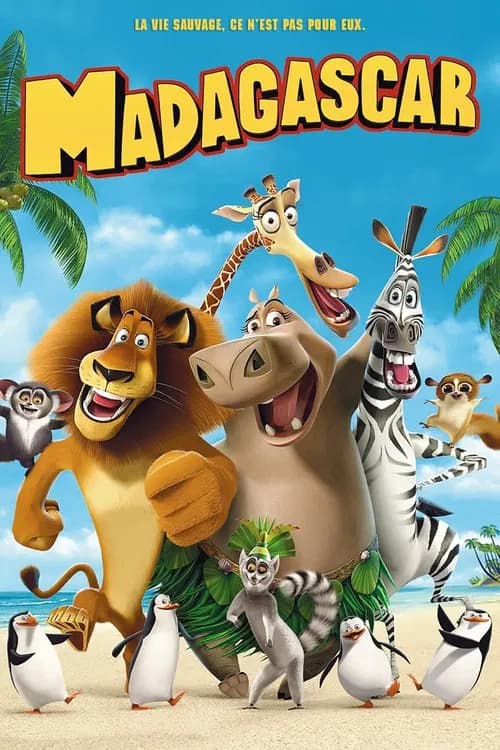
Madagascar is a family animated comedy with an upbeat tone and brisk pace, driven by offbeat humour that oscillates between gags for children and knowing nods to adults. Four animals accustomed to the comfortable confines of a New York zoo find themselves thrust into the wild, forced to reimagine their relationship with the world and with themselves. The film is primarily aimed at children from age 6 onwards, but its dual-register writing is also intended for parents.
Underlying Values
Violence remains within the codes of family animation: it is stylised, without gore, and its consequences are minimised. The most striking scenes involve predators (Foosas, crocodile, carnivorous flower) attacking small animals, and the lion biting the zebra's backside in a bout of hunger, leaving a visible plaster but with no realism whatsoever. These passages may surprise very young sensitive children, but on the whole the film remains firmly in cartoon territory. The lion's hunger, with its strange flashes of gaze and hallucinations, is the most anxiety-inducing element of the film: it represents a loss of control that some children under 5 might struggle to understand.
Violence
Violence remains within the codes of family animation: it is stylised, without gore, and its consequences are minimised. The most striking scenes involve predators (Foosas, crocodile, carnivorous flower) attacking small animals, and the lion biting the zebra's backside in a bout of hunger, leaving a visible plaster but with no realism whatsoever. These passages may surprise very young sensitive children, but on the whole the film remains firmly in cartoon territory. The lion's hunger, with its strange flashes of gaze and hallucinations, is the most anxiety-inducing element of the film: it represents a loss of control that some children under 5 might struggle to understand.
Substances
One scene shows the lion struck by two tranquiliser darts, followed by a psychedelic hallucination staged with a recognisable song. The effect is clearly comedic and endorses no voluntary consumption, but the imagery is striking enough that some curious children may ask questions about what these products do. It is a straightforward opportunity to explain the difference between a veterinary medicine and a recreational drug.
Discrimination
The character of the lemur king King Julien is performed with an exaggerated Indian accent, a voice-acting choice that was not innocent at the time and is now recognised as culturally approximate. The problem does not lie with the character himself, who is funny and well-written, but with the association between a caricatured ethnic accent and a vainly authoritarian leader. Moreover, Madagascar is depicted as an exotic island untouched by any human presence, erasing the cultural reality of an inhabited country. These choices do not dominate the film, but they deserve to be mentioned to a somewhat older child who might question these representations.
Language
The dialogue contains a few double-meaning gags aimed at adults, including a scene involving a rectal thermometer mistakenly used as an oral thermometer. This type of bodily humour is characteristic of the film and often passes over children's heads without them grasping the innuendo. Nothing crude in the strict sense, but the register is sometimes frankly bawdy for a family comedy.
Strengths
The film succeeds in building a genuine dynamic of friendship between four characters with distinctly different temperaments, and their complementarity works without descending into sentimentality. The portrayal of the lion, torn between his attachment to his friends and his predatory instincts, is surprisingly nuanced for a mainstream film: it is an honest inner conflict, not a caricature of wickedness. The pacing is brisk and the gags follow with solid timing. The soundtrack, which recycles recognisable classics, creates genuine intergenerational familiarity. The film offers children an accessible entry point to concrete philosophical questions: is freedom better than security, and can you choose what you are when nature has decided otherwise?
Age recommendation and discussion points
The film is suitable from age 5 to 6 onwards for relaxed viewing, with parental presence recommended for younger children sensitive to predation scenes. Two discussion angles are worth pursuing after viewing: ask the child whether the zoo was really a good life for the animals, and why, and explore with them the lion's difficulty in being both friend and predator, which naturally opens the question of whether you can choose who you are.
Synopsis
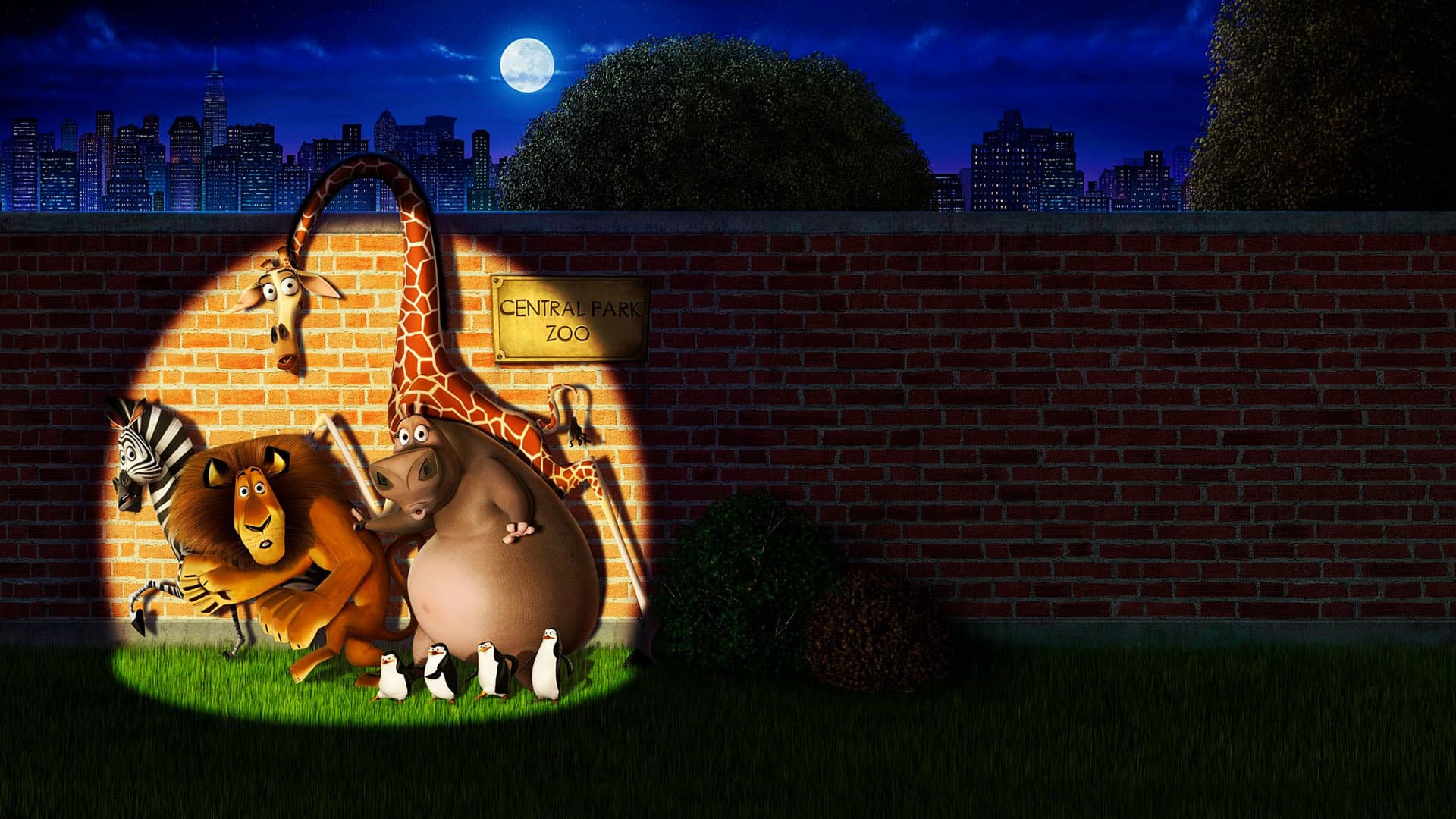
Four animal friends get a taste of the wild life when they break out of captivity at the Central Park Zoo and wash ashore on the island of Madagascar.
About this title
- Format
- Feature film
- Year
- 2005
- Runtime
- 1h 23m
- Countries
- United States of America
- Original language
- EN
- Studios
- Pacific Data Images, DreamWorks Animation
Content barometer
- Violence2/5Moderate
- Fear2/5A few scenes
- Sexuality1/5Allusions
- Language1/5Mild
- Narrative complexity1/5Accessible
- Adult themes1/5Mild
Values conveyed
- Friendship
- Loyalty
- Autonomy
- teamwork
- self acceptance