Littlest Pet Shop
Does this age rating seem accurate to you?
Detailed parental analysis
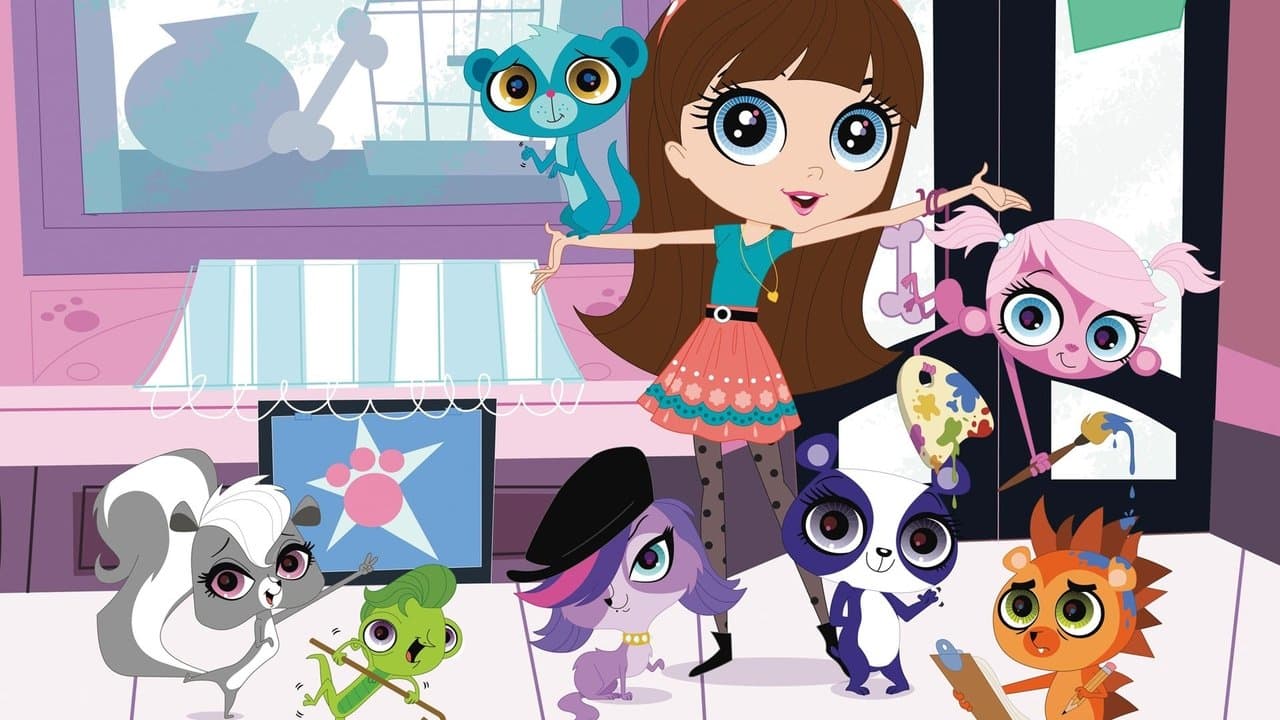
Littlest Pet Shop is a colourful and light animated series, designed in a cheerful and untroubled atmosphere. The plot follows Blythe Baxter, a teenager who discovers she can communicate with the animals in the pet shop of her building, and experiences everyday adventures with them. The series is primarily aimed at children aged 6 to 11, although its accessible tone may suit slightly younger children when accompanied by an adult.
Underlying Values
The dominant value system is one of friendship, self-acceptance and difference, embodied by Blythe and her animal friends. However, the series also introduces two antagonistic characters, the Biskit twins, whose behaviour structures a large part of the conflicts: they belittle their peers, criticise clothing and appearance, and organise malicious pranks. This type of character is common in children's series and can serve as a starting point for discussing peer bullying, provided the parent accompanies the viewing. The series does not explicitly endorse this behaviour, but it does not always deconstruct it with sufficient clarity for a young child to draw the lesson alone. Furthermore, the series is based on a toy line and maintains a close link between narrative and consumption, making it an object of deliberate commercial entertainment rather than an educational tool.
Discrimination
The Biskit twins embody an archetype of the 'mean girl' who judges others on their appearance and social status. This stereotype is recurrent in fiction for children and teenagers, and its presence here is not insignificant: it normalises the idea that certain girls are naturally cruel and superficial, without the series systematically taking the necessary step back to make an explicit critique of it. This is a point worth flagging to parents of young children, who may absorb these representations without filtering them.
Parental and Family Portrayals
The parental figure is barely present in the series, which is consistent with the narrative logic centred on Blythe's autonomy. This pattern of a child left to their own adventures without strong adult supervision is typical of the genre, and does not constitute a cause for concern, but it is worth noting for parents of very young children who might internalise this independence as a norm.
Strengths
The series offers a vibrant and inventive visual aesthetic, with expressive character designs that work well for the target audience. The central idea, a teenager capable of understanding animals, is original enough to fuel the imagination of young children and open conversations about empathy towards animals. The short, fast-paced episodes are well suited to the attention span of 6 to 10-year-olds. Beyond these formal qualities, the series does not seek to go beyond its role as entertainment and offers no particular narrative or emotional depth.
Age recommendation and discussion points
The series is suitable from age 6 for independent viewing, and can be appropriate from age 4 when watched with a parent. Two angles of discussion are worth opening after viewing: why do the Biskit twins behave this way towards others, and is making fun of someone's appearance an acceptable way to get noticed? It is also an opportunity to talk about the advertisements and toys linked to the series, and to explain to the child the connection between a story and the products it seeks to sell.
Synopsis
When Blythe Baxter moved into the city with her father, she never expected to move into the apartment above the Littlest Pet Shop. But an even bigger surprise awaited her. Blythe can talk to pets... and they can talk back!
About this title
- Format
- TV series
- Year
- 2012
- Runtime
- 22m
- Countries
- Canada, United States of America
- Original language
- EN
- Directed by
- Julie McNally Cahill, Timothy Cahill
- Main cast
- Ashleigh Ball, Nicole Oliver, Tabitha St. Germain, Kyle Rideout, Kira Tozer, Peter New, Sam Vincent, Jocelyne Loewen, Michael Kopsa, Kathleen Barr
- Studios
- DHX Media, Hasbro Studios
Content barometer
- Violence0/5None
- Fear0/5None
- Sexuality0/5None
- Language0/5None
- Narrative complexity1/5Accessible
- Adult themes0/5None
Watch-outs
- Bullying
- Mockery
- Gender stereotypes
Values conveyed
- Friendship
- Acceptance of difference
- Autonomy
- teamwork
- creativity
- empathy