Little Hiawatha
Does this age rating seem accurate to you?
Detailed parental analysis
Little Hiawatha is a Disney animated short with a light and mischievous tone, tinged with a gentle childhood melancholy. It follows the adventures of a very young Native American boy who sets out to hunt alone in the forest and finds himself confronted with animals far more formidable than expected. The film is clearly aimed at very young children, with simple narration, accessible visual humour and an overall benevolent atmosphere.
Violence
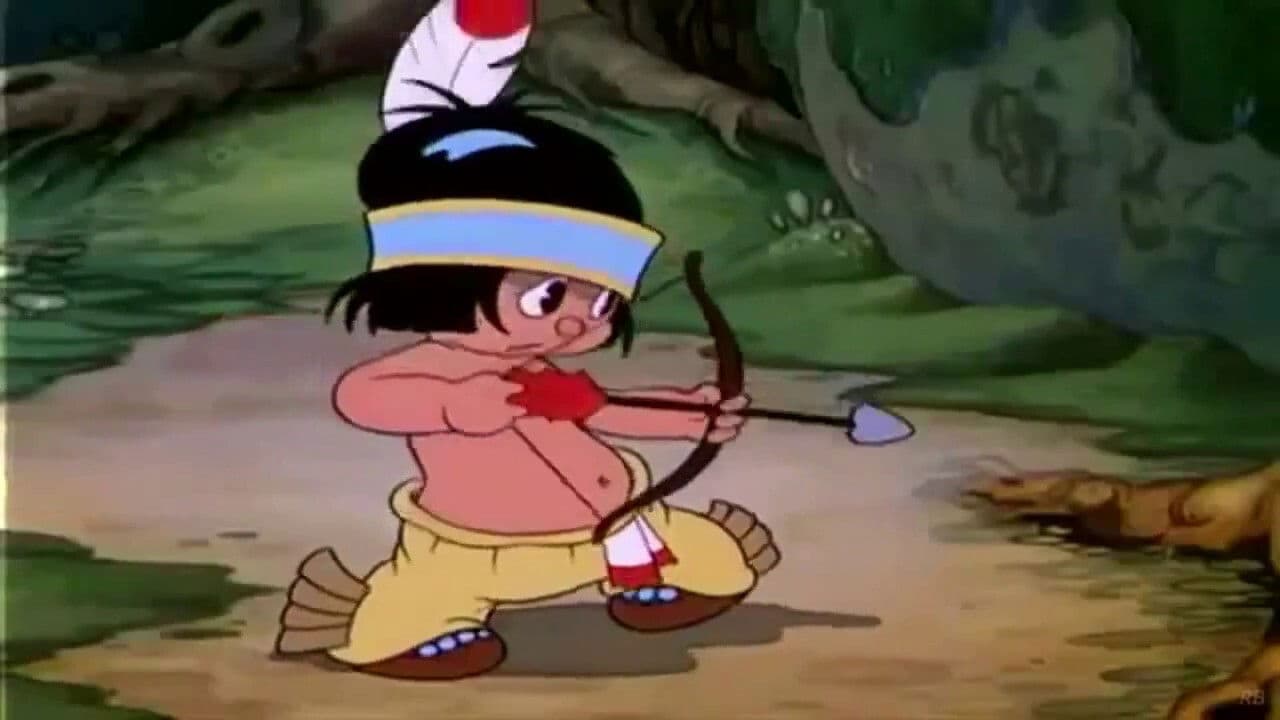
Violence remains within the realm of physical comedy, but two sequences warrant parental attention. The chase by a bear is frankly intense for a very young child: the animal growls, shows its teeth and drools, and the threat is presented as real before tipping into the burlesque. The rabbit hunting scene, where the little boy aims his arrow at his prey whilst the animal is paralysed with fear, may trouble sensitive children, even though it resolves without actual violence. Overall it stays within cartoon conventions, with no blood or injury, but the emotional intensity of the chase exceeds what the youngest children anticipate.
Sex and Nudity
The film relies on a recurring gag: the character's trousers regularly fall down, exposing his buttocks. The nudity is clearly comedic and entirely without sexual connotation, in the tradition of burlesque cartoon humour. For the vast majority of families, this poses no problem. Parents who wish to avoid this type of bodily humour with very young children may wish to note it.
Underlying Values
The narrative values the courage and perseverance of a child who faces alone a natural world larger than himself. The repeated failure of the young hunter is treated with tenderness rather than mockery, making it an implicitly positive message about learning through error. The relationship with nature is central: the animals are characters in their own right, endowed with emotions, which naturally opens a conversation about respect for living things.
Discrimination
The film represents a Native American child through the visual and narrative codes of 1930s Hollywood imagery, which reflect an exoticising and simplified vision of indigenous peoples. The character is endearing and treated with sympathy, but the cultural framework is one of reconstructed folklore, without ethnographic depth. For parents wishing to address the question with an older child, this is a concrete opportunity to explain how cinema of a given era reflects the dominant representations of its time.
Social Themes
The relationship between the child and the wild nature forms the thematic heart of the film. The animals are neither enemies to be slain nor resources to be exploited: they resist, flee, organise themselves and ultimately coexist with the young hunter. This relationship with the natural world, even treated in comic mode, can serve as a starting point for discussion about humanity's place in the environment.
Strengths
The film possesses a genuine visual grace characteristic of Disney animation from this period, with detailed forest settings and a warm colour palette that establishes a fairy-tale atmosphere. The dialogue-free narration relies entirely on the expressive performance of the characters and the music, making it a particularly well-suited exercise in visual literacy for very young children. The humour is gentle, the pacing well-controlled, and the figure of the clumsy yet courageous little hero remains universally touching.
Age recommendation and discussion points
The film is suitable from age 4 for children not sensitive to scenes of animal tension, rather 5 or 6 years for fully serene viewing. Two angles of discussion are worth pursuing after watching: ask the child what they think about the way animals are represented and whether they too have the right to be afraid, and, with an older child, address the question of whether this film shows how Native American children actually lived or whether it is rather an invented story.
Synopsis
The "fearless warrior" of the poem is a very small child whose pants keep falling down. He tries to shoot a grasshopper with his arrow, but the grasshopper spits in his eye. He tries to shoot a bunny rabbit, but the rabbit is too cute and pathetic. He tracks a bear, and runs after its cub and right into the mother. But the rest of the animals, thankful for him saving the rabbit, come to his rescue.
About this title
- Format
- Short film
- Year
- 1937
- Runtime
- 9m
- Countries
- United States of America
- Original language
- EN
- Directed by
- David Hand
- Main cast
- Sally Noble, Mary Rosetti, Millie Walters, Gayne Whitman
- Studios
- Walt Disney Productions
Content barometer
- Violence2/5Moderate
- Fear2/5A few scenes
- Sexuality1/5Allusions
- Language0/5None
- Narrative complexity0/5Simple
- Adult themes0/5None
Watch-outs
- Ethnic or racial stereotypes
Values conveyed
- Courage
- Acceptance of difference
- Perseverance
- Autonomy
- compassion
- helpfulness
- humor