
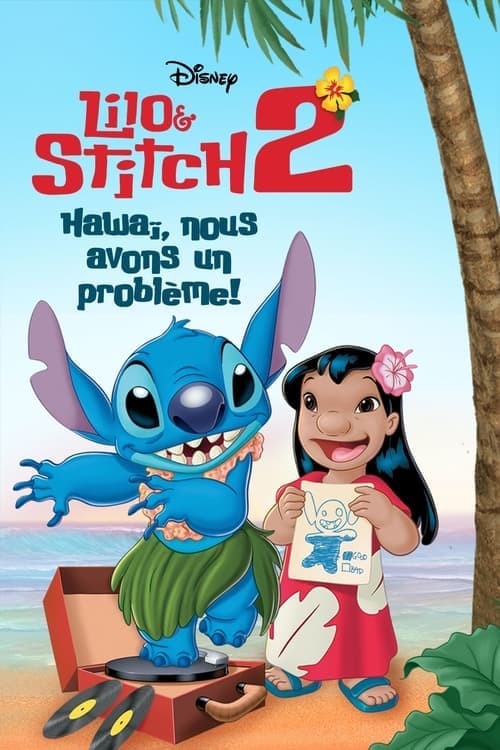
Lilo & Stitch 2: Stitch Has a Glitch
Does this age rating seem accurate to you?
Detailed parental analysis
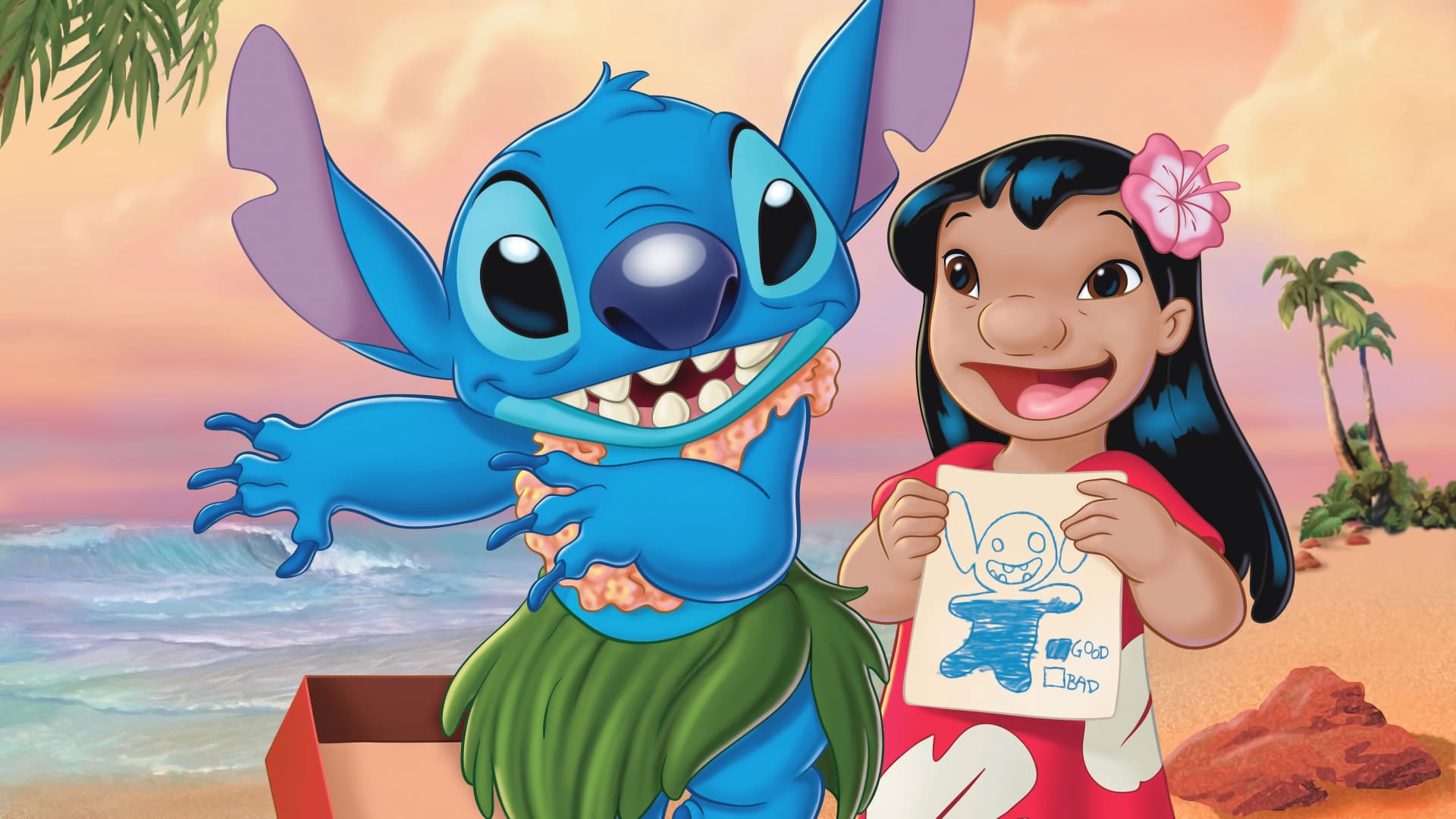
Lilo & Stitch 2 is an animated sequel with a warm atmosphere punctuated by moments of worry and intense emotion, driven by the relationship between a young Hawaiian girl and her alien companion. The plot revolves around a progressive malfunction that threatens Stitch and tests his bond with Lilo. The film is primarily aimed at young children and families, in direct continuation of the first Disney film.
Violence
Stitch's malfunction episodes constitute the film's main source of anxiety. His eyes turn yellow, his movements become uncontrollable and he lashes out at those around him in an altered state, notably injuring Lilo's face. These sequences are not violent in the classical sense, but their unpredictability and the loss of control of a beloved character can be unsettling for very young children. The violence remains mild and without gore, and it is systematically framed by Stitch's sadness and guilt, which gives it a clear narrative purpose rather than a gratuitous quality.
Underlying Values
The film builds its narrative around the Hawaiian concept of ohana, family in the broadest sense, as a central and unconditional value. It also advocates the idea that communicating what one is going through, even when one does not understand what is happening to oneself, is a form of courage and respect towards those who love us. These two messages are conveyed with consistency and without didactic heavyhandedness, making them natural entry points for conversation after viewing.
Parental and Family Portrayals
The central parental figure is Nani, Lilo's older sister, who assumes the role of guardian following the death of their parents. She is portrayed as loving, sometimes overwhelmed, but fundamentally present and responsible. The absence of biological parents is a backdrop to the narrative without being explicitly explored in this second film, but it remains perceptible to children who have seen the first one.
Strengths
The film succeeds in addressing the fear of losing someone you love with an emotional sincerity that is rare for a production of this format. The scene of Stitch's false death, with Lilo in tears, reaches an intensity that exceeds the usual register of direct-to-video sequels. The relationship between the two main characters remains the emotional engine of the narrative and retains the warmth of the first film. For a young child, it is also a gentle introduction to the idea that those we love can be vulnerable and that this vulnerability does not undermine the bond.
Age recommendation and discussion points
The film is suitable from age 5 or 6 onwards, with parental presence recommended for younger children in the face of Stitch's crisis scenes and the false death. Two angles of discussion are worth opening after viewing: why did Stitch not tell Lilo what was happening to him, and what would that have changed? And what does ohana, family, really mean when someone you love does something that hurts you unintentionally?
Synopsis
Now, we find the rowdy extraterrestrial getting used to life with his new ʻohana. However, a malfunction in the ultimate creation of Dr. Jumba soon emerges, which reinstates his destructive programming and threatens to both ruin his friendship with Lilo and to short him out for good!
Where to watch
Availability checked on Apr 29, 2026
About this title
- Format
- Feature film
- Year
- 2005
- Runtime
- 1h 8m
- Countries
- United States of America
- Original language
- EN
- Directed by
- Michael LaBash, Tony Leondis
- Main cast
- Chris Sanders, Dakota Fanning, Tia Carrere, David Ogden Stiers, Kevin McDonald, Kunewa Mook, Jason Scott Lee, William J. Caparella, Holliston Coleman, Matt Corboy
- Studios
- Disney Television Animation, DisneyToon Studios
Content barometer
- Violence2/5Moderate
- Fear3/5Notable tension
- Sexuality0/5None
- Language0/5None
- Narrative complexity0/5Simple
- Adult themes0/5None
Values conveyed
- Friendship
- Acceptance of difference
- Compassion
- Loyalty
- family
- perseverance
- empathy