
Three Little Pigs
Three Little Pigs
Your feedback improves this guide
Your feedback highlights guides that need a second look and keeps the rating trustworthy.
Does this age rating seem accurate to you?
Sign in to vote
What this film brings
Content barometer
Violence
1/5
Mild
Fear
1/5
Mild
Sexuality
0/5
None
Language
0/5
None
Narrative complexity
0/5
Simple
Adult themes
0/5
None
Expert review
This classic animated short has a lively, musical, easy to follow style that clearly targets young children, with a simple story about three little pigs facing a threatening wolf. The main sensitive elements are chase scenes, the repeated arrival of a predator, the destruction of two houses, and a few moments when the wolf uses disguises to trick the pigs, which may unsettle very sensitive viewers. The intensity stays low to mild because everything is highly stylized, with no realistic injury detail, and the overall tone remains playful even during the tense parts. Any fear is more likely to come from the wolf's persistence and the suspense of his attempts to get inside than from anything graphic. For most children, this works around age 4, with an adult nearby if the child is easily frightened by villains, loud blowing, or short chase sequences.
Synopsis
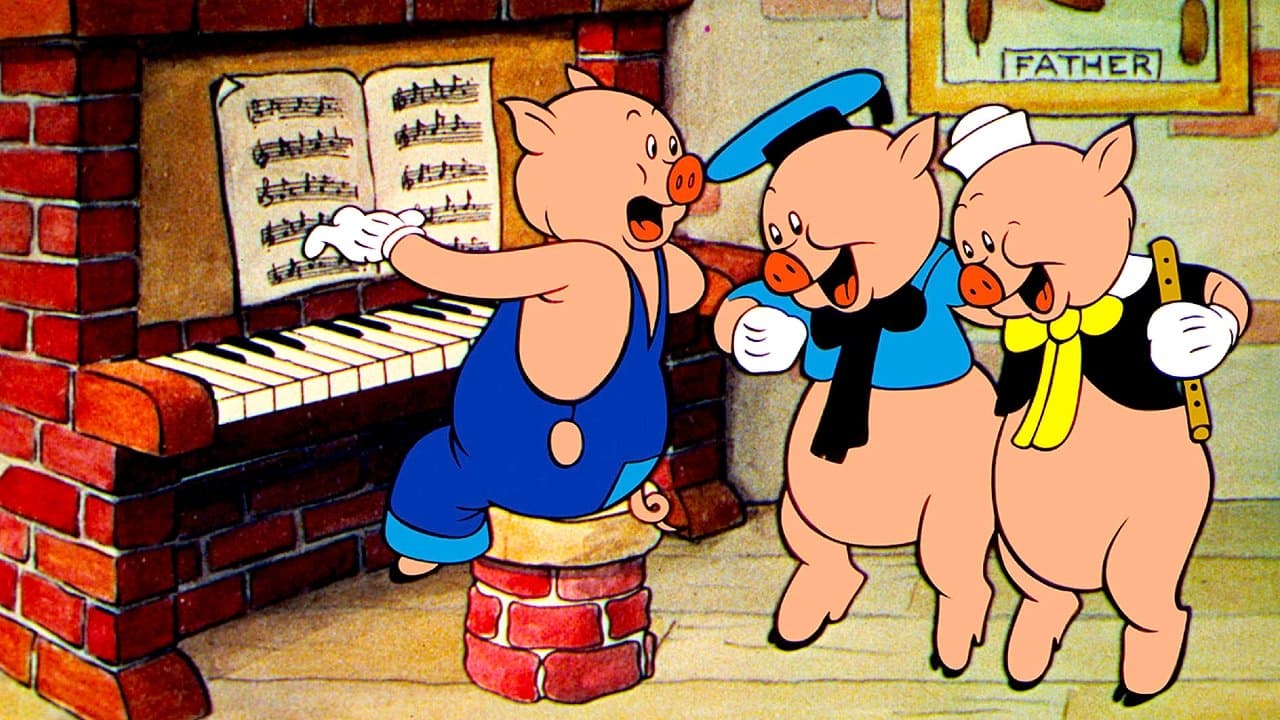
The two pigs building houses of hay and sticks scoff at their brother, building the brick house. But when the wolf comes around and blows their houses down (after trickery like dressing as a foundling sheep fails), they run to their brother's house. And throughout, they sing the classic song, "Who's Afraid of the Big Bad Wolf?".
Difficult scenes
The wolf appears early as a clear threat, and his presence briefly shifts the mood of the cartoon. Young children may be unsettled by his predator look, the way he chases the pigs, and the contrast between the cheerful songs and the sudden arrival of danger. Two houses are blown down by the wolf in danger scenes that are very easy for even young viewers to understand. The presentation stays cartoonish and unrealistic, but seeing a home collapse and the pigs run away in panic may worry a child who is sensitive to being chased or losing a safe place. The wolf also tries to trick the pigs by using disguises to lure them out or get them to open the door. This theme of deception and attempted intrusion may be worth a brief parent conversation, especially for children who react strongly to lying characters or to the idea of someone trying to get into a house.
Where to watch
No verified platform for the US market yet. We keep this section updated as availability changes.
About this title
- Format
- Short film
- Year
- 1933
- Runtime
- 9m
- Countries
- United States of America
- Original language
- EN
- Directed by
- Burt Gillett
- Main cast
- Billy Bletcher, Pinto Colvig, Dorothy Compton, Mary Moder
- Studios
- Walt Disney Productions
Content barometer
Violence
1/5
Mild
Fear
1/5
Mild
Sexuality
0/5
None
Language
0/5
None
Narrative complexity
0/5
Simple
Adult themes
0/5
None
Expert review
This classic animated short has a lively, musical, easy to follow style that clearly targets young children, with a simple story about three little pigs facing a threatening wolf. The main sensitive elements are chase scenes, the repeated arrival of a predator, the destruction of two houses, and a few moments when the wolf uses disguises to trick the pigs, which may unsettle very sensitive viewers. The intensity stays low to mild because everything is highly stylized, with no realistic injury detail, and the overall tone remains playful even during the tense parts. Any fear is more likely to come from the wolf's persistence and the suspense of his attempts to get inside than from anything graphic. For most children, this works around age 4, with an adult nearby if the child is easily frightened by villains, loud blowing, or short chase sequences.
Synopsis
The two pigs building houses of hay and sticks scoff at their brother, building the brick house. But when the wolf comes around and blows their houses down (after trickery like dressing as a foundling sheep fails), they run to their brother's house. And throughout, they sing the classic song, "Who's Afraid of the Big Bad Wolf?".
Difficult scenes
The wolf appears early as a clear threat, and his presence briefly shifts the mood of the cartoon. Young children may be unsettled by his predator look, the way he chases the pigs, and the contrast between the cheerful songs and the sudden arrival of danger. Two houses are blown down by the wolf in danger scenes that are very easy for even young viewers to understand. The presentation stays cartoonish and unrealistic, but seeing a home collapse and the pigs run away in panic may worry a child who is sensitive to being chased or losing a safe place. The wolf also tries to trick the pigs by using disguises to lure them out or get them to open the door. This theme of deception and attempted intrusion may be worth a brief parent conversation, especially for children who react strongly to lying characters or to the idea of someone trying to get into a house.