
We're Back! A Dinosaur's Story
We're Back! A Dinosaur's Story
Your feedback improves this guide
Your feedback highlights guides that need a second look and keeps the rating trustworthy.
Does this age rating seem accurate to you?
Sign in to vote
Watch-outs
What this film brings
Content barometer
Violence
2/5
Moderate
Fear
3/5
Notable tension
Sexuality
0/5
None
Language
1/5
Mild
Narrative complexity
0/5
Simple
Adult themes
0/5
None
Expert review
This animated children s film mixes a playful New York adventure, broad comedy, and lovable dinosaurs, but it also turns noticeably darker whenever the villain and his eerie circus take over the story. The main sensitive material comes from a genuinely menacing antagonist, chase scenes, unsettling transformations, and a twisted circus atmosphere that may frighten younger viewers, there are also some dated gender stereotypes in the way the girl character is at times framed through appearance, romantic longing, or a damsel style role. These moments are not constant, yet they are memorable and stronger than the bright opening suggests, so the shift in tone can catch very young children off guard. For most children, the film is easier to enjoy from about age 7, especially with an adult nearby if they are sensitive to exaggerated villain faces, threatening scenes, or dark fantasy imagery. It can help to warn children that some scenes are designed to feel scary without being realistic, then talk afterward about fear, bravery, and the dated gender portrayals.
Synopsis
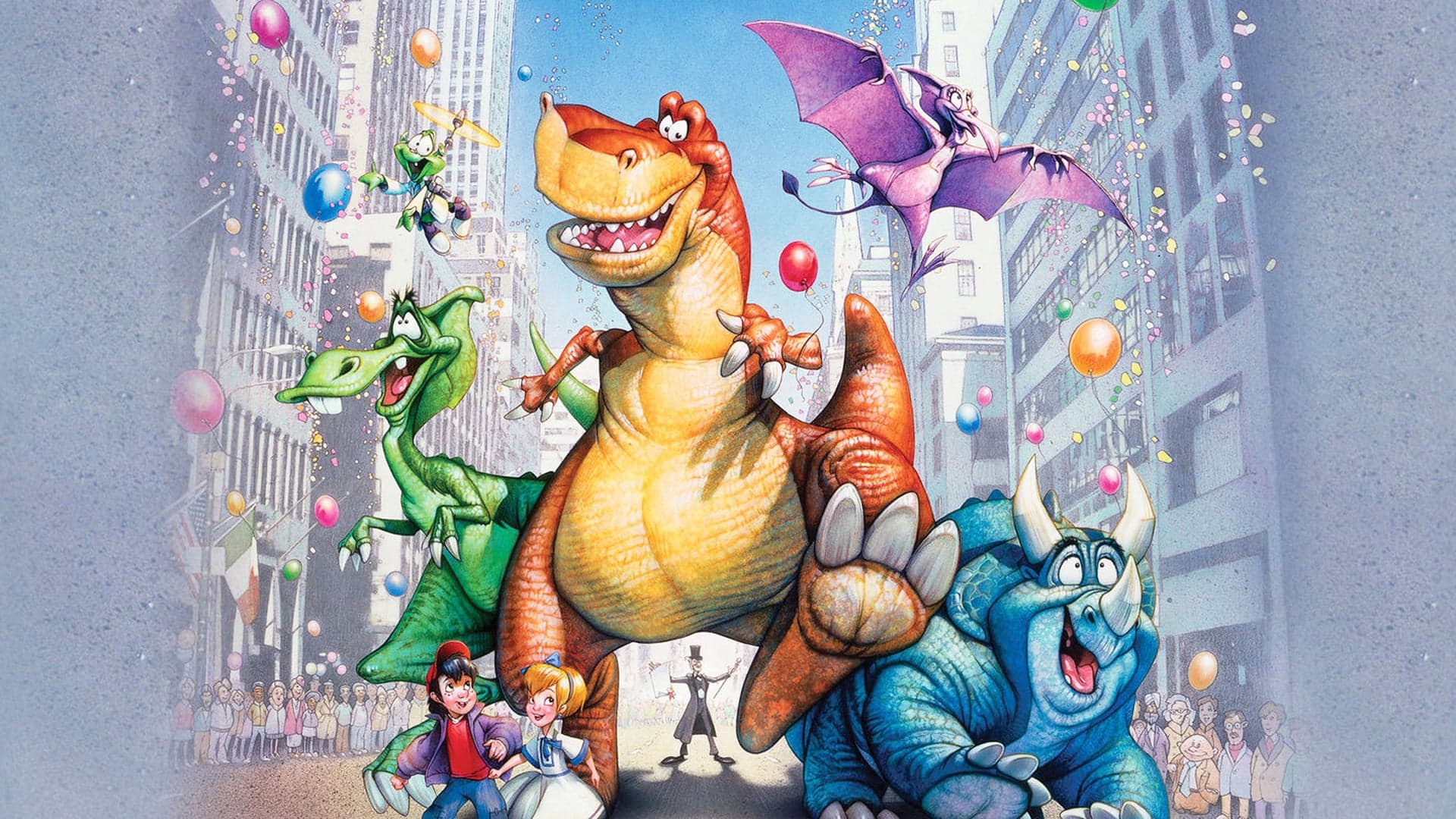
Captain New Eyes travels back in time and feeds dinosaurs his Brain Grain cereal, which makes them intelligent and non-violent. They agree to go to the "Middle Future" in order to grant the wishes of children in New York City. They are to meet Dr. Bleeb of the Museum of Natural History, but get sidetracked with their new children friends and run into the Captain's evil brother, Professor Screweyes.
Difficult scenes
The arrival of Professor Screweyes and everything connected to his circus is the main point parents should note. His design, voice, cruel behavior, and the distorted atmosphere of the setting can be quite intense for a young child, especially because the film suddenly shifts from light adventure to something much darker. Scenes where the dinosaurs and children are chased or threatened create real tension, even though the violence stays stylized rather than graphic. Sensitive children may react most to the fear of capture, the sense that the heroes are losing control, and the villain s very exaggerated facial expressions and menace. Some circus related transformations and fantasy images are presented in a whimsical yet unsettling way, with distorted bodies and faces that feel close to nightmare imagery. These moments are not realistic or gory, but they can linger with children who are easily upset by metamorphosis, creepy performance spaces, or bizarre visual designs. Cecilia is sometimes written through fairly dated gender coding, with emphasis on elegance, romantic dreaming, and being admired or rescued. This is not harsh or constant, but it can be a useful talking point with children about how girls can also be adventurous, funny, and brave without being defined mainly by appearance.
Where to watch
No verified platform for the US market yet. We keep this section updated as availability changes.
About this title
- Format
- Feature film
- Year
- 1993
- Runtime
- 1h 11m
- Countries
- United States of America
- Original language
- EN
- Directed by
- Ralph Zondag, Simon Wells, Phil Nibbelink, Dick Zondag
- Main cast
- John Goodman, René Le Vant, Felicity Kendal, Charles Fleischer, Walter Cronkite, Jay Leno, Joey Shea, Yeardley Smith, Martin Short, Kenneth Mars
- Studios
- Amblin Entertainment, Amblimation, Universal Pictures
Content barometer
Violence
2/5
Moderate
Fear
3/5
Notable tension
Sexuality
0/5
None
Language
1/5
Mild
Narrative complexity
0/5
Simple
Adult themes
0/5
None
Expert review
This animated children s film mixes a playful New York adventure, broad comedy, and lovable dinosaurs, but it also turns noticeably darker whenever the villain and his eerie circus take over the story. The main sensitive material comes from a genuinely menacing antagonist, chase scenes, unsettling transformations, and a twisted circus atmosphere that may frighten younger viewers, there are also some dated gender stereotypes in the way the girl character is at times framed through appearance, romantic longing, or a damsel style role. These moments are not constant, yet they are memorable and stronger than the bright opening suggests, so the shift in tone can catch very young children off guard. For most children, the film is easier to enjoy from about age 7, especially with an adult nearby if they are sensitive to exaggerated villain faces, threatening scenes, or dark fantasy imagery. It can help to warn children that some scenes are designed to feel scary without being realistic, then talk afterward about fear, bravery, and the dated gender portrayals.
Synopsis
Captain New Eyes travels back in time and feeds dinosaurs his Brain Grain cereal, which makes them intelligent and non-violent. They agree to go to the "Middle Future" in order to grant the wishes of children in New York City. They are to meet Dr. Bleeb of the Museum of Natural History, but get sidetracked with their new children friends and run into the Captain's evil brother, Professor Screweyes.
Difficult scenes
The arrival of Professor Screweyes and everything connected to his circus is the main point parents should note. His design, voice, cruel behavior, and the distorted atmosphere of the setting can be quite intense for a young child, especially because the film suddenly shifts from light adventure to something much darker. Scenes where the dinosaurs and children are chased or threatened create real tension, even though the violence stays stylized rather than graphic. Sensitive children may react most to the fear of capture, the sense that the heroes are losing control, and the villain s very exaggerated facial expressions and menace. Some circus related transformations and fantasy images are presented in a whimsical yet unsettling way, with distorted bodies and faces that feel close to nightmare imagery. These moments are not realistic or gory, but they can linger with children who are easily upset by metamorphosis, creepy performance spaces, or bizarre visual designs. Cecilia is sometimes written through fairly dated gender coding, with emphasis on elegance, romantic dreaming, and being admired or rescued. This is not harsh or constant, but it can be a useful talking point with children about how girls can also be adventurous, funny, and brave without being defined mainly by appearance.