Wacky Races
Wacky Races
Your feedback improves this guide
Your feedback highlights guides that need a second look and keeps the rating trustworthy.
Does this age rating seem accurate to you?
Sign in to vote
Watch-outs
What this film brings
Content barometer
Violence
1/5
Mild
Fear
1/5
Mild
Sexuality
0/5
None
Language
0/5
None
Narrative complexity
1/5
Accessible
Adult themes
0/5
None
Expert review
Wacky Races is a Hanna-Barbera animated series from 1968 featuring eleven eccentric racing teams competing across North America in a thoroughly slapstick and lighthearted atmosphere. Sensitive content is essentially limited to cartoon-style physical comedy, with recurring explosions, traps, falls, and mechanical sabotage that never result in any real consequences for the characters. It is worth noting the presence of notable gender stereotypes: Penelope Pitstop, the sole female racer, is repeatedly portrayed as more concerned with her appearance than with racing, and frequently finds herself in distress situations following a gendered damsel-in-distress trope that was typical of its era and that parents may wish to address with their children. These slapstick elements are constant throughout the series but are always handled in a purely comedic register with no real weight, keeping the overall tone light and accessible. Parents can comfortably watch this series with children from age 5 or 6 onward, while also taking the opportunity to discuss the portrayal of women in 1960s animation and the recurring moral theme of cheating never paying off.
Synopsis
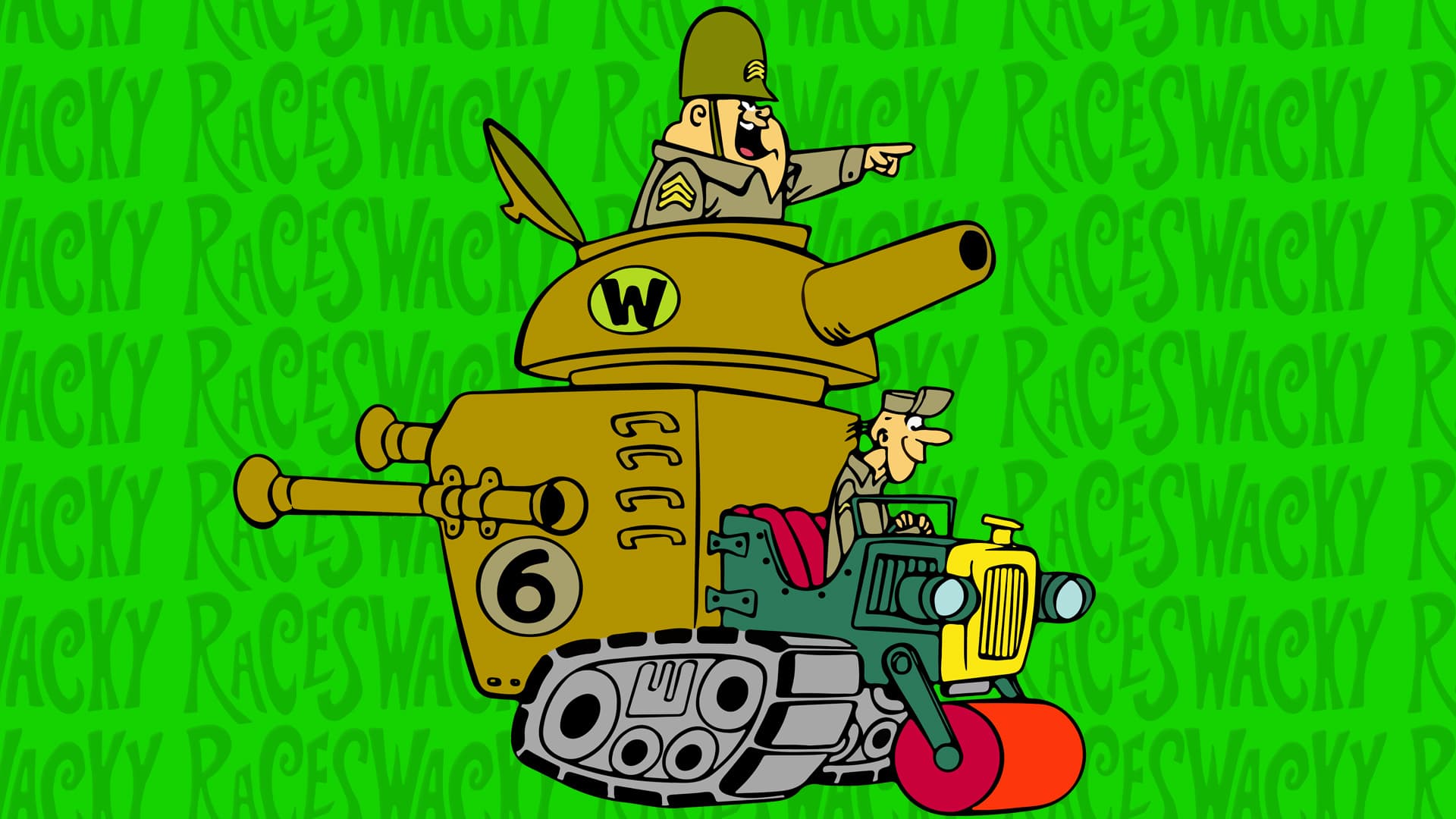
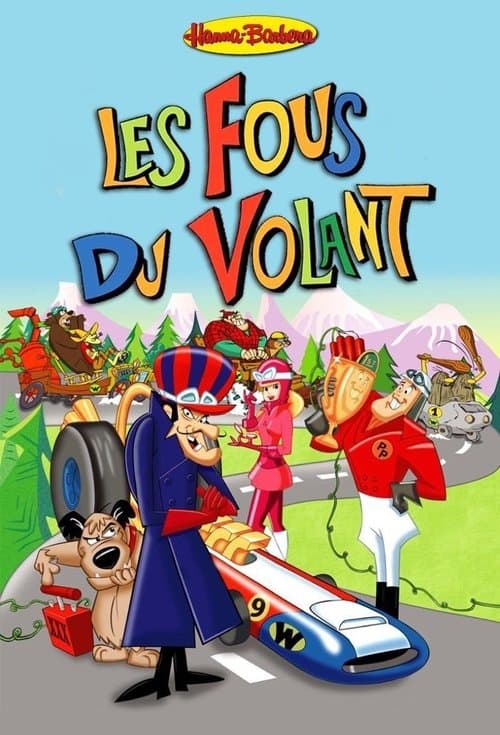
Wacky Races is an animated television series produced by Hanna-Barbera that originally aired in 1968. The show is a parody of traditional car races, featuring a variety of eccentric characters and their outlandish vehicles, all racing across different terrains in a madcap competition for first place. The series is centered around a group of 11 racers, each with their own unique vehicle and distinct personality. The main characters include Dick Dastardly and his dog Muttley, who are always trying to cheat and sabotage the other competitors, although they never succeed. Other notable racers include Penelope Pitstop, the glamorous but tough driver; the adventurous Red Max; and the lovable duo, the Slag Brothers, who drive a massive, rock-like car.
Difficult scenes
Dick Dastardly and Muttley repeatedly set elaborate mechanical traps for the other racers, including explosions, falling boulders, and modified roads. These acts of sabotage are treated in a purely comedic fashion and always backfire on their perpetrators, but their frequency and inventiveness could startle very young children under 4. Penelope Pitstop is repeatedly shown in distress or danger situations, portrayed as needing rescue or as being distracted by her concern for her appearance rather than focusing on the race. This repetitive trope, a legacy of 1960s animation, conveys a reductive image of women that attentive parents may want to discuss and contextualize with their children. The Gruesome Twosome drive a horror-themed car equipped with a fire-breathing dragon, bats, and ghosts. These elements remain visually stylized and non-threatening, but may mildly startle or unsettle particularly sensitive children aged 4 to 5.
Where to watch
Availability checked on Apr 06, 2026
About this title
- Format
- TV series
- Year
- 1968
- Runtime
- 11m
- Countries
- United Kingdom, United States of America
- Original language
- EN
- Directed by
- Joseph Barbera, William Hanna
- Main cast
- John Stephenson, Paul Winchell, Don Messick, Daws Butler, Janet Waldo, Dave Willock
- Studios
- Merrill Heatter-Bob Quigley Productions, Hanna-Barbera Cartoons
Content barometer
Violence
1/5
Mild
Fear
1/5
Mild
Sexuality
0/5
None
Language
0/5
None
Narrative complexity
1/5
Accessible
Adult themes
0/5
None
Expert review
Wacky Races is a Hanna-Barbera animated series from 1968 featuring eleven eccentric racing teams competing across North America in a thoroughly slapstick and lighthearted atmosphere. Sensitive content is essentially limited to cartoon-style physical comedy, with recurring explosions, traps, falls, and mechanical sabotage that never result in any real consequences for the characters. It is worth noting the presence of notable gender stereotypes: Penelope Pitstop, the sole female racer, is repeatedly portrayed as more concerned with her appearance than with racing, and frequently finds herself in distress situations following a gendered damsel-in-distress trope that was typical of its era and that parents may wish to address with their children. These slapstick elements are constant throughout the series but are always handled in a purely comedic register with no real weight, keeping the overall tone light and accessible. Parents can comfortably watch this series with children from age 5 or 6 onward, while also taking the opportunity to discuss the portrayal of women in 1960s animation and the recurring moral theme of cheating never paying off.
Synopsis
Wacky Races is an animated television series produced by Hanna-Barbera that originally aired in 1968. The show is a parody of traditional car races, featuring a variety of eccentric characters and their outlandish vehicles, all racing across different terrains in a madcap competition for first place. The series is centered around a group of 11 racers, each with their own unique vehicle and distinct personality. The main characters include Dick Dastardly and his dog Muttley, who are always trying to cheat and sabotage the other competitors, although they never succeed. Other notable racers include Penelope Pitstop, the glamorous but tough driver; the adventurous Red Max; and the lovable duo, the Slag Brothers, who drive a massive, rock-like car.
Difficult scenes
Dick Dastardly and Muttley repeatedly set elaborate mechanical traps for the other racers, including explosions, falling boulders, and modified roads. These acts of sabotage are treated in a purely comedic fashion and always backfire on their perpetrators, but their frequency and inventiveness could startle very young children under 4. Penelope Pitstop is repeatedly shown in distress or danger situations, portrayed as needing rescue or as being distracted by her concern for her appearance rather than focusing on the race. This repetitive trope, a legacy of 1960s animation, conveys a reductive image of women that attentive parents may want to discuss and contextualize with their children. The Gruesome Twosome drive a horror-themed car equipped with a fire-breathing dragon, bats, and ghosts. These elements remain visually stylized and non-threatening, but may mildly startle or unsettle particularly sensitive children aged 4 to 5.