
Winnie the Pooh: Springtime with Roo
Winnie the Pooh: Springtime with Roo
Your feedback improves this guide
Your feedback highlights guides that need a second look and keeps the rating trustworthy.
Does this age rating seem accurate to you?
Sign in to vote
Watch-outs
What this film brings
Content barometer
Violence
0/5
None
Fear
1/5
Mild
Sexuality
0/5
None
Language
0/5
None
Narrative complexity
0/5
Simple
Adult themes
0/5
None
Expert review
This Winnie the Pooh animated film has a very gentle, cozy, and reassuring atmosphere, built around Easter, friendship, and small everyday conflicts in the Hundred Acre Wood. The sensitive material is mostly emotional, including frustration, a few verbal arguments, one character becoming quite angry, and a short more unsettling sequence involving a scary vision of the future. The intensity stays low, and these moments are brief, with no real violence, no coarse language, and no adult content, which makes it a very accessible family title. Very young viewers may still feel sad when the group is rejected, when the celebration is cancelled, or during the darker dreamlike scene. For a child around age 4, it is usually suitable, especially if an adult is nearby to explain that Rabbit's anger comes from hurt feelings and that the story remains safe and comforting overall.
Synopsis
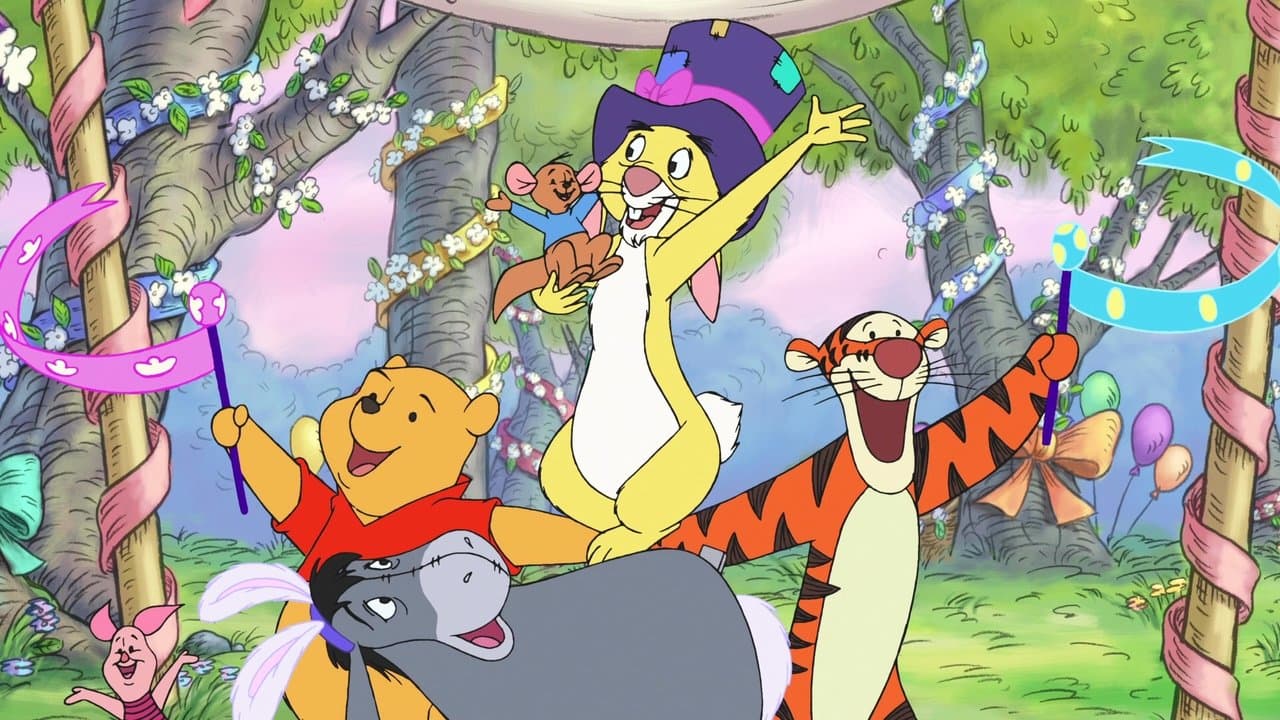
Spring has sprung, and baby Roo is excited to get out and explore and make new friends. But Rabbit seems preoccupied with spring cleaning, instead of embracing his usual role of playing Easter Bunny. Leave it to Roo to show Rabbit -- through love -- that it's more important who you love and not who's in charge.
Difficult scenes
Early in the story, Rabbit abruptly replaces the eagerly expected Easter celebration with a Spring Cleaning Day. This deeply disappoints Roo and the others, which may affect young children who are sensitive to changed plans, frustration, or the loss of an anticipated holiday event. When the other characters try decorating the house to please Rabbit, he reacts angrily when he discovers they disobeyed his instructions. There is no physical violence, but the tone is sharper than in many Winnie the Pooh stories, and some children may be unsettled by the group's rejection and by Roo's visible sadness. Later, the story includes a journey back through the book's pages to revisit a painful memory. This reveals that Rabbit once felt left out during a previous celebration, introducing a theme of hurt feelings and social exclusion that some children may take very personally. One dreamlike vision shows a future in which the wood seems empty and Rabbit's friends are gone. Even though the scene is brief and still highly stylized, the atmosphere becomes noticeably more unsettling, with a solemn voice and an image of abandonment that may worry very young viewers.
Where to watch
No verified platform for the US market yet. We keep this section updated as availability changes.
Availability checked on Apr 01, 2026
About this title
- Format
- Feature film
- Year
- 2004
- Runtime
- 1h 5m
- Countries
- United States of America
- Original language
- EN
- Studios
- Disney Television Animation, DisneyToon Studios
Content barometer
Violence
0/5
None
Fear
1/5
Mild
Sexuality
0/5
None
Language
0/5
None
Narrative complexity
0/5
Simple
Adult themes
0/5
None
Expert review
This Winnie the Pooh animated film has a very gentle, cozy, and reassuring atmosphere, built around Easter, friendship, and small everyday conflicts in the Hundred Acre Wood. The sensitive material is mostly emotional, including frustration, a few verbal arguments, one character becoming quite angry, and a short more unsettling sequence involving a scary vision of the future. The intensity stays low, and these moments are brief, with no real violence, no coarse language, and no adult content, which makes it a very accessible family title. Very young viewers may still feel sad when the group is rejected, when the celebration is cancelled, or during the darker dreamlike scene. For a child around age 4, it is usually suitable, especially if an adult is nearby to explain that Rabbit's anger comes from hurt feelings and that the story remains safe and comforting overall.
Synopsis
Spring has sprung, and baby Roo is excited to get out and explore and make new friends. But Rabbit seems preoccupied with spring cleaning, instead of embracing his usual role of playing Easter Bunny. Leave it to Roo to show Rabbit -- through love -- that it's more important who you love and not who's in charge.
Difficult scenes
Early in the story, Rabbit abruptly replaces the eagerly expected Easter celebration with a Spring Cleaning Day. This deeply disappoints Roo and the others, which may affect young children who are sensitive to changed plans, frustration, or the loss of an anticipated holiday event. When the other characters try decorating the house to please Rabbit, he reacts angrily when he discovers they disobeyed his instructions. There is no physical violence, but the tone is sharper than in many Winnie the Pooh stories, and some children may be unsettled by the group's rejection and by Roo's visible sadness. Later, the story includes a journey back through the book's pages to revisit a painful memory. This reveals that Rabbit once felt left out during a previous celebration, introducing a theme of hurt feelings and social exclusion that some children may take very personally. One dreamlike vision shows a future in which the wood seems empty and Rabbit's friends are gone. Even though the scene is brief and still highly stylized, the atmosphere becomes noticeably more unsettling, with a solemn voice and an image of abandonment that may worry very young viewers.