
The Inventor
The Inventor
Your feedback improves this guide
Your feedback highlights guides that need a second look and keeps the rating trustworthy.
Does this age rating seem accurate to you?
Sign in to vote
Watch-outs
What this film brings
Content barometer
Violence
1/5
Mild
Fear
1/5
Mild
Sexuality
0/5
None
Language
0/5
None
Narrative complexity
3/5
Complex
Adult themes
0/5
None
Expert review
"The Inventor" (2023) is a stop-motion animated film that immerses viewers in Renaissance-era France, following a whimsical and inventive Leonardo da Vinci alongside the spirited Princess Marguerite as they seek the meaning of life. The film is largely warm and playful in tone, but it ventures into fairly abstract philosophical territory around existence, death, and the human body, most notably through Leonardo's anatomical experiments with cadavers, which are depicted with humor but remain present as a recurring motif. These elements, while handled lightly, may surprise or unsettle more sensitive younger viewers. Parents can approach the viewing comfortably with primary-school-age children, using the film's questions about curiosity, art, and science as a springboard for an enriching conversation after watching. It is also worth noting that the work carries dated gender stereotypes, especially in the way some female characters are presented or placed in distress. This does not automatically make the series unsuitable, but it is worth flagging and can be discussed with children.
Synopsis
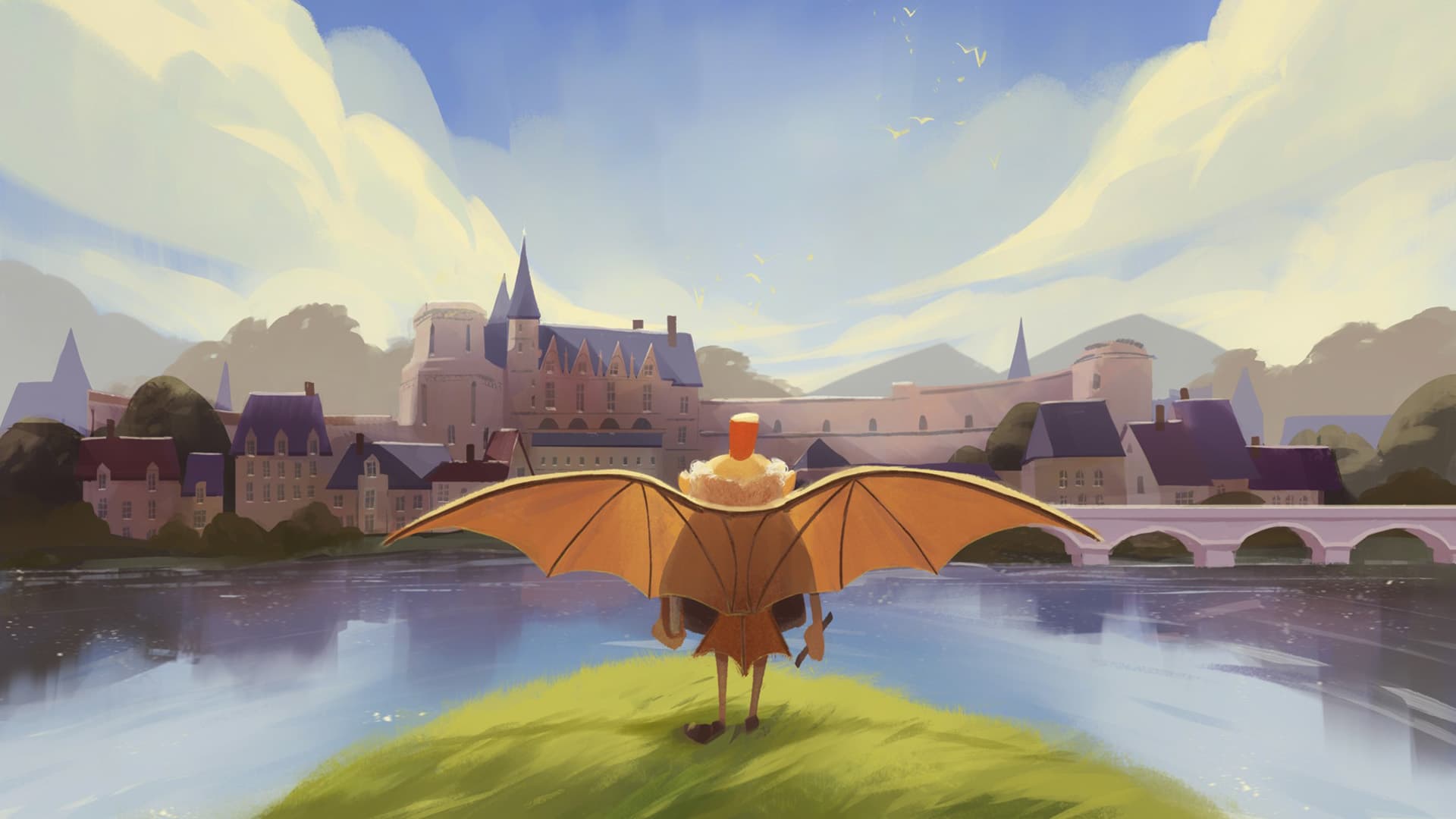
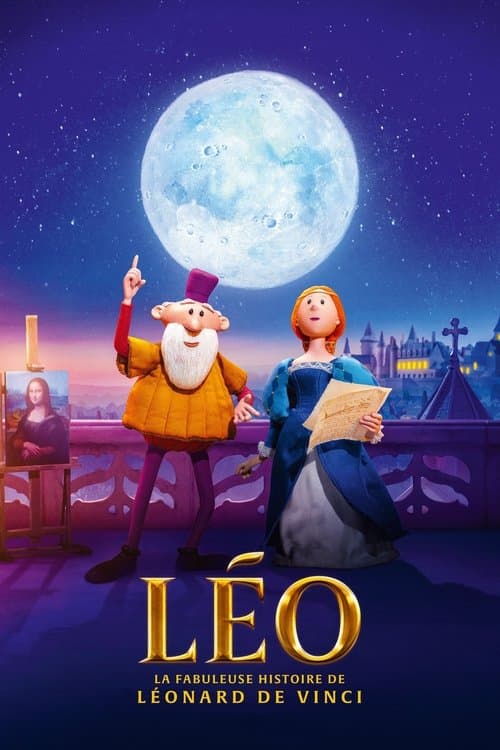
The insatiably curious and headstrong inventor Leonardo da Vinci leaves Italy to join the French court, where he can experiment freely, inventing flying contraptions, incredible machines, and study the human body. There, joined in his adventure by the audacious princess Marguerite, Leonardo will uncover the answer to the ultimate question – "What is the meaning of it all?"
Difficult scenes
Leonardo da Vinci performs dissections of human cadavers in order to understand how the body works. These scenes are stylized and played for humor without any gore, but the depiction of lifeless bodies being handled for scientific purposes may surprise young or sensitive children who do not yet have the emotional scaffolding to distinguish the educational intent from the act being shown. The film repeatedly returns to the philosophical question of the meaning of life, with a sometimes melancholic Leonardo wondering about his place in the world and what it truly means to achieve something. This existential questioning, even when lightly framed, may land differently depending on a child's maturity, and is well worth a gentle family conversation after viewing. Princess Marguerite, the female companion who joins Leonardo in his adventures, is at times positioned more as an admiring observer than as an equal participant in invention and discovery. This occasional imbalance, while not dominant, can be a useful starting point for a conversation with children about how women are represented in historical and fictional narratives.
Where to watch
No verified platform for the US market yet. We keep this section updated as availability changes.
About this title
- Format
- Feature film
- Year
- 2023
- Runtime
- 1h 39m
- Countries
- France, Ireland, United States of America, United Kingdom
- Original language
- EN
- Directed by
- Pierre-Luc Granjon, Jim Capobianco
- Main cast
- Stephen Fry, Daisy Ridley, Marion Cotillard, Matt Berry, Natalie Palamides, Jim Capobianco, Ben Stranahan, Jane Osborn, Gauthier Battoue, John Gilkey
- Studios
- Foliascope, Leo & King, Curiosity Studio, Aerial Contrivance Workshop, SIE Films, Blue Fox Entertainment, Former Prodigy Media, Slated, Leveller Media, Tip-Top Productions, Carte Blanche, Moo Studios, Curiosity Rights, The Exchange
Content barometer
Violence
1/5
Mild
Fear
1/5
Mild
Sexuality
0/5
None
Language
0/5
None
Narrative complexity
3/5
Complex
Adult themes
0/5
None
Expert review
"The Inventor" (2023) is a stop-motion animated film that immerses viewers in Renaissance-era France, following a whimsical and inventive Leonardo da Vinci alongside the spirited Princess Marguerite as they seek the meaning of life. The film is largely warm and playful in tone, but it ventures into fairly abstract philosophical territory around existence, death, and the human body, most notably through Leonardo's anatomical experiments with cadavers, which are depicted with humor but remain present as a recurring motif. These elements, while handled lightly, may surprise or unsettle more sensitive younger viewers. Parents can approach the viewing comfortably with primary-school-age children, using the film's questions about curiosity, art, and science as a springboard for an enriching conversation after watching. It is also worth noting that the work carries dated gender stereotypes, especially in the way some female characters are presented or placed in distress. This does not automatically make the series unsuitable, but it is worth flagging and can be discussed with children.
Synopsis
The insatiably curious and headstrong inventor Leonardo da Vinci leaves Italy to join the French court, where he can experiment freely, inventing flying contraptions, incredible machines, and study the human body. There, joined in his adventure by the audacious princess Marguerite, Leonardo will uncover the answer to the ultimate question – "What is the meaning of it all?"
Difficult scenes
Leonardo da Vinci performs dissections of human cadavers in order to understand how the body works. These scenes are stylized and played for humor without any gore, but the depiction of lifeless bodies being handled for scientific purposes may surprise young or sensitive children who do not yet have the emotional scaffolding to distinguish the educational intent from the act being shown. The film repeatedly returns to the philosophical question of the meaning of life, with a sometimes melancholic Leonardo wondering about his place in the world and what it truly means to achieve something. This existential questioning, even when lightly framed, may land differently depending on a child's maturity, and is well worth a gentle family conversation after viewing. Princess Marguerite, the female companion who joins Leonardo in his adventures, is at times positioned more as an admiring observer than as an equal participant in invention and discovery. This occasional imbalance, while not dominant, can be a useful starting point for a conversation with children about how women are represented in historical and fictional narratives.