
A Turtle's Tale: Sammy's Adventures
A Turtle's Tale: Sammy's Adventures
Your feedback improves this guide
Your feedback highlights guides that need a second look and keeps the rating trustworthy.
Does this age rating seem accurate to you?
Sign in to vote
Watch-outs
What this film brings
Content barometer
Violence
2/5
Moderate
Fear
2/5
A few scenes
Sexuality
1/5
Allusions
Language
0/5
None
Narrative complexity
1/5
Accessible
Adult themes
0/5
None
Expert review
This animated family adventure follows a young sea turtle across the oceans in a bright and gentle world, with a tone that stays mostly reassuring for children. The main sensitive material comes from repeated danger, including seagull attacks, a shark chase, fishing nets, human interference, and several separations that may feel upsetting to younger viewers. The intensity is moderate and not graphic, yet these moments appear regularly throughout the story, so very sensitive children may react to the feeling that the characters are small and vulnerable in a big unsafe world. The romantic thread is innocent, with no meaningful sexual content, almost no strong language, and no substance related material. For children close to the algorithmic reference age, adult company is helpful to comfort them during tense scenes and to talk about the environmental message in simple reassuring words.
Synopsis
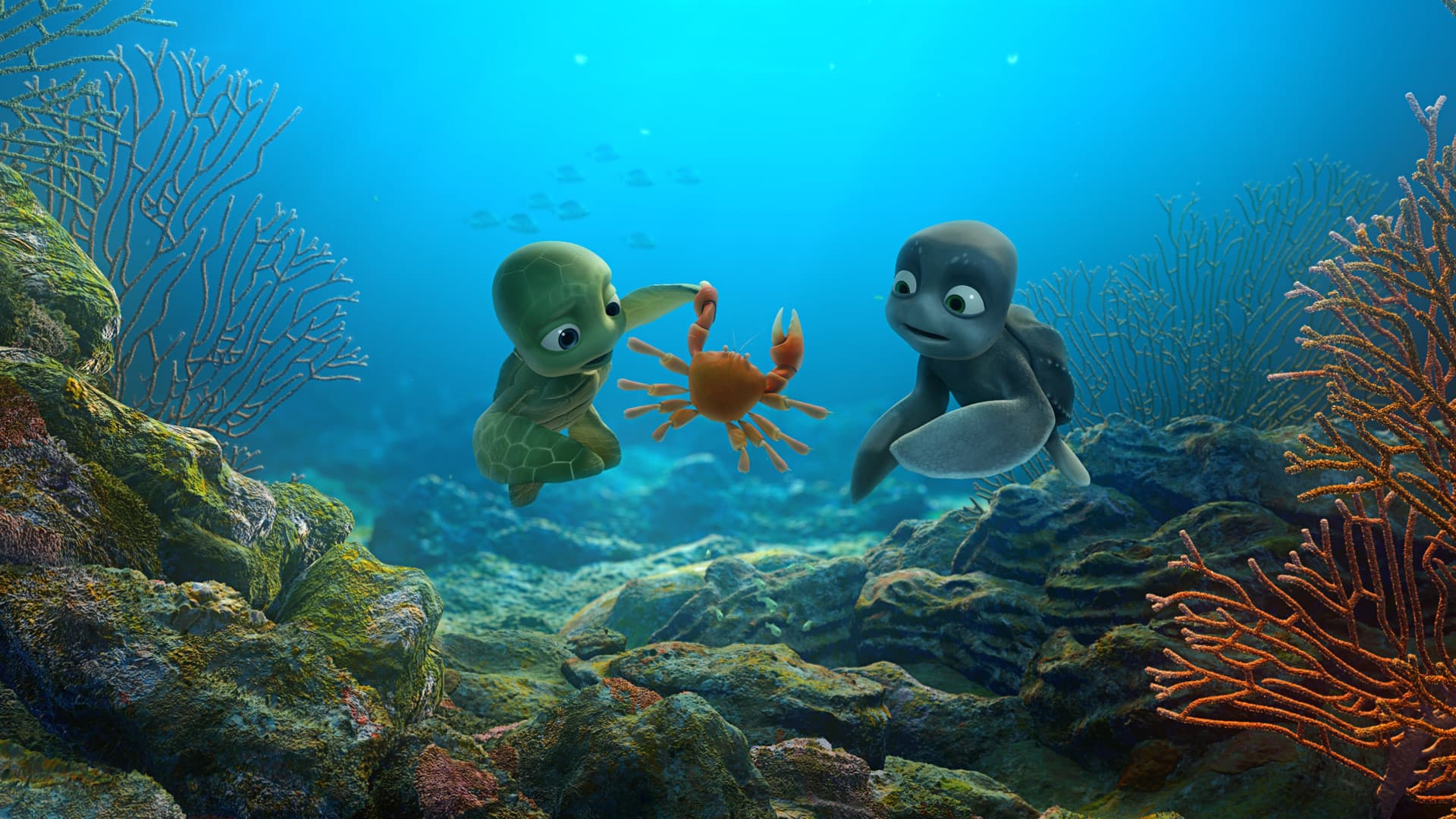
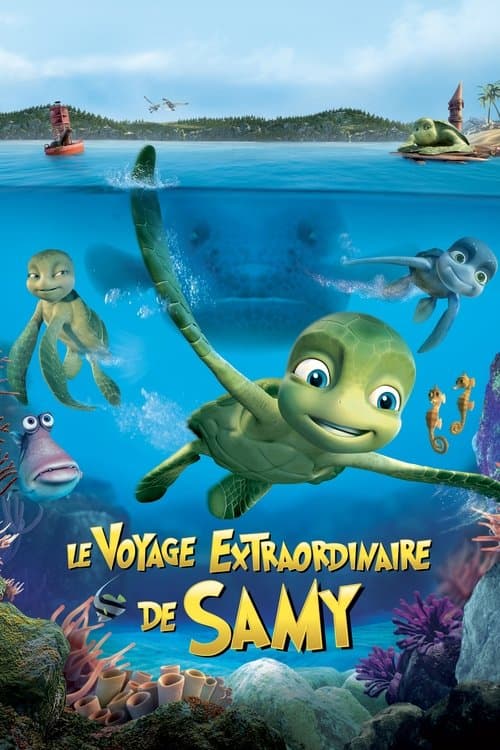
Born on a Baja, California beach in 1959, new hatchling Sammy races across the beach to the ocean while avoiding being caught by seagulls and crabs. Thus begins Sammy's incredible fifty-year ocean journey where he overcomes obstacles, both natural and man-made, while trying to fulfill his dream of travelling around the world. Along the way he meets his best friend, a fellow turtle named Ray, and never forgets about Shelly, a turtle he saved that first day on the beach and the one he's always loved.
Difficult scenes
At the beginning of the film, young Sammy leaves his nest and struggles to reach the ocean while seagulls attack and other beach dangers surround him. The scene emphasizes how tiny and vulnerable he is, which can create real tension for young children even though the visuals remain soft and stylized. Later, Sammy and other sea animals are caught in fishing nets and suddenly separated. This moment can be upsetting because the capture feels believable and the characters seem trapped and helpless, with a strong sense of danger caused by humans. The story also includes several separations between Sammy, Shelly, and Ray during the long journey. These scenes are not deeply tragic in an adult sense, yet they may still bring sadness or worry for children who become attached to the characters, especially because the search and waiting continue over time. A scene involving a shark and other marine predators brings more direct fear, with a clear chase and immediate danger. Even without graphic imagery, the faster pacing and threatening atmosphere may unsettle more sensitive viewers.
Where to watch
No verified platform for the US market yet. We keep this section updated as availability changes.
About this title
- Format
- Feature film
- Year
- 2010
- Runtime
- 1h 25m
- Countries
- Belgium, France, Italy, United States of America
- Original language
- EN
- Directed by
- Ben Stassen
- Main cast
- Yuri Lowenthal, Gemma Arterton, Isabelle Fuhrman, Melanie Griffith, Tim Curry, John Hurt, Robert Sheehan, Kathy Griffin, Jenny McCarthy, Gigi Perreau
- Studios
- Motion Investment Group, nWave Pictures, Illuminata Pictures, StudioCanal, Around the World in 50 Years
Content barometer
Violence
2/5
Moderate
Fear
2/5
A few scenes
Sexuality
1/5
Allusions
Language
0/5
None
Narrative complexity
1/5
Accessible
Adult themes
0/5
None
Expert review
This animated family adventure follows a young sea turtle across the oceans in a bright and gentle world, with a tone that stays mostly reassuring for children. The main sensitive material comes from repeated danger, including seagull attacks, a shark chase, fishing nets, human interference, and several separations that may feel upsetting to younger viewers. The intensity is moderate and not graphic, yet these moments appear regularly throughout the story, so very sensitive children may react to the feeling that the characters are small and vulnerable in a big unsafe world. The romantic thread is innocent, with no meaningful sexual content, almost no strong language, and no substance related material. For children close to the algorithmic reference age, adult company is helpful to comfort them during tense scenes and to talk about the environmental message in simple reassuring words.
Synopsis
Born on a Baja, California beach in 1959, new hatchling Sammy races across the beach to the ocean while avoiding being caught by seagulls and crabs. Thus begins Sammy's incredible fifty-year ocean journey where he overcomes obstacles, both natural and man-made, while trying to fulfill his dream of travelling around the world. Along the way he meets his best friend, a fellow turtle named Ray, and never forgets about Shelly, a turtle he saved that first day on the beach and the one he's always loved.
Difficult scenes
At the beginning of the film, young Sammy leaves his nest and struggles to reach the ocean while seagulls attack and other beach dangers surround him. The scene emphasizes how tiny and vulnerable he is, which can create real tension for young children even though the visuals remain soft and stylized. Later, Sammy and other sea animals are caught in fishing nets and suddenly separated. This moment can be upsetting because the capture feels believable and the characters seem trapped and helpless, with a strong sense of danger caused by humans. The story also includes several separations between Sammy, Shelly, and Ray during the long journey. These scenes are not deeply tragic in an adult sense, yet they may still bring sadness or worry for children who become attached to the characters, especially because the search and waiting continue over time. A scene involving a shark and other marine predators brings more direct fear, with a clear chase and immediate danger. Even without graphic imagery, the faster pacing and threatening atmosphere may unsettle more sensitive viewers.