
A Stork's Journey
Überflieger - Kleine Vögel, großes Geklapper
A Stork's Journey
Überflieger - Kleine Vögel, großes Geklapper
Your feedback improves this guide
Your feedback highlights guides that need a second look and keeps the rating trustworthy.
Does this age rating seem accurate to you?
Sign in to vote
Watch-outs
What this film brings
Content barometer
Violence
2/5
Moderate
Fear
2/5
A few scenes
Sexuality
0/5
None
Language
0/5
None
Narrative complexity
1/5
Accessible
Adult themes
0/5
None
Expert review
A Stork's Journey is a colorful and fast moving family animation built around identity, belonging, and a small sparrow trying to prove himself. The main sensitive material involves an early mention of parental death, a painful feeling of abandonment when his adoptive stork family leaves him behind, and several chase or peril scenes involving animal predators in a clearly cartoon style. The intensity is moderate for a children's adventure, with no graphic injury and no sustained horror atmosphere, yet very young viewers may still feel upset by the separation or uneasy during underground danger sequences. The overall mood stays playful and upbeat thanks to comic side characters, bright visuals, and quick emotional recovery after stressful moments. Parents may want to frame the story beforehand by explaining that Richard is not left behind because he is unloved, but because the adults believe he cannot survive the trip, which helps younger children process the sadness.
Synopsis
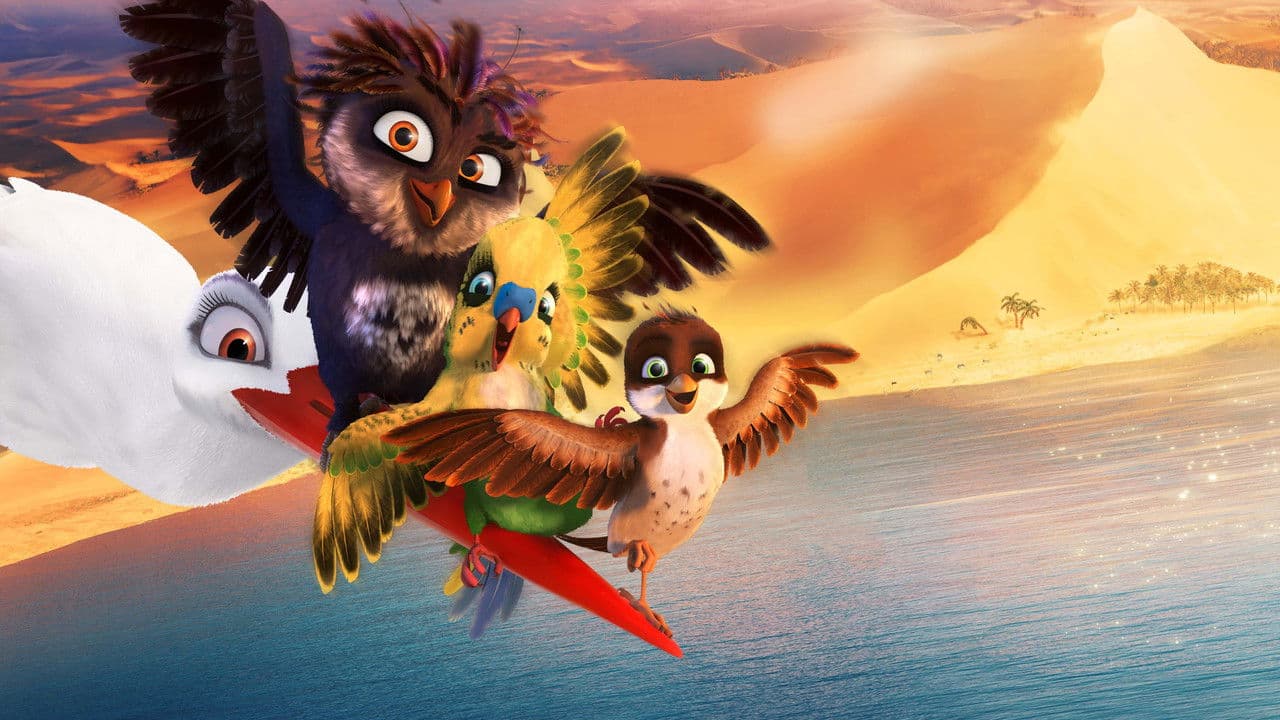
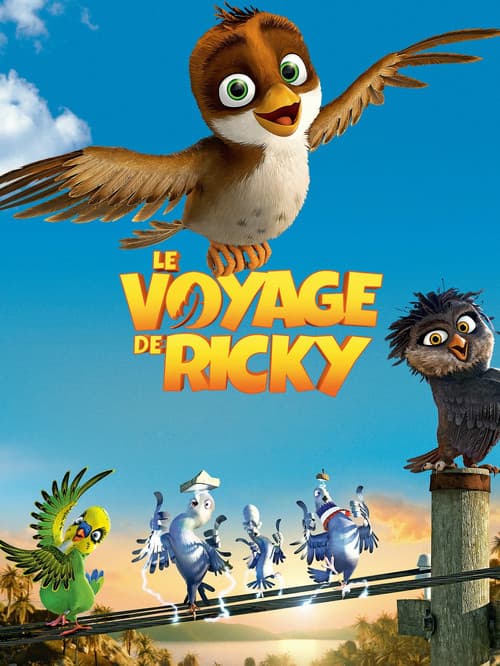
Orphaned at birth and raised by storks, teenage sparrow Richard believes he is one of them. But when time comes to migrate to Africa, his stork family is forced to reveal his true identity and leave him behind in the forest, since he is not a migratory bird and would not survive the journey. Determined to prove he is a stork after all, Richard ventures south on his own. But only with the help of Olga, an eccentric owl with an imaginary friend and Kiki, a narcissistic, disco-singing parakeet, does he stand a chance to reach his goal and learn to accept who he really is.
Difficult scenes
At the beginning, the film states that Richard's biological parents were killed by a predator, even though the event is not shown in a graphic way. That information still introduces a real grief element, and some children may be upset by the idea of a baby bird becoming an orphan at birth. When migration season begins, Richard learns that he is not a stork and cannot travel with his adoptive family. The scene can feel like abandonment because he is left alone and tries to continue despite his distress, which may strongly affect children who are sensitive to family separation. During the journey, several scenes involve obstacles, falls, chases, and situations where the small birds appear to be in danger. These sequences stay within the norms of a cartoon adventure, but the pace is active enough to unsettle very young viewers who struggle with suspense. Later in the African section of the story, a character is dragged into the den of a threatening animal, and the heroes enter an underground space to attempt a rescue. The mood becomes darker there, with a more concrete threat and a trapped feeling that can worry younger children.
Where to watch
No verified platform for the US market yet. We keep this section updated as availability changes.
About this title
- Format
- Feature film
- Year
- 2017
- Runtime
- 1h 30m
- Countries
- Belgium, Germany, Luxembourg, Norway
- Original language
- DE
- Directed by
- Toby Genkel
- Main cast
- Christian Gaul, Tilman Döbler, Nicolette Krebitz, Maud Ackermann, Schroeder Kacmar, Marco Eßer, Erica D. Schroeder, Marc Thompson, Marcus Off, Nico Birnbaum
- Studios
- Walking The Dog, Den Siste Skilling, Knudsen & Streuber Medienmanufaktur, Ulysses Filmproduktion, Melusine Productions
Content barometer
Violence
2/5
Moderate
Fear
2/5
A few scenes
Sexuality
0/5
None
Language
0/5
None
Narrative complexity
1/5
Accessible
Adult themes
0/5
None
Expert review
A Stork's Journey is a colorful and fast moving family animation built around identity, belonging, and a small sparrow trying to prove himself. The main sensitive material involves an early mention of parental death, a painful feeling of abandonment when his adoptive stork family leaves him behind, and several chase or peril scenes involving animal predators in a clearly cartoon style. The intensity is moderate for a children's adventure, with no graphic injury and no sustained horror atmosphere, yet very young viewers may still feel upset by the separation or uneasy during underground danger sequences. The overall mood stays playful and upbeat thanks to comic side characters, bright visuals, and quick emotional recovery after stressful moments. Parents may want to frame the story beforehand by explaining that Richard is not left behind because he is unloved, but because the adults believe he cannot survive the trip, which helps younger children process the sadness.
Synopsis
Orphaned at birth and raised by storks, teenage sparrow Richard believes he is one of them. But when time comes to migrate to Africa, his stork family is forced to reveal his true identity and leave him behind in the forest, since he is not a migratory bird and would not survive the journey. Determined to prove he is a stork after all, Richard ventures south on his own. But only with the help of Olga, an eccentric owl with an imaginary friend and Kiki, a narcissistic, disco-singing parakeet, does he stand a chance to reach his goal and learn to accept who he really is.
Difficult scenes
At the beginning, the film states that Richard's biological parents were killed by a predator, even though the event is not shown in a graphic way. That information still introduces a real grief element, and some children may be upset by the idea of a baby bird becoming an orphan at birth. When migration season begins, Richard learns that he is not a stork and cannot travel with his adoptive family. The scene can feel like abandonment because he is left alone and tries to continue despite his distress, which may strongly affect children who are sensitive to family separation. During the journey, several scenes involve obstacles, falls, chases, and situations where the small birds appear to be in danger. These sequences stay within the norms of a cartoon adventure, but the pace is active enough to unsettle very young viewers who struggle with suspense. Later in the African section of the story, a character is dragged into the den of a threatening animal, and the heroes enter an underground space to attempt a rescue. The mood becomes darker there, with a more concrete threat and a trapped feeling that can worry younger children.