The Tiger Who Came to Tea
The Tiger Who Came to Tea
Your feedback improves this guide
Your feedback highlights guides that need a second look and keeps the rating trustworthy.
Does this age rating seem accurate to you?
Sign in to vote
What this film brings
Content barometer
Violence
0/5
None
Fear
1/5
Mild
Sexuality
0/5
None
Language
0/5
None
Narrative complexity
0/5
Simple
Adult themes
0/5
None
Expert review
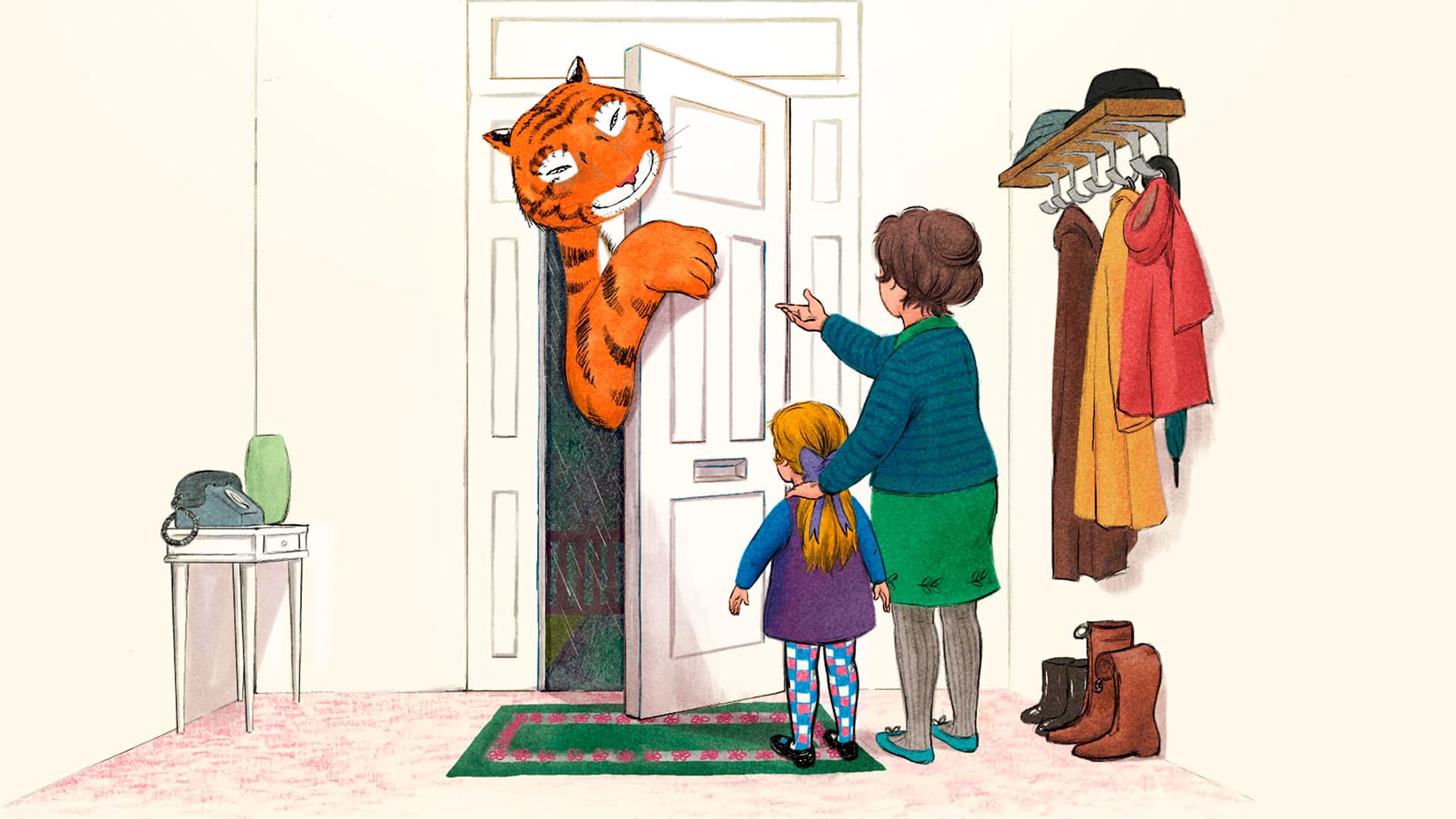
This animated short adapts a beloved children's story in a gentle, whimsical, and very reassuring atmosphere, with visuals that closely resemble an illustrated picture book. The main sensitive element is the sudden arrival of a tiger inside the home, because his large size and intrusive behavior may startle very young viewers, especially when he eats all the food and drinks everything he can find. The intensity stays very low throughout, with no real violence, no explicit threat, and no sustained frightening sequence, since the story remains light and playful from beginning to end. For most children around age 4, this should be easy to handle, although some may briefly feel uneasy about seeing a wild animal in an ordinary family setting. Parents can support viewing by reminding children that this is a funny imaginary story, and by reassuring them that nobody is hurt.
Synopsis
On a rainy day, a mother and daughter forego a trip to the park to bake pastries and partake in a two-person tea party when an unexpected guest menacingly invites himself into the house and ransacks the food and drink in the house.
Difficult scenes
The moment most likely to startle a young child is the doorbell ringing and the tiger suddenly appearing inside the house. The animal is very large compared with the mother and child, which can create a brief sense of unease even though he does not behave in a conventionally violent way. Another moment that may stand out for very young viewers is when the tiger keeps eating more and more food from the table and then from the whole house. The sequence is played for comedy and absurdity, yet some children may feel a little tension because of the mess, the empty kitchen, or the sense that this unusual guest ignores normal household limits.
Where to watch
No verified platform for the US market yet. We keep this section updated as availability changes.
Availability checked on Apr 01, 2026
About this title
- Format
- Short film
- Year
- 2022
- Runtime
- 24m
- Countries
- United Kingdom
- Original language
- EN
- Studios
- Channel 4 Television, Lupus Films
Content barometer
Violence
0/5
None
Fear
1/5
Mild
Sexuality
0/5
None
Language
0/5
None
Narrative complexity
0/5
Simple
Adult themes
0/5
None
Expert review
This animated short adapts a beloved children's story in a gentle, whimsical, and very reassuring atmosphere, with visuals that closely resemble an illustrated picture book. The main sensitive element is the sudden arrival of a tiger inside the home, because his large size and intrusive behavior may startle very young viewers, especially when he eats all the food and drinks everything he can find. The intensity stays very low throughout, with no real violence, no explicit threat, and no sustained frightening sequence, since the story remains light and playful from beginning to end. For most children around age 4, this should be easy to handle, although some may briefly feel uneasy about seeing a wild animal in an ordinary family setting. Parents can support viewing by reminding children that this is a funny imaginary story, and by reassuring them that nobody is hurt.
Synopsis
On a rainy day, a mother and daughter forego a trip to the park to bake pastries and partake in a two-person tea party when an unexpected guest menacingly invites himself into the house and ransacks the food and drink in the house.
Difficult scenes
The moment most likely to startle a young child is the doorbell ringing and the tiger suddenly appearing inside the house. The animal is very large compared with the mother and child, which can create a brief sense of unease even though he does not behave in a conventionally violent way. Another moment that may stand out for very young viewers is when the tiger keeps eating more and more food from the table and then from the whole house. The sequence is played for comedy and absurdity, yet some children may feel a little tension because of the mess, the empty kitchen, or the sense that this unusual guest ignores normal household limits.