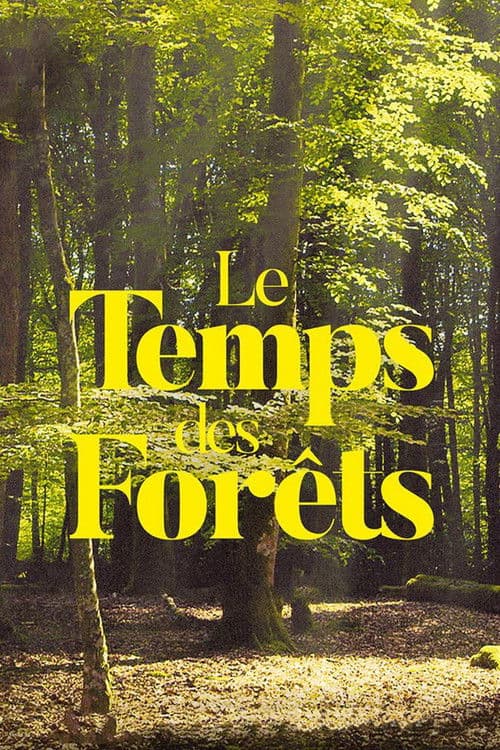
The Time of Forests
The Time of Forests
Your feedback improves this guide
Your feedback highlights guides that need a second look and keeps the rating trustworthy.
Does this age rating seem accurate to you?
Sign in to vote
Watch-outs
What this film brings
Content barometer
Violence
0/5
None
Fear
1/5
Mild
Sexuality
0/5
None
Language
0/5
None
Narrative complexity
3/5
Complex
Adult themes
0/5
None
Expert review
This French documentary takes a realistic and committed look at the industrial transformation of forests, with a serious, reflective mood that can sometimes feel worrying rather than exciting. Sensitive material mainly comes from images of clear-cut areas, very large machines, damaged soils, and discussions about pesticides, biodiversity loss, and the decline of a natural environment many children see as safe and comforting. There is almost no violence in a story sense, no sexual content, and little to no harsh language, but the realism of the topic and the environmental criticism can create sadness, concern, or questions about the future. The intensity stays moderate and thoughtful, without repeated shocking scenes, which makes it more suitable for preteens and teens who are already interested in nature or ecology. Parents can help by explaining key terms, reminding children that this is an investigative documentary, and talking afterward about the alternatives and hopeful ideas presented in the film.
Synopsis
Symbol in the eyes of urbanites of an authentic nature, the French forest is going through an unprecedented phase of industrialization. Heavy mechanization, monocultures, fertilizers and pesticides, forest management follows the intensive agricultural model at high speed. From Limousin to Landes, from Morvan to Vosges, Le Temps des Forêts offers a journey to the heart of industrial forestry and its alternatives. Living forest or wooded desert, today's choices will shape the landscape of tomorrow.
Difficult scenes
The film shows forest areas heavily altered by industrial exploitation, with felled trees, artificial rows, and ground that looks damaged or depleted. For a child who sees the forest as a living and comforting place, these images may create real sadness or a sense of loss, even without explicit violence. Several scenes focus on large forestry machines at work in a very concrete, non fictional way. The noise, the size of the equipment, and its visible impact on the landscape may feel intimidating to younger viewers, especially children who are sensitive to environmental destruction. The documentary clearly discusses fertilizers, pesticides, and monoculture practices, with a critical explanation of their consequences. These ideas are not presented in a sensational way, but they may still worry children who are beginning to understand ecological issues. Some testimonies and commentary emphasize the disappearance of traditional knowledge, biological diversity, and the choices that will shape tomorrow's forests. This can feel emotionally heavy for a young viewer because the film asks the audience to face a real world decline rather than follow a comforting fictional plot.
Where to watch
No verified platform for the US market yet. We keep this section updated as availability changes.
About this title
- Format
- Feature film
- Year
- 2018
- Runtime
- 1h 43m
- Countries
- France
- Original language
- FR
- Directed by
- François-Xavier Drouet
- Studios
- l’atelier documentaire
Content barometer
Violence
0/5
None
Fear
1/5
Mild
Sexuality
0/5
None
Language
0/5
None
Narrative complexity
3/5
Complex
Adult themes
0/5
None
Expert review
This French documentary takes a realistic and committed look at the industrial transformation of forests, with a serious, reflective mood that can sometimes feel worrying rather than exciting. Sensitive material mainly comes from images of clear-cut areas, very large machines, damaged soils, and discussions about pesticides, biodiversity loss, and the decline of a natural environment many children see as safe and comforting. There is almost no violence in a story sense, no sexual content, and little to no harsh language, but the realism of the topic and the environmental criticism can create sadness, concern, or questions about the future. The intensity stays moderate and thoughtful, without repeated shocking scenes, which makes it more suitable for preteens and teens who are already interested in nature or ecology. Parents can help by explaining key terms, reminding children that this is an investigative documentary, and talking afterward about the alternatives and hopeful ideas presented in the film.
Synopsis
Symbol in the eyes of urbanites of an authentic nature, the French forest is going through an unprecedented phase of industrialization. Heavy mechanization, monocultures, fertilizers and pesticides, forest management follows the intensive agricultural model at high speed. From Limousin to Landes, from Morvan to Vosges, Le Temps des Forêts offers a journey to the heart of industrial forestry and its alternatives. Living forest or wooded desert, today's choices will shape the landscape of tomorrow.
Difficult scenes
The film shows forest areas heavily altered by industrial exploitation, with felled trees, artificial rows, and ground that looks damaged or depleted. For a child who sees the forest as a living and comforting place, these images may create real sadness or a sense of loss, even without explicit violence. Several scenes focus on large forestry machines at work in a very concrete, non fictional way. The noise, the size of the equipment, and its visible impact on the landscape may feel intimidating to younger viewers, especially children who are sensitive to environmental destruction. The documentary clearly discusses fertilizers, pesticides, and monoculture practices, with a critical explanation of their consequences. These ideas are not presented in a sensational way, but they may still worry children who are beginning to understand ecological issues. Some testimonies and commentary emphasize the disappearance of traditional knowledge, biological diversity, and the choices that will shape tomorrow's forests. This can feel emotionally heavy for a young viewer because the film asks the audience to face a real world decline rather than follow a comforting fictional plot.