
The Painting
Le Tableau
The Painting
Le Tableau
Your feedback improves this guide
Your feedback highlights guides that need a second look and keeps the rating trustworthy.
Does this age rating seem accurate to you?
Sign in to vote
Watch-outs
What this film brings
Content barometer
Violence
1/5
Mild
Fear
2/5
A few scenes
Sexuality
1/5
Allusions
Language
0/5
None
Narrative complexity
1/5
Accessible
Adult themes
0/5
None
Expert review
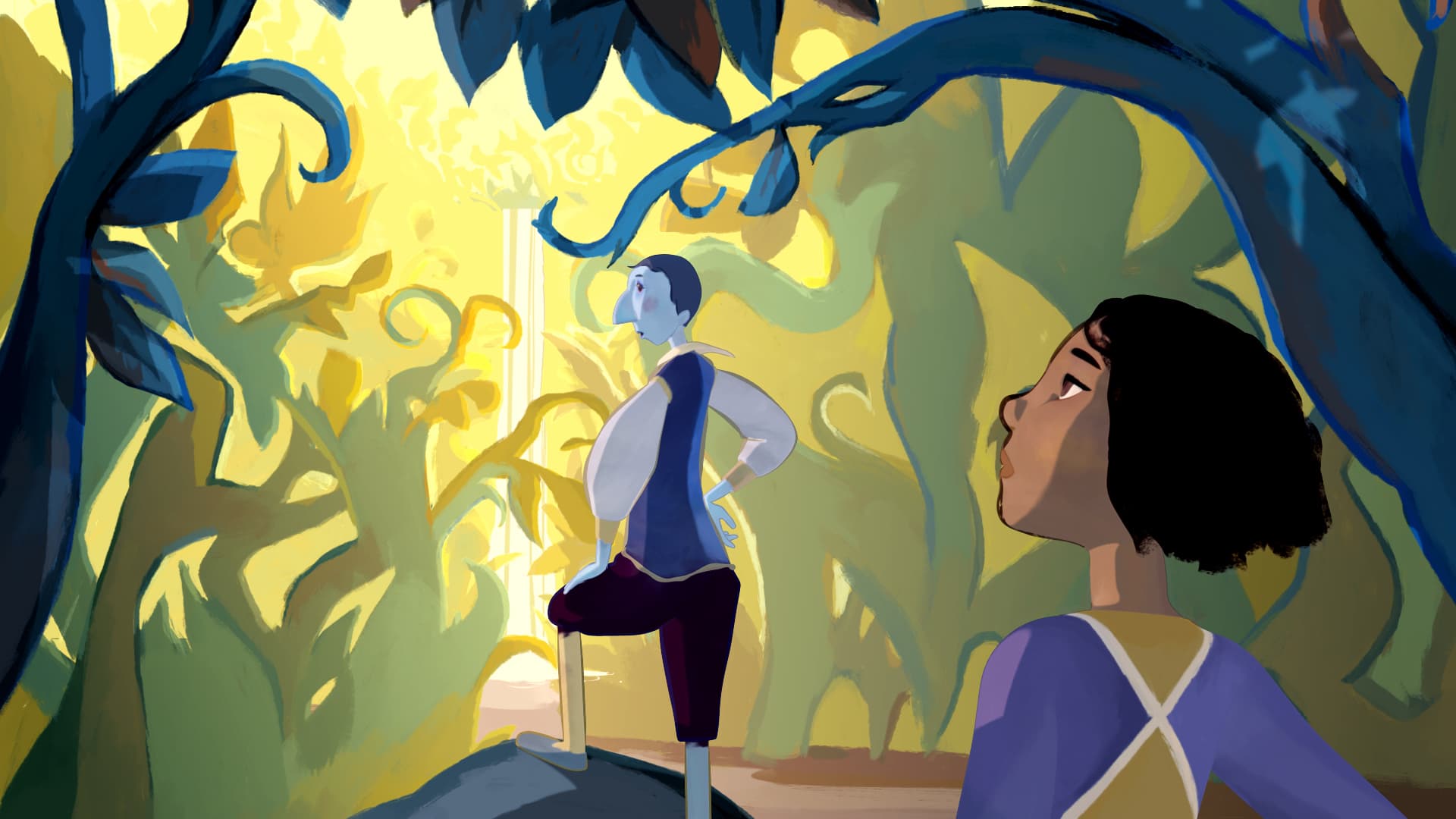
The Painting is a highly stylized, poetic animated film with a distinctive visual world, centered on inequality, exclusion, and the search for identity inside a living artwork. The sensitive material comes mainly from the way one group dominates and hunts the others, with scenes of pursuit, threat, and social rejection that may upset children who react strongly to unfairness. The overall intensity is moderate, with no graphic violence and very little coarse language, yet the film has a melancholic undertone and several moments that require some emotional maturity to process the cruelty between characters. For younger viewers, watching with a parent can help put words on the emotions, explain the story's social metaphor, and provide reassurance during scenes where characters seem endangered or deeply humiliated. It works well as a family film, though it is usually better appreciated by children who can follow a symbolic story and a more reflective pace.
Synopsis
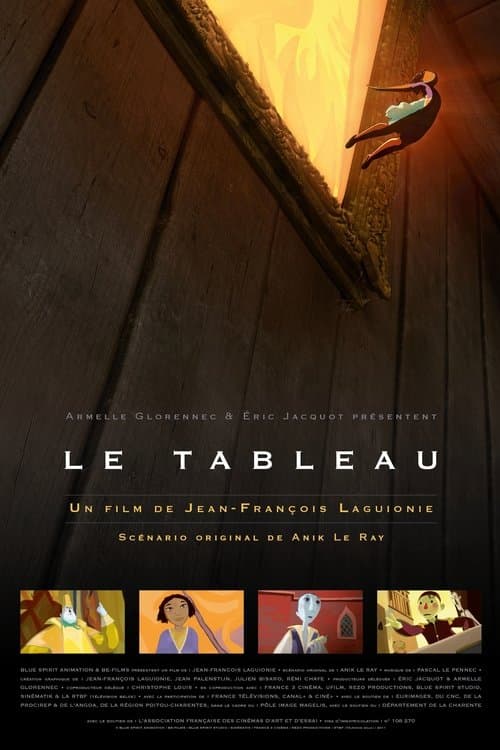
Three characters living in an unfinished painting venture out into the real world in search of their creator to convince him to finish his work.
Difficult scenes
From the beginning, the film presents a caste based society where unfinished characters are treated as lesser beings. This hierarchy comes with rejection, contempt, and active persecution, which may be hard for children who are especially sensitive to humiliation or repeated unfairness. Several scenes show the Sketchies being hunted or forced to hide, creating a real sense of danger even though the violence remains stylized. These moments can feel tense because the film emphasizes the fear of capture and the lack of safety for the most vulnerable characters. The journey outside the painting places the heroes in an unfamiliar world that feels stranger and sometimes more unsettling than their original setting. For a young child, this shift can be exciting, but also mildly unsettling because the characters lose their bearings and move through visually unusual spaces. The story deals quite directly with self worth and with the cruel way others judge people who are different or incomplete. Even without traditionally shocking scenes, this emotional layer may resonate strongly with children who have experienced exclusion, teasing, or a deep need to be accepted.
Where to watch
No verified platform for the US market yet. We keep this section updated as availability changes.
About this title
- Format
- Feature film
- Year
- 2011
- Runtime
- 1h 36m
- Countries
- Belgium, France
- Original language
- FR
- Directed by
- Jean-François Laguionie
- Main cast
- Chloé Berthier, Thierry Jahn, Jessica Monceau, Céline Ronté, Adrien Larmande, Magali Ronsenzweig, Jean-François Laguionie, Julien Bouanich, Serge Faliu, Thomas Sagols
- Studios
- Blue Spirit, Be-FILMS, uFilm, Rezo Productions, Sinématik, France 3 Cinéma, RTBF
Content barometer
Violence
1/5
Mild
Fear
2/5
A few scenes
Sexuality
1/5
Allusions
Language
0/5
None
Narrative complexity
1/5
Accessible
Adult themes
0/5
None
Expert review
The Painting is a highly stylized, poetic animated film with a distinctive visual world, centered on inequality, exclusion, and the search for identity inside a living artwork. The sensitive material comes mainly from the way one group dominates and hunts the others, with scenes of pursuit, threat, and social rejection that may upset children who react strongly to unfairness. The overall intensity is moderate, with no graphic violence and very little coarse language, yet the film has a melancholic undertone and several moments that require some emotional maturity to process the cruelty between characters. For younger viewers, watching with a parent can help put words on the emotions, explain the story's social metaphor, and provide reassurance during scenes where characters seem endangered or deeply humiliated. It works well as a family film, though it is usually better appreciated by children who can follow a symbolic story and a more reflective pace.
Synopsis
Three characters living in an unfinished painting venture out into the real world in search of their creator to convince him to finish his work.
Difficult scenes
From the beginning, the film presents a caste based society where unfinished characters are treated as lesser beings. This hierarchy comes with rejection, contempt, and active persecution, which may be hard for children who are especially sensitive to humiliation or repeated unfairness. Several scenes show the Sketchies being hunted or forced to hide, creating a real sense of danger even though the violence remains stylized. These moments can feel tense because the film emphasizes the fear of capture and the lack of safety for the most vulnerable characters. The journey outside the painting places the heroes in an unfamiliar world that feels stranger and sometimes more unsettling than their original setting. For a young child, this shift can be exciting, but also mildly unsettling because the characters lose their bearings and move through visually unusual spaces. The story deals quite directly with self worth and with the cruel way others judge people who are different or incomplete. Even without traditionally shocking scenes, this emotional layer may resonate strongly with children who have experienced exclusion, teasing, or a deep need to be accepted.