
The Lost Prince
The Lost Prince
Your feedback improves this guide
Your feedback highlights guides that need a second look and keeps the rating trustworthy.
Does this age rating seem accurate to you?
Sign in to vote
Watch-outs
What this film brings
Content barometer
Violence
1/5
Mild
Fear
1/5
Mild
Sexuality
1/5
Allusions
Language
0/5
None
Narrative complexity
3/5
Complex
Adult themes
0/5
None
Expert review
The Lost Prince is a family fantasy comedy with a warm visual style and an imaginative adventure tone that moves between everyday life and dreamlike story worlds. The main sensitive material comes from the emotional distance growing between a father and his daughter as she gets older, along with moments of jealousy, sadness, emotional rejection, and symbolic rivalry inside the fantasy sequences. The intensity stays moderate and not very realistic, because danger and conflict are stylized and often playful rather than truly threatening, though some children may still react to the idea of losing a special place in a parent's heart. For most children, the film is accessible from about age 6, but it is likely to engage them more fully from age 7 and up, especially if they can handle stories about change and family emotions. Parents can help by framing the movie as a story about growing up and changing relationships, and by reassuring younger viewers that becoming more independent does not mean loving a parent any less.
Synopsis
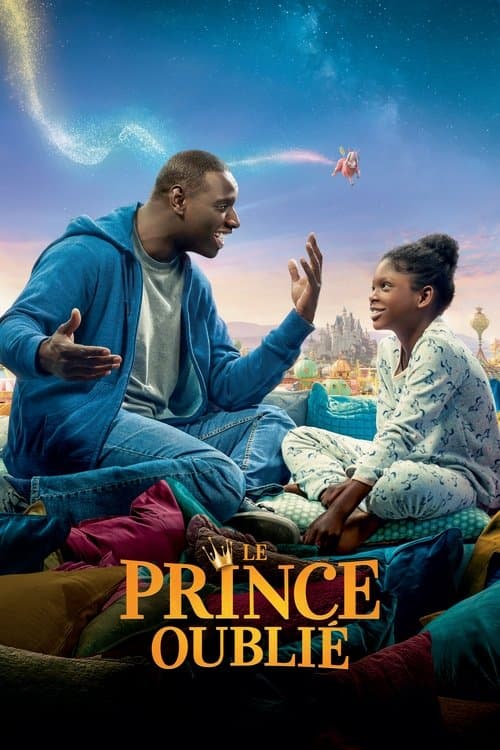
Djibi lives alone with Sofia, his 8-year-old daughter. Every night, he invents a story to put him to sleep. When Sofia falls asleep, these extraordinary stories come to life somewhere in an imaginary world inhabited by knights, pirates and other dragons. In this world that belongs only to them, Sofia is always the princess to save, and the brave Prince is none other than Djibi himself. But 3 years later, the entry of Sofia to the college will mark the end of her childhood. To the despair of her father, she no longer needs her stories at night. On the one hand, Djibi will have to accept that his daughter will grow up and move away from him. On the other hand, in the World of Stories, the Prince will have to face the most epic of all his adventures. Find your destiny in a world where it no longer has a place.
Difficult scenes
The main sensitive element is the father's pain as his daughter begins to move away from their bedtime rituals. Several scenes show his confusion, jealousy, and fear of being replaced, which may strongly affect children who are very attached to family routines or who are sensitive to separation themes. In the fantasy world, the father appears as a prince facing a rival and various magical obstacles. These sequences include chases, symbolic conflict, and a few visually intense moments for younger viewers, but the presentation stays highly stylized and does not feel realistically violent. The film also includes moments of mild teasing, social discomfort, and the awkward shift that comes with starting middle school and focusing on new interests. A child who is sensitive to rejection, growing apart, or friendship changes may find these scenes a little sad, even though the film handles them gently.
Where to watch
No verified platform for the US market yet. We keep this section updated as availability changes.
About this title
- Format
- Feature film
- Year
- 2020
- Runtime
- 1h 41m
- Countries
- Belgium, France
- Original language
- FR
- Directed by
- Michel Hazanavicius
- Main cast
- Omar Sy, Bérénice Bejo, François Damiens, Sarah Gaye, Keyla Fala, Néotis Ronzon, Philippe Vieux, Philippe Uchan, Lionel Laget, Philippe Hérisson
- Studios
- Prélude, Pathé, StudioCanal, TF1 Films Production, Belga Productions, Korokoro, Wallimage, Canal+, Ciné+, TF1, TMC, Belga Films, Beside Productions
Content barometer
Violence
1/5
Mild
Fear
1/5
Mild
Sexuality
1/5
Allusions
Language
0/5
None
Narrative complexity
3/5
Complex
Adult themes
0/5
None
Expert review
The Lost Prince is a family fantasy comedy with a warm visual style and an imaginative adventure tone that moves between everyday life and dreamlike story worlds. The main sensitive material comes from the emotional distance growing between a father and his daughter as she gets older, along with moments of jealousy, sadness, emotional rejection, and symbolic rivalry inside the fantasy sequences. The intensity stays moderate and not very realistic, because danger and conflict are stylized and often playful rather than truly threatening, though some children may still react to the idea of losing a special place in a parent's heart. For most children, the film is accessible from about age 6, but it is likely to engage them more fully from age 7 and up, especially if they can handle stories about change and family emotions. Parents can help by framing the movie as a story about growing up and changing relationships, and by reassuring younger viewers that becoming more independent does not mean loving a parent any less.
Synopsis
Djibi lives alone with Sofia, his 8-year-old daughter. Every night, he invents a story to put him to sleep. When Sofia falls asleep, these extraordinary stories come to life somewhere in an imaginary world inhabited by knights, pirates and other dragons. In this world that belongs only to them, Sofia is always the princess to save, and the brave Prince is none other than Djibi himself. But 3 years later, the entry of Sofia to the college will mark the end of her childhood. To the despair of her father, she no longer needs her stories at night. On the one hand, Djibi will have to accept that his daughter will grow up and move away from him. On the other hand, in the World of Stories, the Prince will have to face the most epic of all his adventures. Find your destiny in a world where it no longer has a place.
Difficult scenes
The main sensitive element is the father's pain as his daughter begins to move away from their bedtime rituals. Several scenes show his confusion, jealousy, and fear of being replaced, which may strongly affect children who are very attached to family routines or who are sensitive to separation themes. In the fantasy world, the father appears as a prince facing a rival and various magical obstacles. These sequences include chases, symbolic conflict, and a few visually intense moments for younger viewers, but the presentation stays highly stylized and does not feel realistically violent. The film also includes moments of mild teasing, social discomfort, and the awkward shift that comes with starting middle school and focusing on new interests. A child who is sensitive to rejection, growing apart, or friendship changes may find these scenes a little sad, even though the film handles them gently.