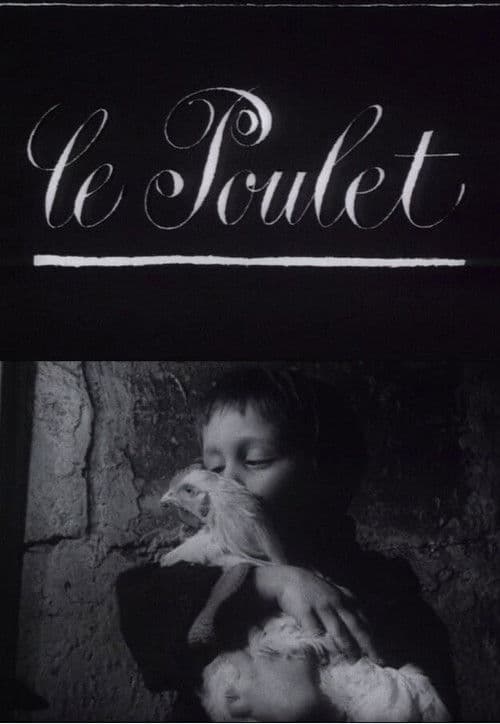
The Chicken
The Chicken
Your feedback improves this guide
Your feedback highlights guides that need a second look and keeps the rating trustworthy.
Does this age rating seem accurate to you?
Sign in to vote
What this film brings
Content barometer
Violence
0/5
None
Fear
1/5
Mild
Sexuality
0/5
None
Language
0/5
None
Narrative complexity
0/5
Simple
Adult themes
0/5
None
Expert review
This French short film has a light, playful tone and focuses on a young boy's simple attachment to a chicken he wants to protect. The main sensitive element is the repeated idea that the animal may be killed for food, which could upset children who are especially sensitive to animal welfare or to stories about pets and farm animals. The presentation remains gentle, with no graphic violence, no on screen death, and no truly frightening atmosphere, since the tension mostly comes from the comic contrast between adult practicality and the child's imagination. These elements are limited in intensity and frequency, and the film stays broadly accessible for young viewers. For very young children, parents may want to briefly explain beforehand that the story is about a child trying to save an animal, then talk afterward about feelings, empathy, and how families may see animals differently.
Synopsis
The Chicken [Le Poulet] is a 1965 French short comedy film directed by Claude Berri. The film follows a father, mother, and son who go to visit a chicken farm. The son catches and brings home a chicken. The father plans to eat it if the chicken doesn't lay eggs. The boy aims to save the chicken and comedy ensues. It won an Oscar in 1966 for Best Short Subject.
Difficult scenes
The main point of tension comes when the father makes it clear that the chicken will be eaten if it does not lay eggs. This remains a verbal threat with no disturbing detail, but it may still worry children who already understand what it means to cook an animal a character loves. Part of the comedy is built around the boy's worry as he actively tries to find a way to save the chicken. A very empathetic young viewer may feel his temporary stress and sadness, even though the overall treatment remains gentle and comedic.
Where to watch
No verified platform for the US market yet. We keep this section updated as availability changes.
Availability checked on Apr 01, 2026
About this title
- Format
- Short film
- Year
- 1965
- Runtime
- 15m
- Countries
- France
- Original language
- FR
Content barometer
Violence
0/5
None
Fear
1/5
Mild
Sexuality
0/5
None
Language
0/5
None
Narrative complexity
0/5
Simple
Adult themes
0/5
None
Expert review
This French short film has a light, playful tone and focuses on a young boy's simple attachment to a chicken he wants to protect. The main sensitive element is the repeated idea that the animal may be killed for food, which could upset children who are especially sensitive to animal welfare or to stories about pets and farm animals. The presentation remains gentle, with no graphic violence, no on screen death, and no truly frightening atmosphere, since the tension mostly comes from the comic contrast between adult practicality and the child's imagination. These elements are limited in intensity and frequency, and the film stays broadly accessible for young viewers. For very young children, parents may want to briefly explain beforehand that the story is about a child trying to save an animal, then talk afterward about feelings, empathy, and how families may see animals differently.
Synopsis
The Chicken [Le Poulet] is a 1965 French short comedy film directed by Claude Berri. The film follows a father, mother, and son who go to visit a chicken farm. The son catches and brings home a chicken. The father plans to eat it if the chicken doesn't lay eggs. The boy aims to save the chicken and comedy ensues. It won an Oscar in 1966 for Best Short Subject.
Difficult scenes
The main point of tension comes when the father makes it clear that the chicken will be eaten if it does not lay eggs. This remains a verbal threat with no disturbing detail, but it may still worry children who already understand what it means to cook an animal a character loves. Part of the comedy is built around the boy's worry as he actively tries to find a way to save the chicken. A very empathetic young viewer may feel his temporary stress and sadness, even though the overall treatment remains gentle and comedic.