The Fish of the Fish
魚の魚
The Fish of the Fish
魚の魚
Your feedback improves this guide
Your feedback highlights guides that need a second look and keeps the rating trustworthy.
Does this age rating seem accurate to you?
Sign in to vote
What this film brings
Content barometer
Violence
1/5
Mild
Fear
1/5
Mild
Sexuality
0/5
None
Language
0/5
None
Narrative complexity
0/5
Simple
Adult themes
0/5
None
Expert review
This very short experimental cartoon presents a simple, repetitive sequence in which fish keep eating smaller fish. The only notable sensitive element is predation, with several visible swallowing moments, but there is no blood, no screaming, and no realistic injury detail. The intensity remains very low because the style is abstract, the running time is extremely brief, and the film does not dwell on pain, although the idea of being eaten may still unsettle very young or animal sensitive children. For most viewers, it plays more like a visual illustration of the food chain than a conventional violent scene. Parents can support viewing by briefly explaining that the images show how nature works in a cartoon form, then checking whether the child experiences it as funny, odd, or slightly upsetting.
Synopsis
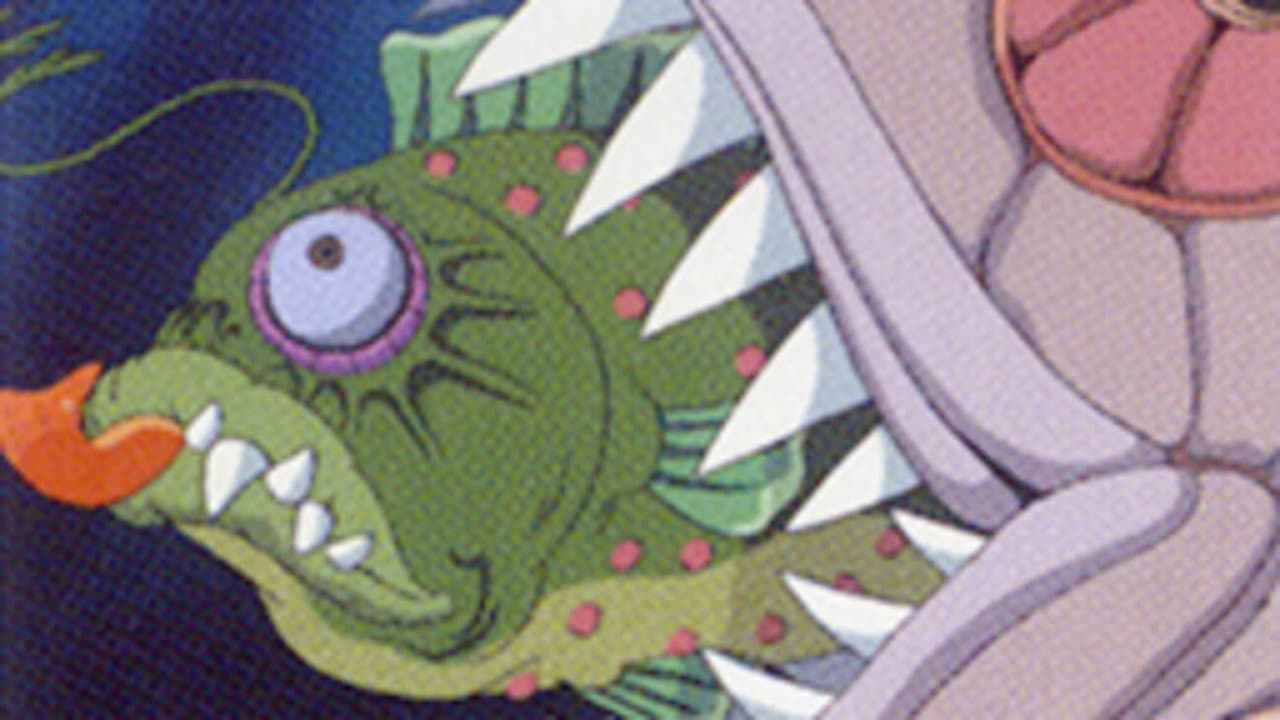
A small white fish enters the frame and is eaten by a larger one, then the latter is in turn eaten by an even larger fish... At the end, only a huge white fish remains which seems to shrink in size. swimming towards the bottom of the screen. He leaves the frame and the cycle resumes.
Difficult scenes
From the basic premise onward, a small fish appears and is swallowed by a larger one. The moment is very quick and highly stylized, with no realistic detail, but seeing an animal disappear into another animal's mouth may bother a child who is sensitive to danger involving creatures. The pattern repeats several times with larger and larger fish. This repetition can create a mild sense of ongoing threat for very young viewers, even though the presentation stays abstract and the film shows no injury detail, no blood, and no visible suffering.
Where to watch
No verified platform for the US market yet. We keep this section updated as availability changes.
Availability checked on Apr 01, 2026
About this title
- Format
- Short film
- Year
- 2001
- Runtime
- 1m
- Countries
- Japan
- Original language
- JA
- Directed by
- Hayao Miyazaki
- Studios
- Studio Ghibli
Content barometer
Violence
1/5
Mild
Fear
1/5
Mild
Sexuality
0/5
None
Language
0/5
None
Narrative complexity
0/5
Simple
Adult themes
0/5
None
Expert review
This very short experimental cartoon presents a simple, repetitive sequence in which fish keep eating smaller fish. The only notable sensitive element is predation, with several visible swallowing moments, but there is no blood, no screaming, and no realistic injury detail. The intensity remains very low because the style is abstract, the running time is extremely brief, and the film does not dwell on pain, although the idea of being eaten may still unsettle very young or animal sensitive children. For most viewers, it plays more like a visual illustration of the food chain than a conventional violent scene. Parents can support viewing by briefly explaining that the images show how nature works in a cartoon form, then checking whether the child experiences it as funny, odd, or slightly upsetting.
Synopsis
A small white fish enters the frame and is eaten by a larger one, then the latter is in turn eaten by an even larger fish... At the end, only a huge white fish remains which seems to shrink in size. swimming towards the bottom of the screen. He leaves the frame and the cycle resumes.
Difficult scenes
From the basic premise onward, a small fish appears and is swallowed by a larger one. The moment is very quick and highly stylized, with no realistic detail, but seeing an animal disappear into another animal's mouth may bother a child who is sensitive to danger involving creatures. The pattern repeats several times with larger and larger fish. This repetition can create a mild sense of ongoing threat for very young viewers, even though the presentation stays abstract and the film shows no injury detail, no blood, and no visible suffering.