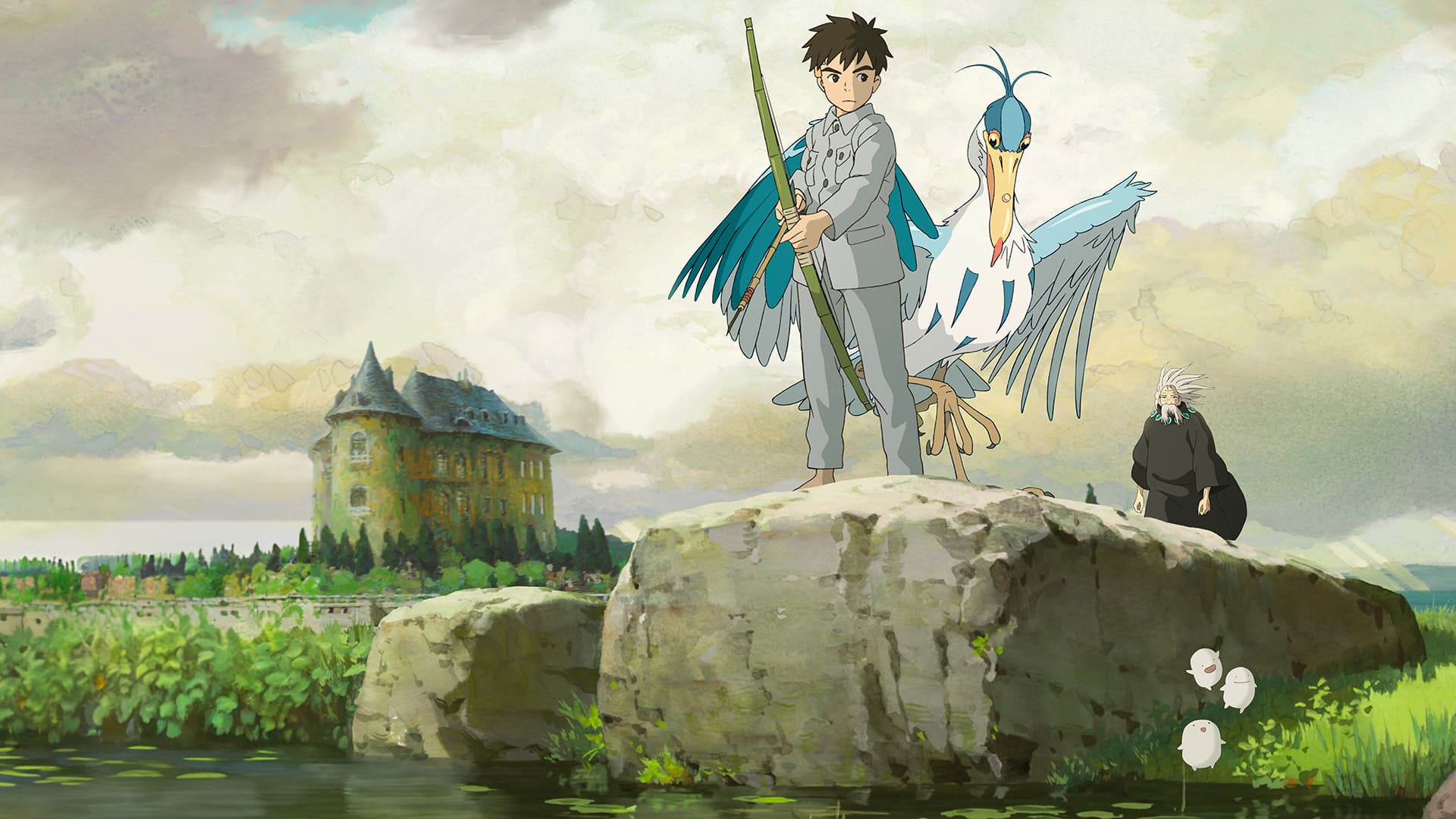
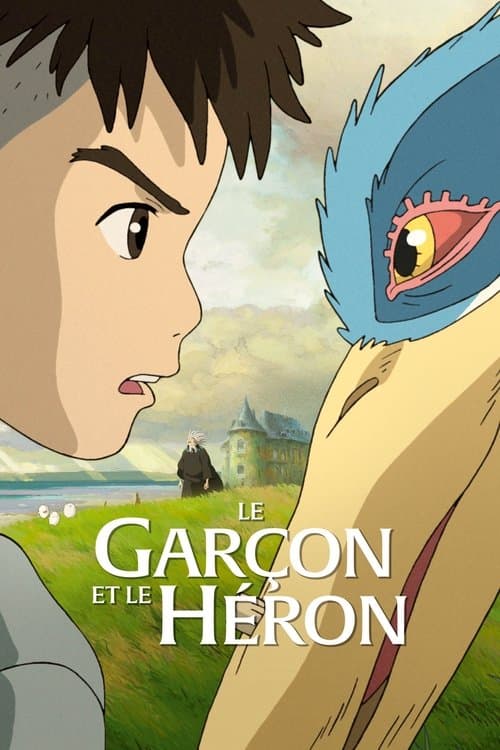
The Boy and the Heron
君たちはどう生きるか
The Boy and the Heron
君たちはどう生きるか
Your feedback improves this guide
Your feedback highlights guides that need a second look and keeps the rating trustworthy.
Does this age rating seem accurate to you?
Sign in to vote
Watch-outs
What this film brings
Content barometer
Violence
3/5
Notable
Fear
3/5
Notable tension
Sexuality
0/5
None
Language
0/5
None
Narrative complexity
3/5
Complex
Adult themes
0/5
None
Expert review
The Boy and the Heron is Hayao Miyazaki's final film, produced by Studio Ghibli in 2023, and immerses the viewer in a deeply personal, dreamlike narrative about grief, identity, and the acceptance of loss, carried by breathtaking visuals but a deliberately melancholic and disorienting atmosphere. The sensitive elements are numerous and central to the story: the film opens with the death of the protagonist's mother in a fire, Mahito deliberately injures himself with a rock after a school fight, and the magical world he traverses is populated by threatening creatures, giant man-eating parakeets, and a pervasive existential tension. These heavy themes run throughout the entire film without respite, with the self-inflicted wound, the figure of death, the child's profound loneliness, and the moral ambiguity of the fantasy world forming the very core of the narrative rather than peripheral elements. Parents are encouraged to watch the film beforehand before sharing it with young teens, and to remain available for conversations about Mahito's self-harm and the theme of grief, which may resonate deeply for children who have experienced loss or are going through a difficult period.
Synopsis
While the Second World War rages, the teenage Mahito, haunted by his mother's tragic death, is relocated from Tokyo to the serene rural home of his new stepmother Natsuko, a woman who bears a striking resemblance to the boy's mother. As he tries to adjust, this strange new world grows even stranger following the appearance of a persistent gray heron, who perplexes and bedevils Mahito, dubbing him the "long-awaited one."
Difficult scenes
The film opens with an intense and chaotic nighttime fire sequence: Mahito, woken in the middle of the night, runs through the burning streets of Tokyo to reach the hospital where his mother is being treated, but arrives too late. The mother's death is presented explicitly within the very first minutes, without softening, and serves as the foundational trauma of the entire narrative. This opening sequence may be particularly distressing for young children. After a school fight in which he is bullied by other students, Mahito picks up a rock and deliberately strikes himself on the temple, wounding himself enough to bleed and forcing him into recovery at home. This act of self-harm is shown clearly and without ambiguity. It is a pivotal moment in the film as it reveals the character's inner distress, but it may prompt intense questions from young viewers, particularly those who are themselves going through emotional difficulties. The fantasy world inside the tower is inhabited by anthropomorphic giant parakeets presented as man-eaters, hostile and violent. They capture Mahito and other characters, imprison them, and represent a credible, repeated physical threat throughout the second half of the film. These sequences, visually striking, may generate lasting anxious tension in younger viewers. The grey heron, an ambiguous and manipulative character, deceives Mahito by making him believe his mother is alive and that he can find her if he enters the tower. This deception materializes as a false apparition of the mother that dissolves at Mahito's touch, a moment that is both deeply sad and unsettling, brutally confronting the boy with the irreversibility of death and with emotional manipulation.
Where to watch
No verified platform for the US market yet. We keep this section updated as availability changes.
Availability checked on Apr 01, 2026
About this title
- Format
- Feature film
- Year
- 2023
- Runtime
- 1h 59m
- Countries
- Japan
- Original language
- JA
- Studios
- Studio Ghibli
Content barometer
Violence
3/5
Notable
Fear
3/5
Notable tension
Sexuality
0/5
None
Language
0/5
None
Narrative complexity
3/5
Complex
Adult themes
0/5
None
Expert review
The Boy and the Heron is Hayao Miyazaki's final film, produced by Studio Ghibli in 2023, and immerses the viewer in a deeply personal, dreamlike narrative about grief, identity, and the acceptance of loss, carried by breathtaking visuals but a deliberately melancholic and disorienting atmosphere. The sensitive elements are numerous and central to the story: the film opens with the death of the protagonist's mother in a fire, Mahito deliberately injures himself with a rock after a school fight, and the magical world he traverses is populated by threatening creatures, giant man-eating parakeets, and a pervasive existential tension. These heavy themes run throughout the entire film without respite, with the self-inflicted wound, the figure of death, the child's profound loneliness, and the moral ambiguity of the fantasy world forming the very core of the narrative rather than peripheral elements. Parents are encouraged to watch the film beforehand before sharing it with young teens, and to remain available for conversations about Mahito's self-harm and the theme of grief, which may resonate deeply for children who have experienced loss or are going through a difficult period.
Synopsis
While the Second World War rages, the teenage Mahito, haunted by his mother's tragic death, is relocated from Tokyo to the serene rural home of his new stepmother Natsuko, a woman who bears a striking resemblance to the boy's mother. As he tries to adjust, this strange new world grows even stranger following the appearance of a persistent gray heron, who perplexes and bedevils Mahito, dubbing him the "long-awaited one."
Difficult scenes
The film opens with an intense and chaotic nighttime fire sequence: Mahito, woken in the middle of the night, runs through the burning streets of Tokyo to reach the hospital where his mother is being treated, but arrives too late. The mother's death is presented explicitly within the very first minutes, without softening, and serves as the foundational trauma of the entire narrative. This opening sequence may be particularly distressing for young children. After a school fight in which he is bullied by other students, Mahito picks up a rock and deliberately strikes himself on the temple, wounding himself enough to bleed and forcing him into recovery at home. This act of self-harm is shown clearly and without ambiguity. It is a pivotal moment in the film as it reveals the character's inner distress, but it may prompt intense questions from young viewers, particularly those who are themselves going through emotional difficulties. The fantasy world inside the tower is inhabited by anthropomorphic giant parakeets presented as man-eaters, hostile and violent. They capture Mahito and other characters, imprison them, and represent a credible, repeated physical threat throughout the second half of the film. These sequences, visually striking, may generate lasting anxious tension in younger viewers. The grey heron, an ambiguous and manipulative character, deceives Mahito by making him believe his mother is alive and that he can find her if he enters the tower. This deception materializes as a false apparition of the mother that dissolves at Mahito's touch, a moment that is both deeply sad and unsettling, brutally confronting the boy with the irreversibility of death and with emotional manipulation.