
The Boy and the Beast
バケモノの子
The Boy and the Beast
バケモノの子
Your feedback improves this guide
Your feedback highlights guides that need a second look and keeps the rating trustworthy.
Does this age rating seem accurate to you?
Sign in to vote
Watch-outs
What this film brings
Content barometer
Violence
3/5
Notable
Fear
2/5
A few scenes
Sexuality
0/5
None
Language
1/5
Mild
Narrative complexity
3/5
Complex
Adult themes
0/5
None
Expert review
The Boy and the Beast is a fantasy animated adventure built around a wounded child and a rough mentor figure, with an exciting atmosphere that also carries real sadness. Sensitive material mainly includes the early death of the boy's mother, scenes of abandonment and loneliness, repeated sword and martial arts fights, and a darker inner force presented in a symbolic way that may still unsettle younger viewers. The violence is stylized rather than realistic, but the emotional intensity grows in the later part of the story, with stronger danger and heavier themes than in a very light family comedy. For sensitive children, the most challenging part may be the grief, anger, and fear of being alone, not just the action scenes. I would suggest this film from about age 9 for most children, or from 8 with parental support if the child already handles animated peril and stories about loss well, followed by a conversation about grief, belonging, and asking for help.
Synopsis
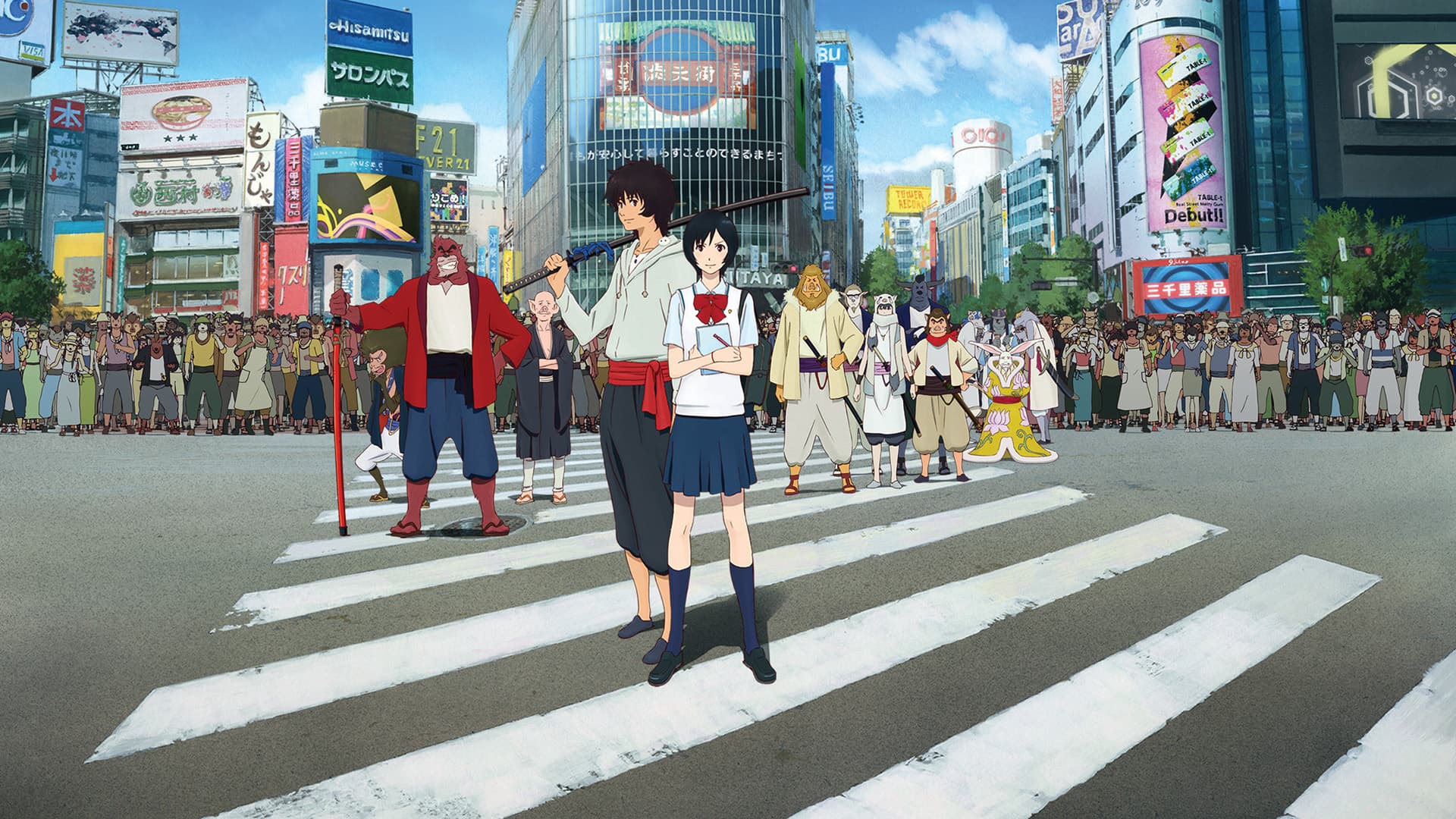
Kyuta, a boy living in Shibuya, and Kumatetsu, a lonesome beast from Jutengai, an imaginary world. One day, Kyuta forays into the imaginary world and, as he's looking for his way back, meets Kumatetsu who becomes his spirit guide. That encounter leads them to many adventures.
Difficult scenes
At the beginning, a nine year old boy has just lost his mother and refuses to go with extended family members. He wanders the city alone, steals food, and sleeps outside, which may be especially upsetting for children who are sensitive to abandonment or unsafe situations. Several training and duel scenes include hits, falls, and sword based or martial arts combat within a competitive setting. The presentation stays animated and not graphic, but some fights are fairly long, loud, and emotionally charged, especially when the characters are angry. As the story develops, the main character is torn between two worlds and shows intense anger toward adults and toward himself. This inner darkness is visualized in a dramatic way, creating a sense of losing control that may unsettle younger viewers even without graphic imagery. In the later part of the film, there are serious injuries, a threatening opponent, and scenes of urban chaos with destruction and panic. Even within a fantasy style, this section is clearly more intense than a light adventure comedy and may be the hardest part for younger children.
Where to watch
No verified platform for the US market yet. We keep this section updated as availability changes.
Availability checked on Apr 01, 2026
About this title
- Format
- Feature film
- Year
- 2015
- Runtime
- 1h 59m
- Countries
- Japan
- Original language
- JA
- Directed by
- Mamoru Hosoda
- Main cast
- Koji Yakusho, Aoi Miyazaki, Shota Sometani, Suzu Hirose, Lily Franky, Yo Oizumi, Kazuhiro Yamaji, Mamoru Miyano, Kappei Yamaguchi, Haru Kuroki
- Studios
- Nippon Television Network Corporation, Studio Chizu, TOHO, VAP, dentsu, Yomiuri Telecasting Corporation, D.N. Dream Partners, Sapporo Television Broadcasting Company, Miyagi Television Broadcasting, Shizuoka Daiichi Television, Hiroshima Telecasting, Fukuoka Broadcasting System, KADOKAWA, Chukyo TV Broadcasting Company
Content barometer
Violence
3/5
Notable
Fear
2/5
A few scenes
Sexuality
0/5
None
Language
1/5
Mild
Narrative complexity
3/5
Complex
Adult themes
0/5
None
Expert review
The Boy and the Beast is a fantasy animated adventure built around a wounded child and a rough mentor figure, with an exciting atmosphere that also carries real sadness. Sensitive material mainly includes the early death of the boy's mother, scenes of abandonment and loneliness, repeated sword and martial arts fights, and a darker inner force presented in a symbolic way that may still unsettle younger viewers. The violence is stylized rather than realistic, but the emotional intensity grows in the later part of the story, with stronger danger and heavier themes than in a very light family comedy. For sensitive children, the most challenging part may be the grief, anger, and fear of being alone, not just the action scenes. I would suggest this film from about age 9 for most children, or from 8 with parental support if the child already handles animated peril and stories about loss well, followed by a conversation about grief, belonging, and asking for help.
Synopsis
Kyuta, a boy living in Shibuya, and Kumatetsu, a lonesome beast from Jutengai, an imaginary world. One day, Kyuta forays into the imaginary world and, as he's looking for his way back, meets Kumatetsu who becomes his spirit guide. That encounter leads them to many adventures.
Difficult scenes
At the beginning, a nine year old boy has just lost his mother and refuses to go with extended family members. He wanders the city alone, steals food, and sleeps outside, which may be especially upsetting for children who are sensitive to abandonment or unsafe situations. Several training and duel scenes include hits, falls, and sword based or martial arts combat within a competitive setting. The presentation stays animated and not graphic, but some fights are fairly long, loud, and emotionally charged, especially when the characters are angry. As the story develops, the main character is torn between two worlds and shows intense anger toward adults and toward himself. This inner darkness is visualized in a dramatic way, creating a sense of losing control that may unsettle younger viewers even without graphic imagery. In the later part of the film, there are serious injuries, a threatening opponent, and scenes of urban chaos with destruction and panic. Even within a fantasy style, this section is clearly more intense than a light adventure comedy and may be the hardest part for younger children.