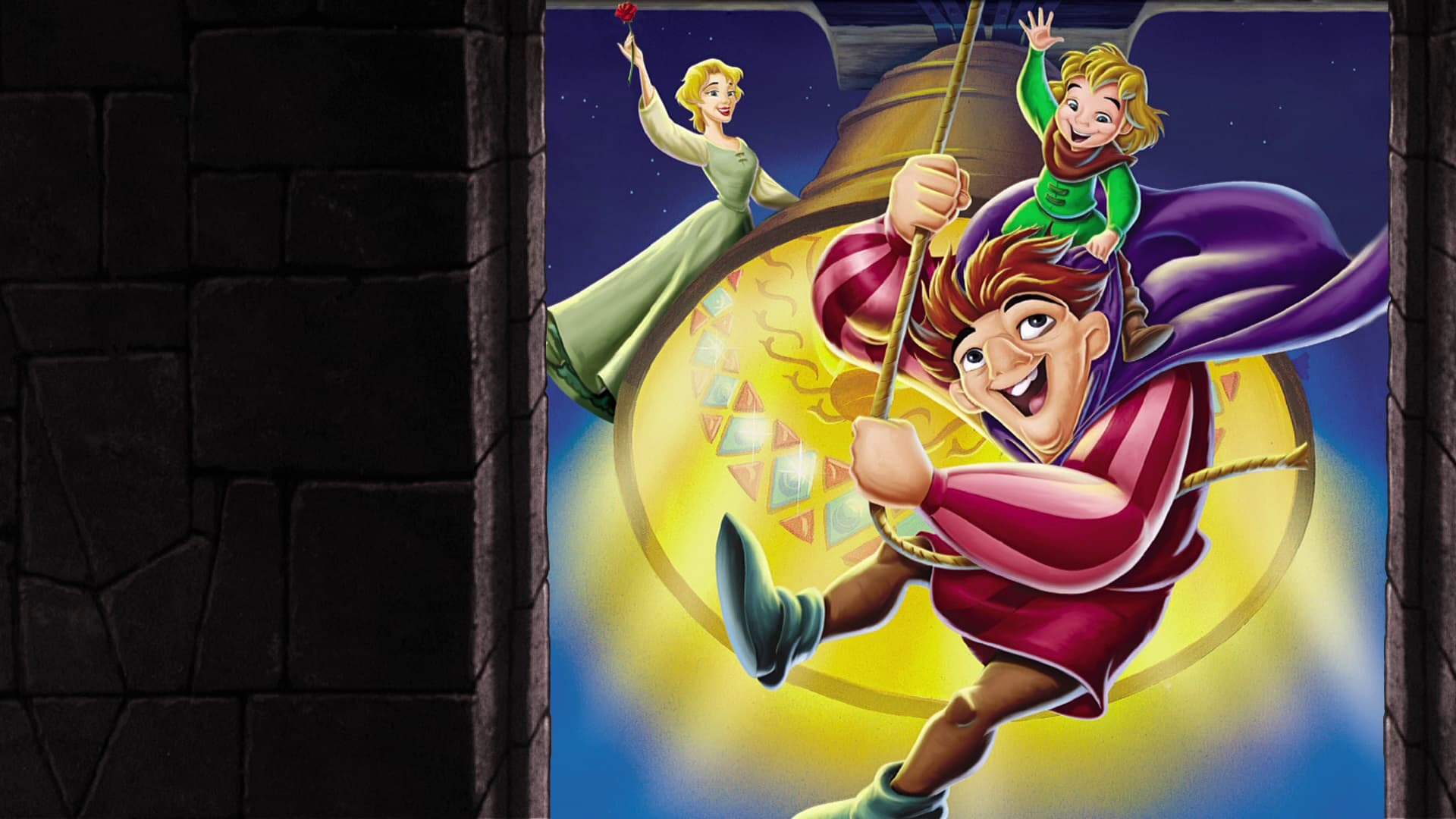

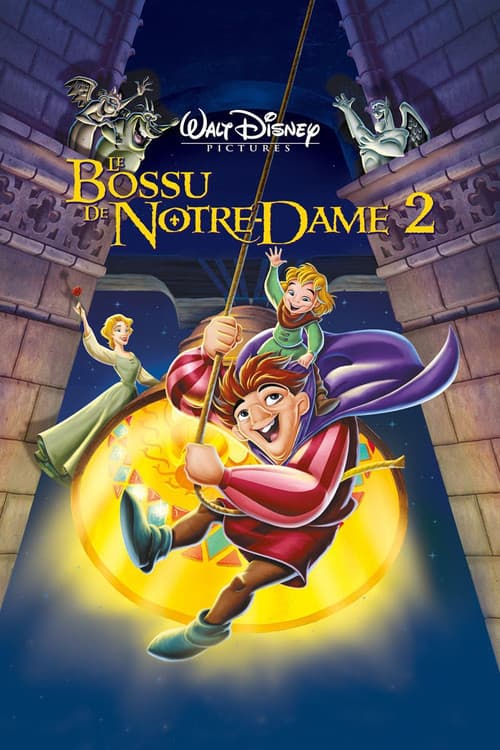
The Hunchback of Notre Dame II
The Hunchback of Notre Dame II
Your feedback improves this guide
Your feedback highlights guides that need a second look and keeps the rating trustworthy.
Does this age rating seem accurate to you?
Sign in to vote
Watch-outs
What this film brings
Content barometer
Violence
2/5
Moderate
Fear
2/5
A few scenes
Sexuality
1/5
Allusions
Language
0/5
None
Narrative complexity
0/5
Simple
Adult themes
0/5
None
Expert review
This Disney animated sequel is a bright family adventure focused on Quasimodo, friendship, trust, and a theft plot involving a traveling circus. The sensitive material mostly comes from mild to moderate tension, including a manipulative villain, emotional deception, a few danger scenes, chases, and a credible threat against Quasimodo, along with a very gentle romantic storyline and a chaste kiss. Overall, it is clearly less dark than the first film, the violence is not graphic, and the tone stays reassuring, though sensitive children may still react to Quasimodo being initially rejected and to the psychological pressure placed on Madellaine. For most children around age 7 and up, the film is accessible, but watching together can help adults discuss appearance based prejudice, manipulation, and the idea that a kind person may be pushed into doing something against her values. Parents may also want to prepare very sensitive viewers for a few scenes where the heroes are briefly in danger, even though the movie never becomes truly frightening.
Synopsis
Now that Frollo is gone, Quasimodo rings the bell with the help of his new friend and Esmeralda's and Phoebus' little son, Zephyr. But when Quasi stops by a traveling circus owned by evil magician Sarousch, he falls for Madellaine, Sarouch's assistant.
Difficult scenes
At the start of their relationship, Madellaine enjoys spending time with Quasimodo before seeing his face, then pulls back when she finally does. The scene is brief and quickly softened, but it may affect children who are sensitive to themes of visible difference and rejection. Sarousch manipulates Madellaine by reminding her that she owes him her survival since childhood, then pressures her to deceive Quasimodo so he can locate the bell he wants to steal. This psychological pressure is more notable than the physical action in the film, because it shows control, guilt, and a believable threat toward a very sympathetic character. Several sequences involve thefts, chases, and characters being briefly trapped or placed in danger inside the cathedral. These moments stay within a child friendly adventure style, but they may unsettle younger viewers who are easily bothered by persistent villains or by scenes involving confinement and suspense.
Where to watch
No verified platform for the US market yet. We keep this section updated as availability changes.
Availability checked on Apr 01, 2026
About this title
- Format
- Feature film
- Year
- 2002
- Runtime
- 1h 8m
- Countries
- United States of America
- Original language
- EN
- Directed by
- Bradley Raymond
- Main cast
- Tom Hulce, Jennifer Love Hewitt, Jason Alexander, Paul Kandel, Charles Kimbrough, Michael McKean, Demi Moore, Kevin Kline, Haley Joel Osment, Jane Withers
- Studios
- Disney Television Animation, Walt Disney Animation Japan, Walt Disney Pictures
Content barometer
Violence
2/5
Moderate
Fear
2/5
A few scenes
Sexuality
1/5
Allusions
Language
0/5
None
Narrative complexity
0/5
Simple
Adult themes
0/5
None
Expert review
This Disney animated sequel is a bright family adventure focused on Quasimodo, friendship, trust, and a theft plot involving a traveling circus. The sensitive material mostly comes from mild to moderate tension, including a manipulative villain, emotional deception, a few danger scenes, chases, and a credible threat against Quasimodo, along with a very gentle romantic storyline and a chaste kiss. Overall, it is clearly less dark than the first film, the violence is not graphic, and the tone stays reassuring, though sensitive children may still react to Quasimodo being initially rejected and to the psychological pressure placed on Madellaine. For most children around age 7 and up, the film is accessible, but watching together can help adults discuss appearance based prejudice, manipulation, and the idea that a kind person may be pushed into doing something against her values. Parents may also want to prepare very sensitive viewers for a few scenes where the heroes are briefly in danger, even though the movie never becomes truly frightening.
Synopsis
Now that Frollo is gone, Quasimodo rings the bell with the help of his new friend and Esmeralda's and Phoebus' little son, Zephyr. But when Quasi stops by a traveling circus owned by evil magician Sarousch, he falls for Madellaine, Sarouch's assistant.
Difficult scenes
At the start of their relationship, Madellaine enjoys spending time with Quasimodo before seeing his face, then pulls back when she finally does. The scene is brief and quickly softened, but it may affect children who are sensitive to themes of visible difference and rejection. Sarousch manipulates Madellaine by reminding her that she owes him her survival since childhood, then pressures her to deceive Quasimodo so he can locate the bell he wants to steal. This psychological pressure is more notable than the physical action in the film, because it shows control, guilt, and a believable threat toward a very sympathetic character. Several sequences involve thefts, chases, and characters being briefly trapped or placed in danger inside the cathedral. These moments stay within a child friendly adventure style, but they may unsettle younger viewers who are easily bothered by persistent villains or by scenes involving confinement and suspense.