Lady and the Tramp II: Scamp's Adventure
Does this age rating seem accurate to you?
Detailed parental analysis
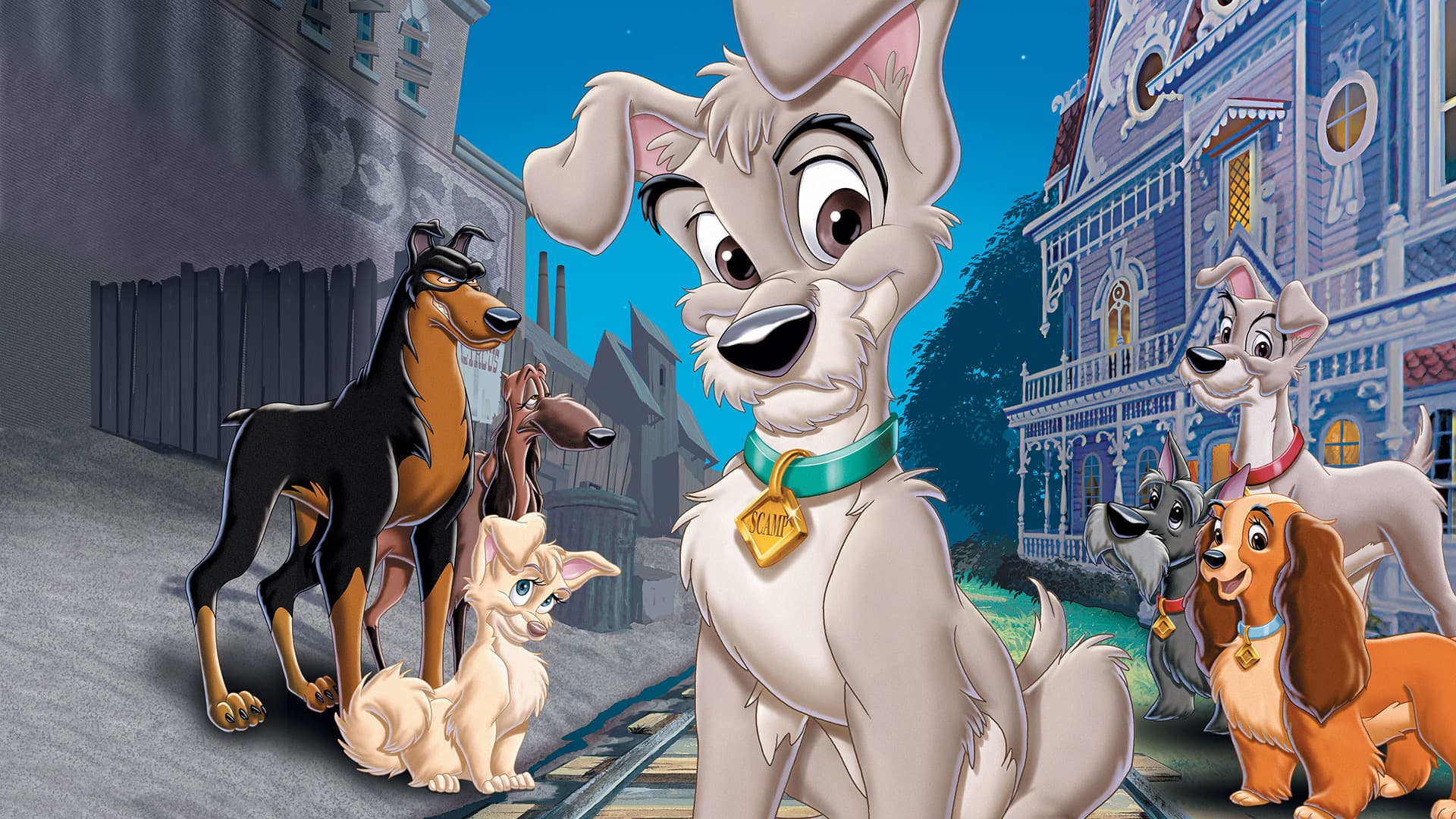
Lady and the Tramp II is a Disney animated sequel with a light and warm atmosphere, carried by catchy songs and a colourful aesthetic faithful to the original. The story follows Scamp, the boisterous son of Lady and the Tramp, who dreams of freedom and wild life in the city streets. The film is aimed primarily at young children, with simple narration and emotions accessible from an early age.
Parental and Family Portrayals
The father-son relationship is the true engine of the narrative. The Tramp, a former stray dog turned family man, imposes on Scamp a domestic discipline that the latter experiences as a cage. The tension between the two is honestly presented: the father is not a tyrant, but he is too rigid, unable to hear his son's need for adventure. The film does not absolve him easily: it explicitly acknowledges his wrongs and accepts allowing a place for freedom within the family framework. This is a rare parental arc in children's animation, showing that a parent can be wrong and admit it. The family as a whole is represented as a space of love and security, without naive idealisation.
Violence
The film exposes Scamp to several situations of genuine physical danger: he narrowly misses cars, is trampled by a horse and nearly crushed by a train. These sequences are treated in an adventure register rather than one of terror, but their accumulation may surprise very young children. A large dog, Reggie, constitutes the most direct threat in the film: he attacks Scamp on two occasions with visible aggression. Scamp appears briefly knocked out during one confrontation, which may worry sensitive children. The violence remains without lasting consequences and is never gratuitous, but it is sufficiently present to merit attention depending on the child's sensitivity.
Underlying Values
The film consistently defends the idea that family is a fundamental anchor, not a constraint to escape. Scamp learns that freedom without belonging is an illusion, and that family love is worth more than solitary adventure. This message is sincere and well constructed, but it is nuanced by the recognition that family rules can be too rigid and that the child has the right to express who they are. The balance between belonging and individuality is the true subject of the film, treated with a certain subtlety for a production of this format.
Language
The language is overall very wholesome. One character uses the word 'butt' during a fight, which constitutes the only departure from the child-friendly register of the film. This is incidental and of no real consequence.
Strengths
The film delivers on its promise as an affective sequel thanks to a sincerely written father-son arc that avoids the usual manichaeism of the genre. The song 'The Family' is particularly successful on an emotional level and stays in the memory. The narration is clear and well-paced for young children, without excessive dead time. The film has the rare merit of showing a father who acknowledges his mistakes without this being presented as a defeat, making it a concrete basis for discussion within families.
Age recommendation and discussion points
The film is suitable from age 4 or 5, with parental presence recommended for the youngest children during the danger sequences and Reggie's appearances. Two angles of discussion are worth exploring after viewing: ask the child why Scamp wanted to leave, and whether the Tramp was right to be so strict, then explore together what it means to have rules at home whilst remaining oneself.
Synopsis
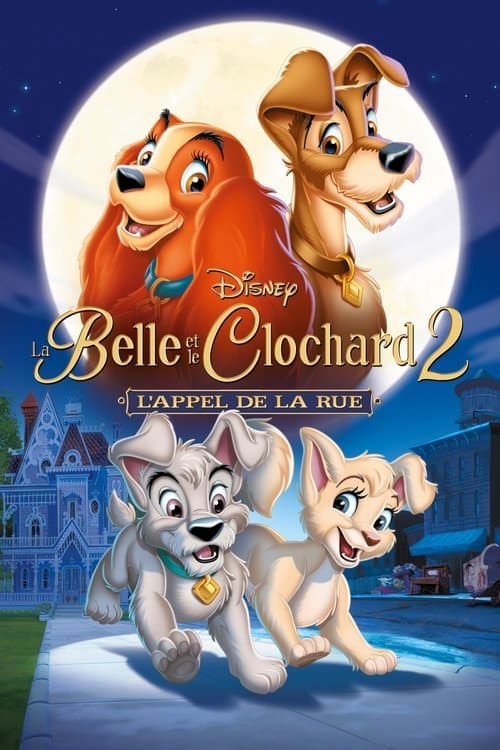
Lady and Tramp's mischievous pup, Scamp, gets fed up with rules and restrictions imposed on him by life in a family, and longs for a wild and free lifestyle. He runs away from home and into the streets where he joins a pack of stray dogs known as the "Junkyard Dogs." Buster, the pack's leader, takes an instant disliking to the "house-dog" and considers him a rival. Angel, a junkyard pup Scamp's age, longs for the safety and comfort of life in a family and the two become instant companions. Will Scamp choose the wild and free life of a stray or the unconditional love of his family?
Where to watch
Availability checked on Apr 28, 2026
About this title
- Format
- Feature film
- Year
- 2001
- Runtime
- 1h 9m
- Countries
- Australia, United States of America
- Original language
- EN
- Directed by
- Darrell Rooney, Jeannine Roussel
- Main cast
- Scott Wolf, Alyssa Milano, Chazz Palminteri, Jeff Bennett, Jodi Benson, Bill Fagerbakke, Mickey Rooney, Bronson Pinchot, Cathy Moriarty, Mary Kay Bergman
- Studios
- Disney Television Animation, Walt Disney Animation
Content barometer
- Violence2/5Moderate
- Fear2/5A few scenes
- Sexuality0/5None
- Language1/5Mild
- Narrative complexity0/5Simple
- Adult themes0/5None
Values conveyed
- Courage
- Acceptance of difference
- Loyalty
- Autonomy
- family
- friendship
- responsibility