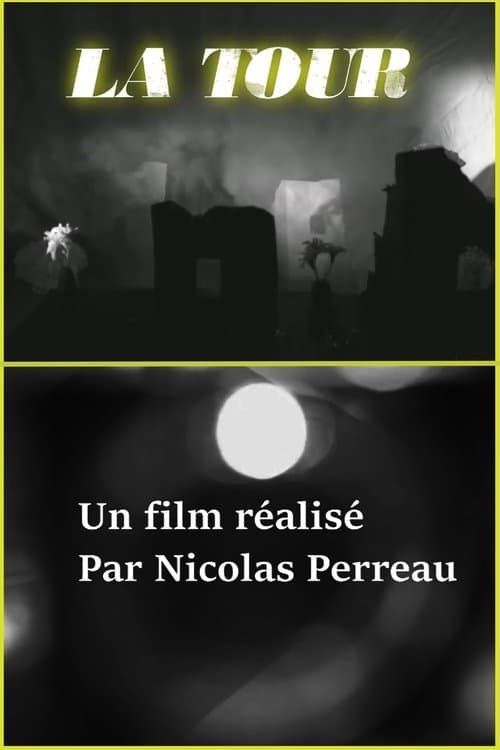
La Tour
Does this age rating seem accurate to you?
Detailed parental analysis
The Tower is a survival film with an oppressive and resolutely nihilistic atmosphere, rooted in the genre of catastrophic confined-space drama. The plot follows inhabitants of a residential tower forced to organise themselves to survive a deadly fog that gradually invades the outside world. The film targets an adult audience and contains no family-friendly dimension: its tone, violence and structural bleakness categorically exclude it for children and younger adolescents.
Violence
Violence is the most striking element of the film and it is treated without filter or distance. The death of a child occurs on screen in particularly brutal and involuntary circumstances, constituting one of the most traumatising moments of the narrative. Added to this are extreme unsanitary conditions, the presence of corpses, and prolonged depiction of the physical decay of the characters. Violence here is not aestheticised or stylised: it is raw, oppressive, and accompanied by no narrative catharsis. It is neither questioned nor carried by any structured critical perspective, which gives it a crushing rather than pedagogical character.
Underlying Values
The film conveys a deeply dark vision of human nature in a crisis situation: individualism quickly supersedes any solidarity, and survival of the fittest imposes itself as the dominant logic. The overall atmosphere is one of avowed nihilism, without any prospect of transcendence or collective resilience. Figures of authority are ineffectual or corrupt, and no character constitutes a stable moral model. This framework can be read as a satire of communal withdrawal, but the film does not provide the narrative tools necessary for this reading to impose itself naturally on a young viewer.
Discrimination
The distribution of characters within the tower follows ethnic lines presented in a schematic and unsubtle manner, with groups forming and confronting one another essentially according to visual belonging. This representation is not interrogated by the narrative, which treats it as a natural given rather than as a problem to be examined. Female characters are moreover relegated to a secondary and dependent role, their presence being primarily defined by their relationship to dominant male characters. These two aspects together form a reductive and dated vision of social dynamics, with no perceptible narrative counterweight.
Parental and Family Portrayals
Parental and protective figures are absent or failing in the film's universe. The death of a child, precisely because it occurs in a context where the adults meant to protect have failed, reinforces the impression of a world in which family and protective structures disintegrate under pressure. This motif contributes to the atmosphere of abandonment and powerlessness that runs through the entire narrative.
Social Themes
The tower as a social microcosm points to real-world issues: de facto segregation in collective housing, collapse of social ties in emergency situations, violence of class and belonging relations. These themes are present in the background but the film does not develop them with sufficient detachment for them to become levers for clear reflection. An alert adult may read a metaphor of identity withdrawal in them, but the filmmaking does not guide towards this interpretation.
Strengths
The film maintains genuine atmospheric tension through the management of the confined space and the use of fog as an invisible and relentless threat. The anxiety linked to darkness and confinement is effectively constructed on a sensory level. This is roughly where the notable qualities end: character writing is too schematic to generate genuine empathy, and the ambient nihilism is not sufficiently developed to produce a coherent statement on the human condition. The film fulfils its contract as an anxiety-inducing film for seasoned adults, without pretension beyond that.
Age recommendation and discussion points
The film is firmly not recommended before age 16, and even for 16 to 17 year-olds, parental accompaniment is advised given the draining tone and potentially destabilising content. For an adult or older adolescent who has seen it, two angles are worth discussing: why does the film choose to show violence without distance or reflection, and what does the communal distribution of characters say about the representations our society produces of itself in times of crisis.
About this title
- Format
- Short film
- Year
- 2020
- Runtime
- 5m
- Original language
- FR
- Directed by
- Nicolas Perreau
Content barometer
- Violence5/5Very strong
- Fear5/5Very intense
- Sexuality1/5Allusions
- Language2/5Moderate
- Narrative complexity0/5Simple
- Adult themes1/5Mild
Watch-outs
- Death
- Ethnic or racial stereotypes
- Gender stereotypes
- Violence
Values conveyed
- imagination
- curiosity