
The Red Turtle
La tortue rouge
The Red Turtle
La tortue rouge
Your feedback improves this guide
Your feedback highlights guides that need a second look and keeps the rating trustworthy.
Does this age rating seem accurate to you?
Sign in to vote
Watch-outs
What this film brings
Content barometer
Violence
2/5
Moderate
Fear
2/5
A few scenes
Sexuality
1/5
Allusions
Language
0/5
None
Narrative complexity
2/5
Moderate
Adult themes
0/5
None
Expert review
The Red Turtle is a quiet, dialogue free animated film about survival and the stages of a human life on a deserted island, with a calm atmosphere that often feels wistful and reflective. Its sensitive material comes mostly from natural peril, a few scenes of physical distress, one deliberate act of violence toward an animal, and later themes of separation, aging, loss, and death that may affect emotionally sensitive children. The visual intensity stays moderate, with no graphic gore or harsh imagery, yet several scenes carry real emotional weight, and the slow pacing gives children time to sit with fear or sadness. This is not a frightening film in the usual sense, but it does ask for some emotional maturity and comfort with symbolism and silence. Parents may want to watch alongside younger viewers and be ready to talk about loneliness, change, and grief, because the film is gentle in style while still touching on profound life themes.
Synopsis
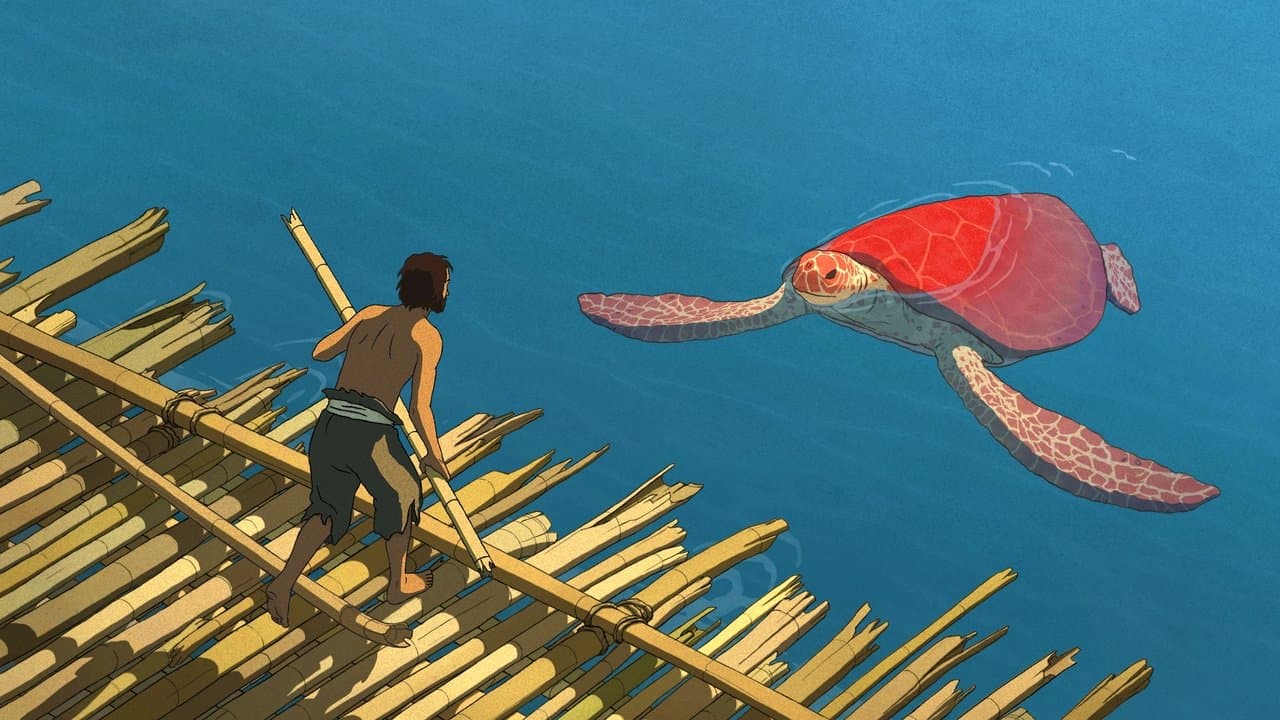
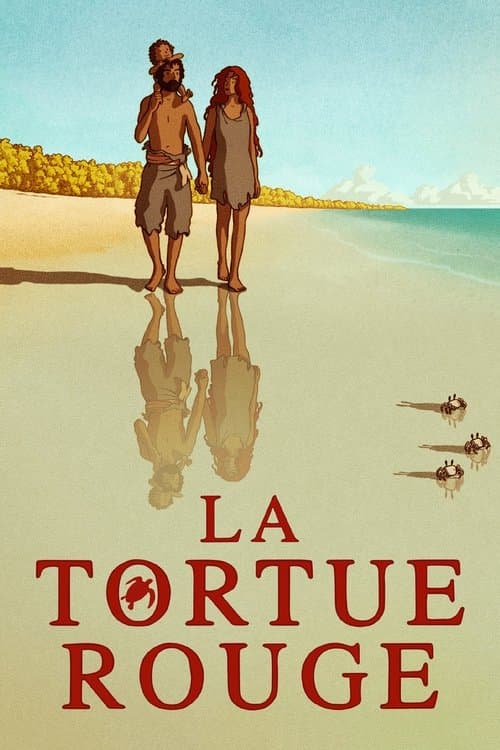
The dialogue-less film follows the major life stages of a castaway on a deserted tropical island populated by turtles, crabs and birds.
Difficult scenes
Early on, a stranded man struggles alone in rough seas and wakes up on a deserted island. Several scenes show his exhaustion, hunger, isolation, and physical danger, including a moment when he becomes trapped among rocks and must escape underwater while holding his breath, which may unsettle children who are sensitive to drowning or suffocation situations. One of the most delicate moments comes when the man, angry and frustrated, hits a giant red turtle on the head with bamboo and flips it onto its back, leaving it stranded and helpless. The scene is not graphic, but the intention to harm an animal is clear, and the character's remorse may not fully soften the impact for young viewers who are especially attached to animals. The film also includes strange, quiet visions on the beach that feel dreamlike and disorienting rather than traditionally scary. The overall mood remains gentle, yet this sense of mystery, combined with the lack of dialogue, can make some moments feel more confusing or emotionally unsettling for children who prefer very literal storytelling. Later, a tsunami hits the island and briefly separates the family members. This sequence includes natural disaster imagery, panic, injuries, and fear of losing loved ones, and the story also engages with aging and death in a restrained but emotionally meaningful way, which may lead to deeper questions from children.
Where to watch
No verified platform for the US market yet. We keep this section updated as availability changes.
About this title
- Format
- Feature film
- Year
- 2016
- Runtime
- 1h 21m
- Countries
- Belgium, France, Japan
- Original language
- FR
- Directed by
- Michael Dudok de Wit
- Main cast
- Tom Hudson, Baptiste Goy, Axel Devillers, Barbara Beretta
- Studios
- Wild Bunch, Studio Ghibli, Why Not Productions, CN4 Productions, Belvision, ARTE France Cinéma, Prima Linéa Productions
Content barometer
Violence
2/5
Moderate
Fear
2/5
A few scenes
Sexuality
1/5
Allusions
Language
0/5
None
Narrative complexity
2/5
Moderate
Adult themes
0/5
None
Expert review
The Red Turtle is a quiet, dialogue free animated film about survival and the stages of a human life on a deserted island, with a calm atmosphere that often feels wistful and reflective. Its sensitive material comes mostly from natural peril, a few scenes of physical distress, one deliberate act of violence toward an animal, and later themes of separation, aging, loss, and death that may affect emotionally sensitive children. The visual intensity stays moderate, with no graphic gore or harsh imagery, yet several scenes carry real emotional weight, and the slow pacing gives children time to sit with fear or sadness. This is not a frightening film in the usual sense, but it does ask for some emotional maturity and comfort with symbolism and silence. Parents may want to watch alongside younger viewers and be ready to talk about loneliness, change, and grief, because the film is gentle in style while still touching on profound life themes.
Synopsis
The dialogue-less film follows the major life stages of a castaway on a deserted tropical island populated by turtles, crabs and birds.
Difficult scenes
Early on, a stranded man struggles alone in rough seas and wakes up on a deserted island. Several scenes show his exhaustion, hunger, isolation, and physical danger, including a moment when he becomes trapped among rocks and must escape underwater while holding his breath, which may unsettle children who are sensitive to drowning or suffocation situations. One of the most delicate moments comes when the man, angry and frustrated, hits a giant red turtle on the head with bamboo and flips it onto its back, leaving it stranded and helpless. The scene is not graphic, but the intention to harm an animal is clear, and the character's remorse may not fully soften the impact for young viewers who are especially attached to animals. The film also includes strange, quiet visions on the beach that feel dreamlike and disorienting rather than traditionally scary. The overall mood remains gentle, yet this sense of mystery, combined with the lack of dialogue, can make some moments feel more confusing or emotionally unsettling for children who prefer very literal storytelling. Later, a tsunami hits the island and briefly separates the family members. This sequence includes natural disaster imagery, panic, injuries, and fear of losing loved ones, and the story also engages with aging and death in a restrained but emotionally meaningful way, which may lead to deeper questions from children.