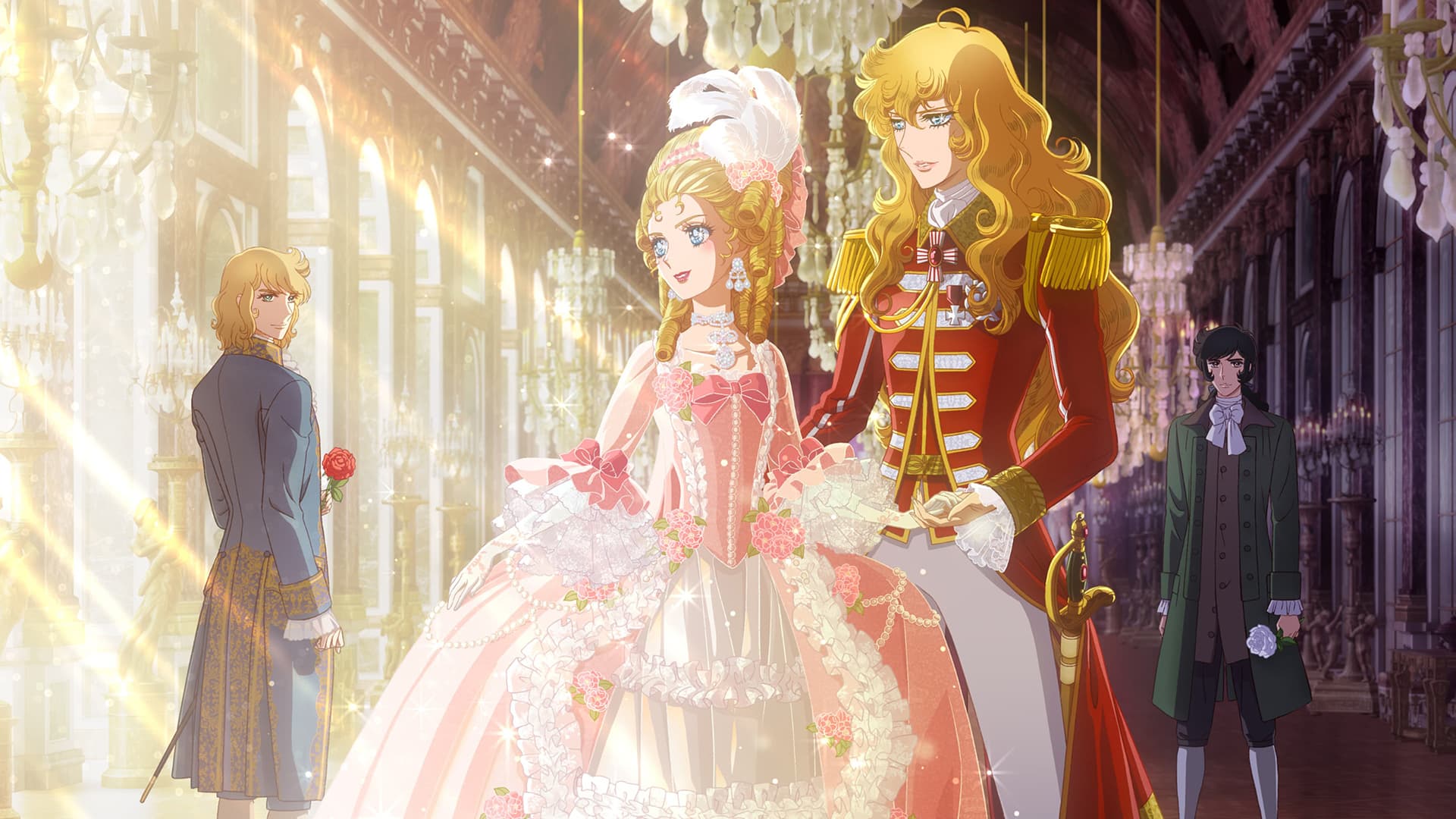

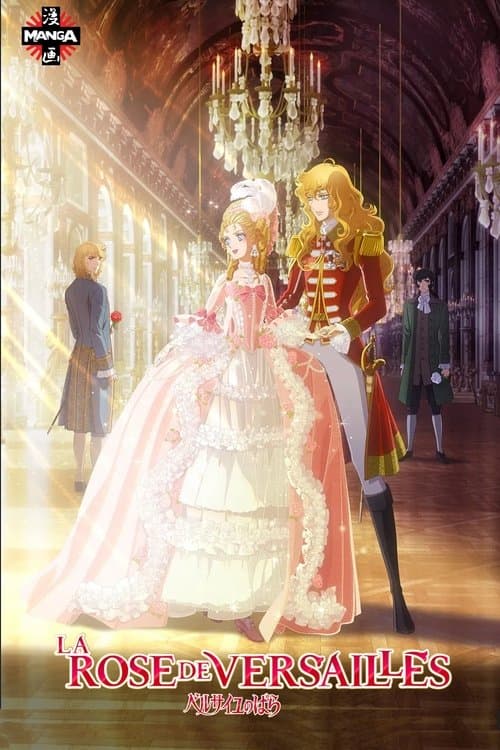
The Rose of Versailles
ベルサイユのばら
The Rose of Versailles
ベルサイユのばら
Your feedback improves this guide
Your feedback highlights guides that need a second look and keeps the rating trustworthy.
Does this age rating seem accurate to you?
Sign in to vote
Watch-outs
What this film brings
Content barometer
Violence
3/5
Notable
Fear
2/5
A few scenes
Sexuality
2/5
Mild
Language
0/5
None
Narrative complexity
3/5
Complex
Adult themes
1/5
Mild
Expert review
This animated adaptation of The Rose of Versailles blends historical romance, court drama, and the growing unrest of the French Revolution, with a graceful style that becomes increasingly serious. Sensitive material comes mainly from social injustice, unhappy love stories, rumors of infidelity, some sword fighting, and crowd scenes where characters face real danger. The film is not built around horror, yet the emotional and political tension is steady, with several sad passages connected to sacrifice, inequality, and the harshness of the era. The romantic content stays mostly restrained, although it includes mature feelings, forbidden love, and a clearly implied intimate night between two characters. Children around 8 may follow parts of the story, but many will find it too mournful and complex, so parents should be ready to explain the historical setting, class divisions, and the emotional choices the characters make.
Synopsis
In an age of revolution, Marie Antoinette and her protector Oscar François de Jarjayes face tough choices as women growing into their distinct roles.
Difficult scenes
Early in the film, a father chooses to raise his youngest daughter as a boy, with a strict education focused on duty, swordsmanship, and obedience. This is not framed as direct ongoing physical abuse, yet it may unsettle sensitive children because Oscar's identity and personal choices are shaped strongly by parental authority. Several scenes deal with the suffering of ordinary people, growing anger toward the queen, and the contrast between aristocratic luxury and widespread poverty. These moments are not necessarily graphic, but they create a lasting sense of social sadness and may lead children to ask questions about injustice, hunger, and collective blame. The revolutionary section includes armed conflict, gunfire, crowd charges, and major characters placed in credible mortal danger. Even with a stylized animated presentation, the intensity rises clearly and the atmosphere turns dark, which may surprise children expecting only palace intrigue and romance. The romantic storylines can be painful, involving impossible love, jealousy, rumors of infidelity, and one character driven toward emotional desperation. One moment clearly implies an intimate union between two loving adults, without explicit nudity, but the emotional framing is intense and more mature than a typical children's romance.
Where to watch
No verified platform for the US market yet. We keep this section updated as availability changes.
Availability checked on Apr 01, 2026
About this title
- Format
- Feature film
- Year
- 2025
- Runtime
- 1h 53m
- Countries
- Japan
- Original language
- JA
- Directed by
- Ai Yoshimura
- Main cast
- Miyuki Sawashiro, Aya Hirano, Toshiyuki Toyonaga, Kazuki Kato, Shunsuke Takeuchi, Takuya Eguchi, Miyu Irino, Fukushi Ochiai, Banjo Ginga, Mayumi Tanaka
- Studios
- MAPPA, avex pictures, Shueisha
Content barometer
Violence
3/5
Notable
Fear
2/5
A few scenes
Sexuality
2/5
Mild
Language
0/5
None
Narrative complexity
3/5
Complex
Adult themes
1/5
Mild
Expert review
This animated adaptation of The Rose of Versailles blends historical romance, court drama, and the growing unrest of the French Revolution, with a graceful style that becomes increasingly serious. Sensitive material comes mainly from social injustice, unhappy love stories, rumors of infidelity, some sword fighting, and crowd scenes where characters face real danger. The film is not built around horror, yet the emotional and political tension is steady, with several sad passages connected to sacrifice, inequality, and the harshness of the era. The romantic content stays mostly restrained, although it includes mature feelings, forbidden love, and a clearly implied intimate night between two characters. Children around 8 may follow parts of the story, but many will find it too mournful and complex, so parents should be ready to explain the historical setting, class divisions, and the emotional choices the characters make.
Synopsis
In an age of revolution, Marie Antoinette and her protector Oscar François de Jarjayes face tough choices as women growing into their distinct roles.
Difficult scenes
Early in the film, a father chooses to raise his youngest daughter as a boy, with a strict education focused on duty, swordsmanship, and obedience. This is not framed as direct ongoing physical abuse, yet it may unsettle sensitive children because Oscar's identity and personal choices are shaped strongly by parental authority. Several scenes deal with the suffering of ordinary people, growing anger toward the queen, and the contrast between aristocratic luxury and widespread poverty. These moments are not necessarily graphic, but they create a lasting sense of social sadness and may lead children to ask questions about injustice, hunger, and collective blame. The revolutionary section includes armed conflict, gunfire, crowd charges, and major characters placed in credible mortal danger. Even with a stylized animated presentation, the intensity rises clearly and the atmosphere turns dark, which may surprise children expecting only palace intrigue and romance. The romantic storylines can be painful, involving impossible love, jealousy, rumors of infidelity, and one character driven toward emotional desperation. One moment clearly implies an intimate union between two loving adults, without explicit nudity, but the emotional framing is intense and more mature than a typical children's romance.