Young Justice
Young Justice
Your feedback improves this guide
Your feedback highlights guides that need a second look and keeps the rating trustworthy.
Does this age rating seem accurate to you?
Sign in to vote
Watch-outs
What this film brings
Content barometer
Violence
2/5
Moderate
Fear
2/5
A few scenes
Sexuality
1/5
Allusions
Language
1/5
Mild
Narrative complexity
1/5
Accessible
Adult themes
0/5
None
Expert review
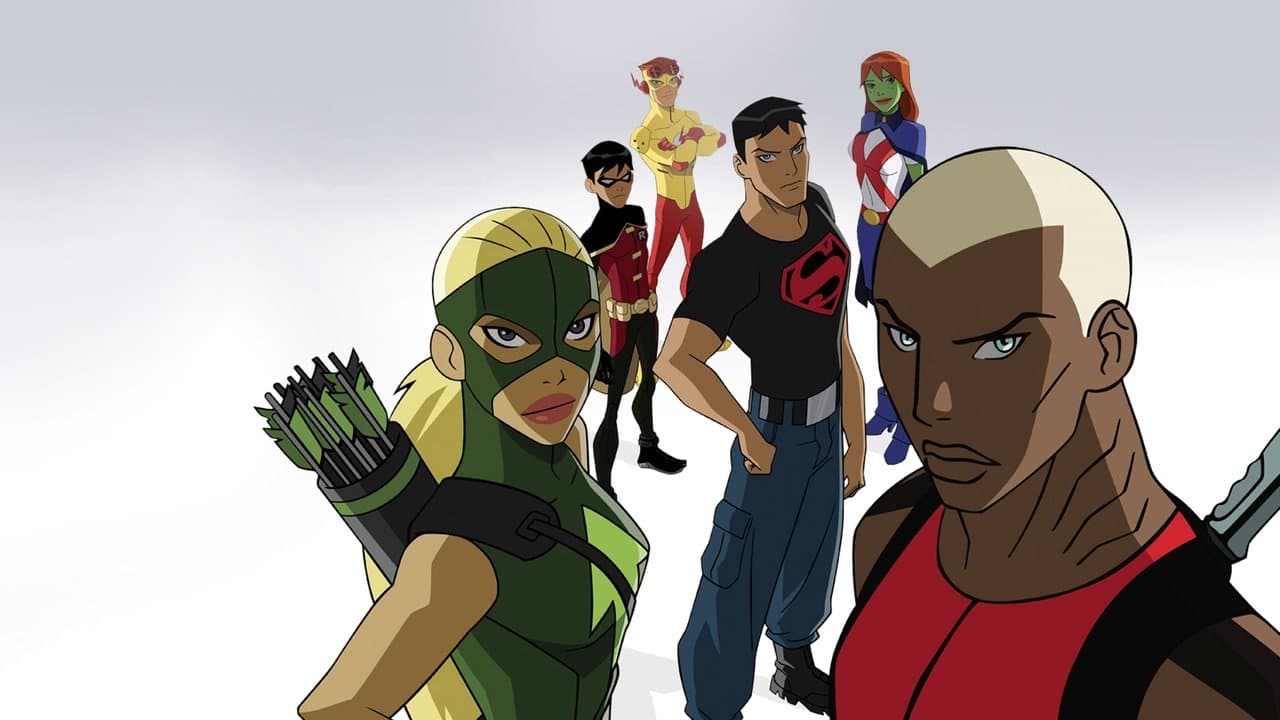
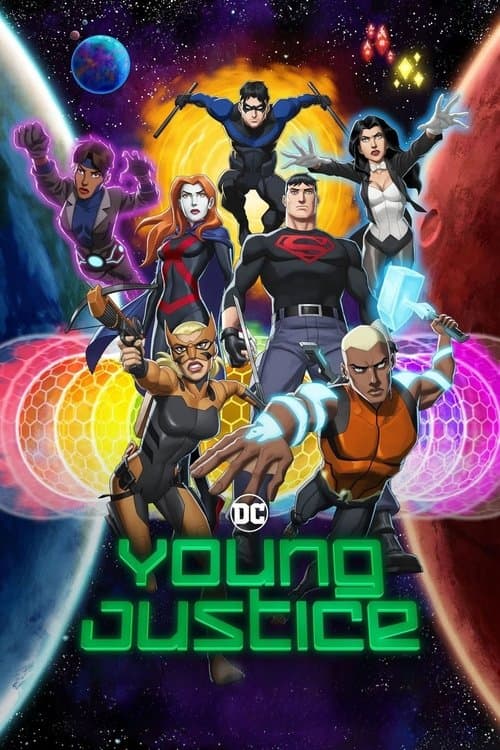
This animated superhero series follows the teenage sidekicks of the Justice League as they try to prove themselves on covert missions, with an adventurous tone that is noticeably more intense and serialized than a show made for very young children. The main sensitive elements are frequent action scenes, kidnappings, ominous labs, mind control, and an espionage atmosphere in which the young heroes are repeatedly placed in real danger. The violence is stylized rather than graphic, with little visible injury, but it happens often, and the ongoing tension is reinforced by themes of identity, betrayal, secrecy, and manipulation that ask for some emotional maturity. Younger children may be more affected by the constant peril and serious tone than by the animation style itself, so parents may want to watch alongside them, help clarify confusing alliances, and offer reassurance after scenes involving captivity, experiments, or psychological pressure.
Synopsis
Teenage superheroes strive to prove themselves as members of the Justice League.
Difficult scenes
Early on, the young heroes disobey safety instructions and investigate a hidden threat on their own. This sequence creates a real sense of danger through infiltration, armed guards, fights, and the discovery of a laboratory, which may unsettle a sensitive child even though the visuals remain highly stylized. Several episodes involve teenagers being captured, restrained, chased, or subjected to experiments and mind manipulation. The material is not graphic, but the idea of young characters losing control of themselves or being used by hostile adults can be disturbing for younger viewers. The series builds emotional conflict around secrecy, mistrust, and the feeling of not being good enough for their mentors. These tensions are frequent and may weigh more heavily than the action for some children, especially when the heroes question their place in the team or uncover unsettling truths. Some villains and missions lean into a darker atmosphere, with hidden bases, threatening creatures, surprise attacks, and a broader sense of world level danger. There is no explicit horror, but the steady accumulation of peril, conspiracy, and suspense can feel intense for a child who prefers simpler and more reassuring stories.
Where to watch
No verified platform for the US market yet. We keep this section updated as availability changes.
About this title
- Format
- TV series
- Year
- 2010
- Runtime
- 22m
- Countries
- United States of America
- Original language
- EN
- Directed by
- Greg Weisman, Brandon Vietti
- Main cast
- Jesse McCartney, Khary Payton, Nolan North, Danica McKellar, Stephanie Lemelin, Greg Cipes, Lacey Chabert, Denise Boutte
- Studios
- Warner Bros. Animation, DC Entertainment, DC
Content barometer
Violence
2/5
Moderate
Fear
2/5
A few scenes
Sexuality
1/5
Allusions
Language
1/5
Mild
Narrative complexity
1/5
Accessible
Adult themes
0/5
None
Expert review
This animated superhero series follows the teenage sidekicks of the Justice League as they try to prove themselves on covert missions, with an adventurous tone that is noticeably more intense and serialized than a show made for very young children. The main sensitive elements are frequent action scenes, kidnappings, ominous labs, mind control, and an espionage atmosphere in which the young heroes are repeatedly placed in real danger. The violence is stylized rather than graphic, with little visible injury, but it happens often, and the ongoing tension is reinforced by themes of identity, betrayal, secrecy, and manipulation that ask for some emotional maturity. Younger children may be more affected by the constant peril and serious tone than by the animation style itself, so parents may want to watch alongside them, help clarify confusing alliances, and offer reassurance after scenes involving captivity, experiments, or psychological pressure.
Synopsis
Teenage superheroes strive to prove themselves as members of the Justice League.
Difficult scenes
Early on, the young heroes disobey safety instructions and investigate a hidden threat on their own. This sequence creates a real sense of danger through infiltration, armed guards, fights, and the discovery of a laboratory, which may unsettle a sensitive child even though the visuals remain highly stylized. Several episodes involve teenagers being captured, restrained, chased, or subjected to experiments and mind manipulation. The material is not graphic, but the idea of young characters losing control of themselves or being used by hostile adults can be disturbing for younger viewers. The series builds emotional conflict around secrecy, mistrust, and the feeling of not being good enough for their mentors. These tensions are frequent and may weigh more heavily than the action for some children, especially when the heroes question their place in the team or uncover unsettling truths. Some villains and missions lean into a darker atmosphere, with hidden bases, threatening creatures, surprise attacks, and a broader sense of world level danger. There is no explicit horror, but the steady accumulation of peril, conspiracy, and suspense can feel intense for a child who prefers simpler and more reassuring stories.