Justice League
Justice League
Your feedback improves this guide
Your feedback highlights guides that need a second look and keeps the rating trustworthy.
Does this age rating seem accurate to you?
Sign in to vote
Watch-outs
What this film brings
Content barometer
Violence
2/5
Moderate
Fear
2/5
A few scenes
Sexuality
0/5
None
Language
1/5
Mild
Narrative complexity
1/5
Accessible
Adult themes
0/5
None
Expert review
This animated superhero series offers energetic, accessible adventure, with a sometimes serious tone but no harsh realism, as DC's most famous heroes face large scale threats. The main sensitive material comes from frequent battles, large scale destruction, kidnappings, group peril, and some villains or creatures that may unsettle younger children, especially when the atmosphere turns darker during invasions or conspiracy plots. The intensity stays moderate for the genre because the violence is highly stylized, visible injuries are limited, and the show generally avoids gore, explicit sexuality, and strong language, even though some episodes feel tenser than preschool oriented animation. There are also occasional gender stereotypes connected to early 2000s superhero conventions and to how some female characters are framed within the team, though this is not the defining feature of the series. For sensitive viewers, co viewing is a good idea, starting with a few episodes first to gauge reactions to combat, imposing villains, and scenes of citywide danger. Even with the very low algorithmic reference age, this series is usually a better fit from about age 7, and many children will enjoy it more once they are slightly older.
Synopsis
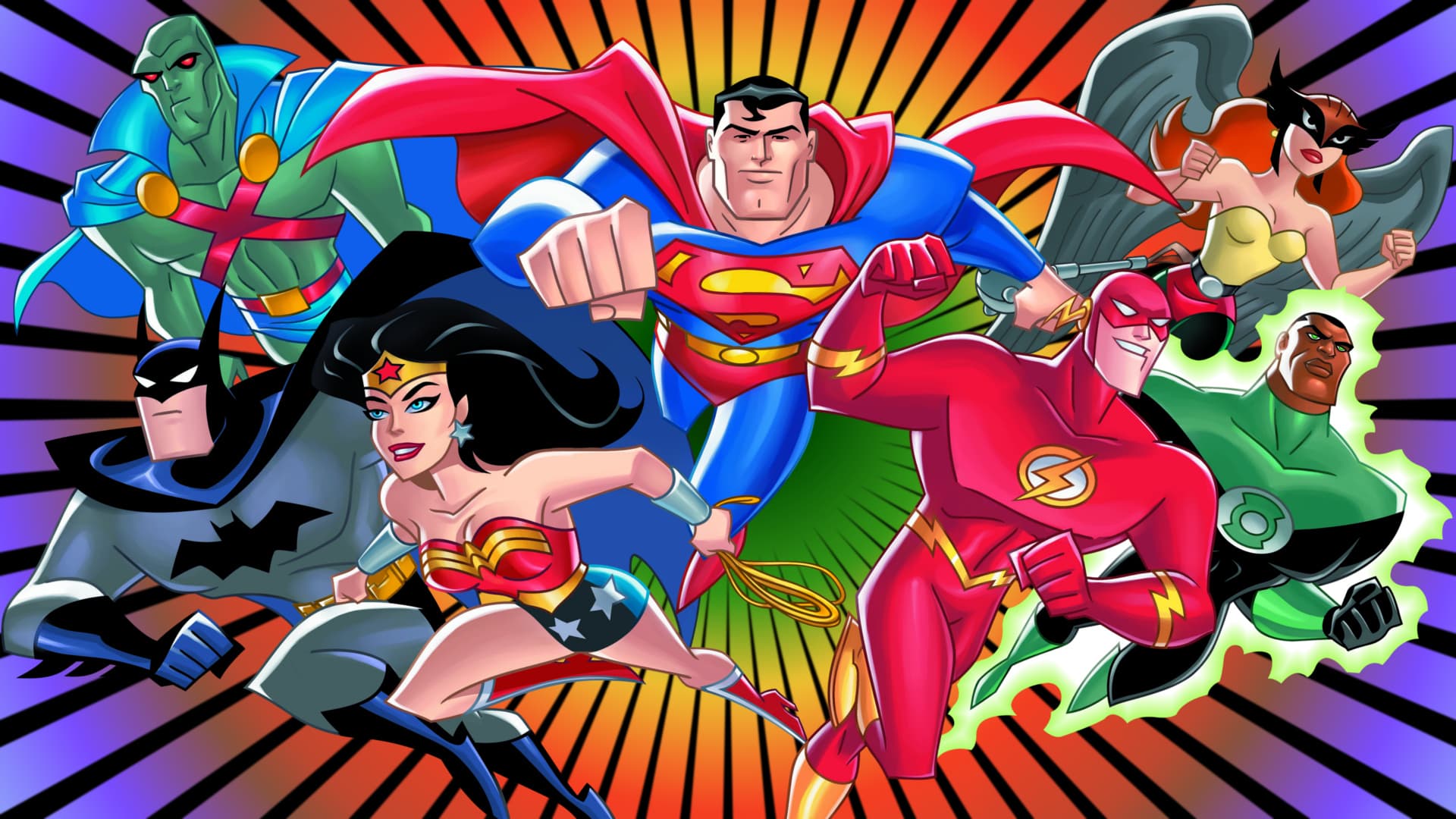
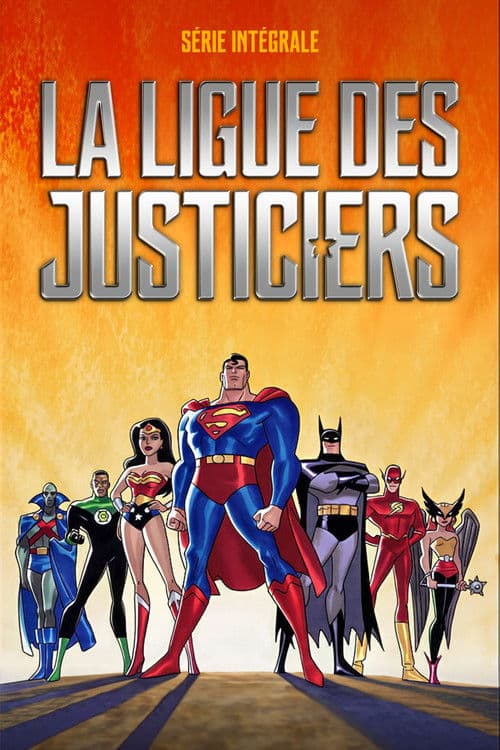
The long-awaited rebirth of the greatest superhero team of all time: Batman, Superman, Wonder Woman, The Flash, Hawkgirl, Green Lantern, and Martian Manhunter.
Difficult scenes
Several episodes feature large scale attacks on cities or hero bases, with explosions, panic, and civilians in danger. Even though the animation stays clean and not graphic, the scale of destruction can be intense for a young child who is sensitive to disaster scenes or chaotic imagery. Battles between heroes and supervillains are frequent and sometimes sustained, with punches, energy blasts, high falls, and forceful restraints. There is usually no blood or realistic suffering, but the fast pace and repeated danger may overwhelm or worry more sensitive viewers. Some antagonists, including alien invaders, monstrous creatures, or extremely powerful enemies, are introduced with darker visuals and dramatic music. These scenes can create short lived fear, especially when the heroes appear temporarily outmatched or are captured. The series also includes internal team tension, suspicion, loyalty conflicts, and a few moments involving sacrifice or references to loss. This material remains youth oriented, but it asks for slightly more emotional maturity than a purely light cartoon.
Where to watch
No verified platform for the US market yet. We keep this section updated as availability changes.
About this title
- Format
- TV series
- Year
- 2001
- Runtime
- 24m
- Countries
- United States of America
- Original language
- EN
- Main cast
- Kevin Conroy, George Newbern, Susan Eisenberg, Phil LaMarr, Carl Lumbly, Michael Rosenbaum, Maria Canals-Barrera
- Studios
- Warner Bros. Animation
Content barometer
Violence
2/5
Moderate
Fear
2/5
A few scenes
Sexuality
0/5
None
Language
1/5
Mild
Narrative complexity
1/5
Accessible
Adult themes
0/5
None
Expert review
This animated superhero series offers energetic, accessible adventure, with a sometimes serious tone but no harsh realism, as DC's most famous heroes face large scale threats. The main sensitive material comes from frequent battles, large scale destruction, kidnappings, group peril, and some villains or creatures that may unsettle younger children, especially when the atmosphere turns darker during invasions or conspiracy plots. The intensity stays moderate for the genre because the violence is highly stylized, visible injuries are limited, and the show generally avoids gore, explicit sexuality, and strong language, even though some episodes feel tenser than preschool oriented animation. There are also occasional gender stereotypes connected to early 2000s superhero conventions and to how some female characters are framed within the team, though this is not the defining feature of the series. For sensitive viewers, co viewing is a good idea, starting with a few episodes first to gauge reactions to combat, imposing villains, and scenes of citywide danger. Even with the very low algorithmic reference age, this series is usually a better fit from about age 7, and many children will enjoy it more once they are slightly older.
Synopsis
The long-awaited rebirth of the greatest superhero team of all time: Batman, Superman, Wonder Woman, The Flash, Hawkgirl, Green Lantern, and Martian Manhunter.
Difficult scenes
Several episodes feature large scale attacks on cities or hero bases, with explosions, panic, and civilians in danger. Even though the animation stays clean and not graphic, the scale of destruction can be intense for a young child who is sensitive to disaster scenes or chaotic imagery. Battles between heroes and supervillains are frequent and sometimes sustained, with punches, energy blasts, high falls, and forceful restraints. There is usually no blood or realistic suffering, but the fast pace and repeated danger may overwhelm or worry more sensitive viewers. Some antagonists, including alien invaders, monstrous creatures, or extremely powerful enemies, are introduced with darker visuals and dramatic music. These scenes can create short lived fear, especially when the heroes appear temporarily outmatched or are captured. The series also includes internal team tension, suspicion, loyalty conflicts, and a few moments involving sacrifice or references to loss. This material remains youth oriented, but it asks for slightly more emotional maturity than a purely light cartoon.